
2026 Best 1 Ton Overhead Crane for Global Buyers?
Choosing the 2026 best 1 ton overhead crane requires more than comparing lifting capacity and purchase price. Global buyers must examine duty class, span, lifting height, travel speed, control options, installation conditions, and long-term service support. A compact workshop crane may look efficient on paper. Yet it can struggle under frequent starts, dusty production areas, or limited headroom. Small details matter.
Crane engineer Mark Bridgwater explains, “Capacity is only one part of the decision; the working environment often determines real performance.” This view remains practical for factories, warehouses, maintenance bays, and light manufacturing plants. A reliable 1 ton overhead crane should offer stable load handling, responsive braking, clear emergency controls, and accessible spare parts. Remote controls can improve visibility. They cannot replace trained operators or disciplined inspections.
This guide compares leading configurations for international buyers in 2026. It considers single-girder and workstation designs, electric hoists, power supply differences, structural compatibility, and supplier responsiveness. Certification documents should be reviewed carefully, not accepted as decoration. Some buyers focus too heavily on the lowest quotation. That can become an expensive mistake.
There is no universal winner. A crane suited to a quiet repair shop may fail in a demanding production line. Even this comparison has limits, because local site surveys and operating habits can change the result. Buyers should verify technical data with qualified engineers before ordering. The best choice is safe, serviceable, and matched to real work—not merely impressive in a brochure.
What Is a 1 Ton Overhead Crane?
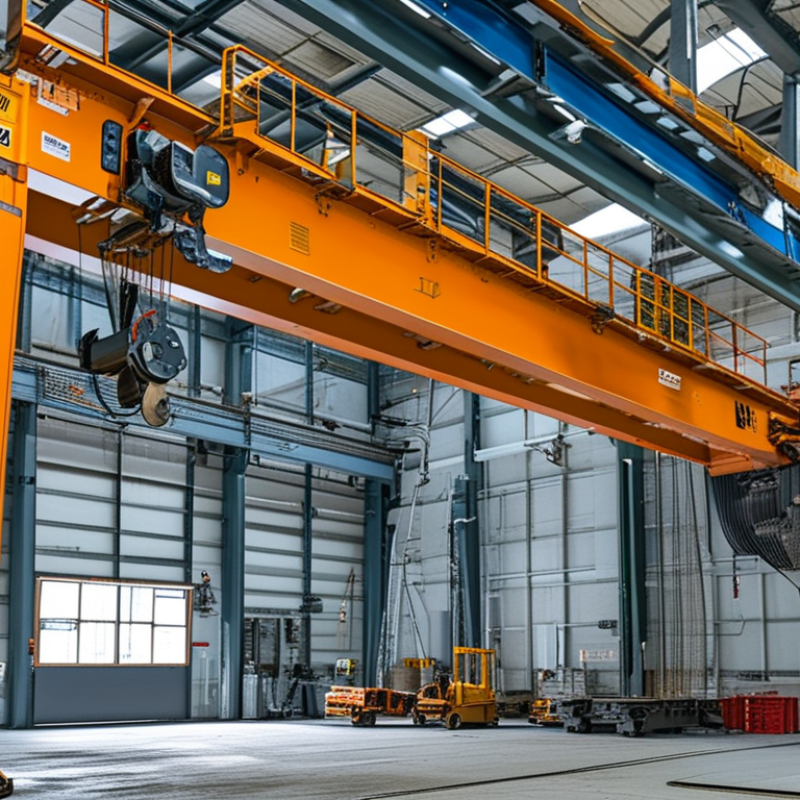
A 1 ton overhead crane is a fixed lifting system rated to move loads up to 1,000 kilograms under specified conditions. It usually includes a bridge, end trucks, hoist, trolley, runway beams, controls, and safety devices. The hoist travels across the bridge, while the bridge moves along the runway. This creates controlled three-dimensional movement inside a workshop or warehouse.
The 1 ton rating is not a lifting target. It is the maximum permitted load for the complete system, including the hook, lifting accessories, and dynamic forces. ASME B30.2 and OSHA 1910.179 require attention to rated capacity, inspection, guarding, controls, and runway conditions. ISO 4301-1 also classifies crane duty by load spectrum and operating frequency. A light-duty crane may suit occasional maintenance, but not repeated production cycles. CPWR’s analysis of U.S. Bureau of Labor Statistics data recorded 297 crane-related worker deaths from 2011 to 2017. Small capacity does not remove serious risk.
Tips: Confirm the real load weight, lifting height, span, duty class, power supply, and indoor or outdoor exposure. Check headroom before selecting a low-profile hoist. Test brakes and limit switches regularly. Keep the load centered. Avoid side pulling. I have seen specifications focus on capacity while ignoring runway deflection. That mistake deserves a second look.
2026 Best 1 Ton Overhead Crane for Global Buyers? - What Is a 1 Ton Overhead Crane?
A 1 ton overhead crane is a powered lifting system designed to safely move loads up to 1,000 kg along a runway and across a bridge. The following comparison summarizes commonly specified configurations for international industrial applications.
| Crane Configuration | Typical Application | Rated Capacity | Typical Span Range | Typical Lifting Height | Recommended Duty Class | Typical Hoisting Speed | Main Advantages |
|---|---|---|---|---|---|---|---|
| Single-Girder Top-Running Crane | Manufacturing workshops, maintenance areas, warehouses and assembly lines | 1,000 kg maximum working load | Approximately 6–25 m | Approximately 3–12 m | Light to medium service; commonly selected for intermittent handling | Approximately 4–8 m/min, depending on the hoist and control system | Good general-purpose solution, efficient use of floor space and relatively simple runway installation |
| Single-Girder Under-Running Crane | Buildings with limited headroom or where the runway is supported by the roof structure | 1,000 kg maximum working load | Approximately 6–20 m | Approximately 3–10 m | Light to medium service | Approximately 4–8 m/min | Can operate beneath runway beams and may provide useful lifting coverage in facilities with restricted structural height |
| Monorail Hoist Crane | Repeated lifting and transport along a fixed production route | 1,000 kg maximum working load | Route-dependent; commonly 5–30 m between lifting points | Approximately 3–10 m | Light-duty, repetitive material handling | Approximately 4–8 m/min | Cost-effective for linear movement, with a compact layout and straightforward operation |
| Portable Gantry Crane | Temporary workstations, repair bays, outdoor maintenance and areas without a permanent runway | 1,000 kg maximum working load | Commonly 2–6 m beam width | Commonly 2–4 m | Light and occasional service | Approximately 2–8 m/min | Relocatable and suitable where permanent building modifications are undesirable |
| Low-Headroom Electric Hoist Crane | Facilities where overhead clearance is limited | 1,000 kg maximum working load | Approximately 6–20 m | Approximately 2–10 m | Light to medium service | Approximately 2–8 m/min, often with two-speed control | Maximizes usable hook height by reducing the space required by the hoist and trolley |
| Explosion-Protected Configuration | Selected chemical, pharmaceutical, paint, gas or dust-risk environments after hazard classification | 1,000 kg maximum working load | Project-specific; commonly 6–20 m | Project-specific; commonly 3–10 m | Duty class must be determined by operating cycles and hazardous-area requirements | Application-specific and normally controlled to reduce ignition risk | Designed with suitable electrical and mechanical protection for the identified hazardous environment |
Selection note: Actual span, lifting height, duty classification, travel speeds, power supply, runway loads and safety features must be confirmed through a site survey and engineering review. A 1 ton rating refers to the maximum permitted lifted load and does not include the weight of the hook block, lifting accessories or other suspended equipment unless specified by the manufacturer.
Related Posts
-

What is a 1 Ton Gantry Crane and How is it Used?
-

New York Crane Suppliers for Global Buyers Looking for Quality?
-
How to Choose the Right 10 Ton Overhead Crane for Your Operations?
-

Top 10 Tips for Safely Operating a Construction Crane
-

How to Choose the Right Industrial Crane for Your Needs?
-

Why Choose a Grove Crane for Your Heavy Lifting Needs?