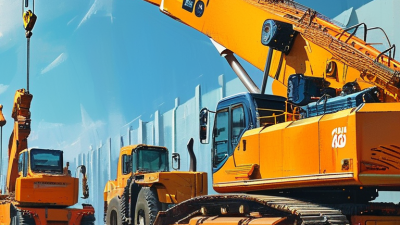
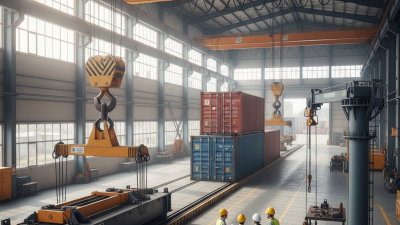
Choosing the best China crane for US buyers is not a simple price comparison. It is a fit-and-risk decision.
Grand View Research identifies construction, infrastructure, and industrial maintenance as major drivers of crane demand. Mordor Intelligence also highlights replacement needs, rental fleets, and infrastructure investment. These reports show a growing market. They do not prove that every low-cost machine is a smart purchase.
A practical US crane decision must examine rated capacity, duty class, electrical standards, documentation, spare parts, and service response. OSHA’s 29 CFR 1926 Subpart CC places strong emphasis on inspections, operator training, assembly, and safe operation. The crane must work on paper and at the jobsite.
Mike Parnell, president of Industrial Training International and a respected lifting-industry educator, has emphasized, “The crane is only one part of the lift.” That point matters. A reliable machine can still fail through poor planning, weak rigging, or delayed maintenance.
Look beyond the catalog photograph.
For US buyers, import cost is only the opening figure. Freight, port handling, commissioning, replacement components, software support, and technician travel can reshape the final budget. A cheaper purchase may become expensive after the first breakdown.
This guide compares Chinese crane options through a US buyer’s lens. It considers performance, compliance readiness, supplier experience, lifecycle cost, and after-sales support. The analysis cannot remove every uncertainty. Factory claims still require verification. Yet careful questions, documented testing, and realistic site details can expose weak choices before money and time disappear.
The best China crane is defined by your operating data, not by appearance or maximum capacity. Start with the rated load, including lifting devices and impact allowances. A 10-ton crane may be unsuitable if loads regularly approach its limit. Span must match the runway width and building columns. Measure the usable bay carefully. Small errors can create costly installation changes.
Lift height should include hook approach, headroom, and the highest storage position. Speed also needs practical judgment. Fast hoisting can improve production, but it may reduce load control during delicate placement. Consider separate hoist, trolley, and bridge speeds. Variable-speed controls often provide smoother movement.
Duty class matters just as much. Frequent steel handling demands a higher class than occasional maintenance lifting. Ask for load-cycle calculations, inspection records, welding procedures, and complete technical drawings. Some buyers focus too heavily on price. That is understandable, but incomplete.
Tips: Give the supplier a real duty profile. Include loads per hour, average load weight, daily operating time, travel distance, and indoor or outdoor conditions. Request motor data, brake details, control-panel specifications, and spare-parts information. Have a qualified engineer verify runway loads and electrical compatibility before purchase. Recheck every dimension. Even experienced teams sometimes overlook headroom, pendant travel, or maintenance access.
What Is the Best China Crane for US Buyers?
For US projects from 5 to 500 tons, crane selection should start with duty cycle, span, lift height, and building geometry. A bridge crane suits indoor factories with fixed runways and repeated production lifts. It uses the building structure efficiently, but runway design and installation accuracy matter. A gantry crane fits outdoor yards, steel storage, and sites without adequate columns. Its legs transfer loads directly to rails or ground beams. That flexibility can reduce building modifications, although wind exposure and foundation costs are easy to underestimate.
Jib cranes work well below roughly 10 tons, especially at workstations, loading points, and machine cells. Their local coverage is excellent, but rotation limits and foundation loads require careful review. For heavier applications, bridge or gantry systems usually offer better capacity control. ASME B30.2 and OSHA 29 CFR 1910.179 provide important US guidance for overhead and gantry crane design, inspection, operation, and rated-load marking. Do not treat compliance paperwork as engineering approval.
The U.S. Bureau of Labor Statistics reported 5,283 fatal work injuries in 2023, reinforcing the need for documented lifting controls and operator training. MHI’s 2024 Annual Industry Report also identifies labor availability and productivity as major material-handling pressures. Buyers should request load charts, duty classification, weld procedures, electrical schematics, spare-parts lists, and third-party inspection records. Market reports sometimes predict steady crane-market growth, but those forecasts cannot replace a site survey. A lower purchase price may become expensive after delivery.
For US buyers, a China-made overhead crane should be judged by evidence, not price alone. OSHA 1910.179 covers overhead and gantry crane safety in the workplace. It addresses rated-load markings, inspections, hooks, wire ropes, brakes, controls, guards, bumpers, and operating practices. A crane must fit the actual building, runway, load pattern, and working environment.
OSHA does not approve a crane as a product. The employer remains responsible for safe installation, inspection, and operation. Ask for clear load charts, inspection procedures, material records, electrical diagrams, and test documentation. Check whether the emergency stop, upper limit switch, trolley travel limits, and overload protection work under realistic conditions. Paperwork alone is weak evidence.
ASME B30.2 provides recognized requirements for overhead and gantry crane construction, installation, inspection, maintenance, and operation. Its provisions should be reviewed with a qualified US engineer, especially for design loads, supporting structures, controls, and maintenance access. Confirm the applicable edition and document any deviations. A certificate may look impressive, but it may not address your specific runway or duty cycle. That detail is often missed.
Do not assume a standard design fits every facility. Measure headroom, span, wheel loads, power supply, and hook travel before ordering. Require a factory acceptance test with witnessed functions and documented results. Even then, the installation needs a careful site inspection. There is room for error.
For US buyers, the best China crane is not simply the lowest quoted price. It must match the lifting cycle, load spectrum, and 60-Hz, 460-V power available at the site. ISO and FEM duty classes provide a practical starting point. A crane lifting near capacity every hour needs a higher class than a unit used occasionally. Cycle records matter.
ISO M4-M8 and FEM 1Bm-5m classifications describe expected utilization and load severity. However, these systems are not perfectly interchangeable. Ask the supplier for calculated operating time, starts per hour, average load, and maximum load. Do not accept “heavy duty” as a specification. I would also request motor data at 460 V and 60 Hz, including current, insulation class, cooling method, and starting torque.
The electrical package deserves equal attention. Confirm three-phase compatibility, transformer sizing, control voltage, grounding, overload protection, and enclosure ratings. Check the design against NFPA 70 and local installation requirements. A 50-Hz motor cannot be treated as a 60-Hz solution without checking speed, heating, and brake performance. That shortcut can create nuisance trips or unsafe stopping.
I have seen drawings look correct while the supplied panel used unfamiliar terminals and incomplete labeling. Clear schematics, English manuals, spare components, and factory test records improve commissioning reliability. Leave room for doubt. A local engineer should verify the final design against the site’s electrical rules and actual operating pattern.
For US buyers, the best China crane is not simply the lowest-priced unit. It should arrive with traceable load-test records, calibrated instruments, and drawings matching the delivered equipment. Ask for the test load, test date, acceptance criteria, and responsible engineer. OSHA rules require rated-load markings and safe operating controls, while applicable ASME B30 standards guide inspection and testing practices. A factory certificate alone may not prove site readiness.
NRTL certification deserves careful checking. It normally applies to specific electrical components or control assemblies, not automatically to the entire crane. Confirm the certification scope, model number, enclosure, and wiring design. Request the certificate before shipment. MHI’s 2024 Annual Industry Report found that 83% of surveyed supply-chain professionals expected technology investment to increase. That trend supports better monitoring, but advanced software cannot correct poor installation.
Small detail. Verify it.
Spare parts can decide lifecycle cost. Require a ten-year parts list, interchangeability data, recommended stock, and written lead times. Motors, brakes, pendant controls, limit switches, and radio components deserve special attention. Compare energy use, inspection labor, downtime, and technician access, not only purchase price.
A lower quote may become expensive after one unavailable brake assembly. I would also model three failure scenarios. The model will be imperfect. That is better than pretending maintenance risk is zero.