
What Is the Best Small Crane Manufacturer in China?
Choosing the best small crane manufacturer in China requires more than comparing prices or maximum lifting capacity. KHL Group’s 2024 Yellow Table reported combined revenue of about US$243.4 billion among the 50 largest construction-equipment manufacturers. That broad ranking offers useful industry context, but it does not isolate small cranes or prove which maker is best for a specific job. The distinction matters. Buyers should check the actual model, rated load chart, working radius, boom configuration, parts availability, and service support.
Crane-safety specialist David MacCollum’s published work highlights a practical principle: rated capacity alone cannot determine whether a crane suits a lift; site conditions and operating plans matter too. Treat that as a selection guide, not a direct product endorsement. A compact machine may need to pass through a narrow gate, work beside a warehouse wall, or lift repeatedly on a crowded factory floor. Small details matter. A clear load chart and accessible maintenance records can be more useful than a bold brochure claim.
This article compares Chinese small crane manufacturers through verifiable specifications, manufacturing capability, customization options, quality documentation, and after-sales support. It also separates manufacturer claims from independently checkable evidence. Public reports rarely provide apples-to-apples data for this segment, so some comparisons remain imperfect. That limitation deserves attention. The best choice is not automatically the largest factory or lowest quote; it is the supplier whose equipment and support match your lifting conditions, budget, and expected service life.
What Defines a Small Crane and Where Is It Used?
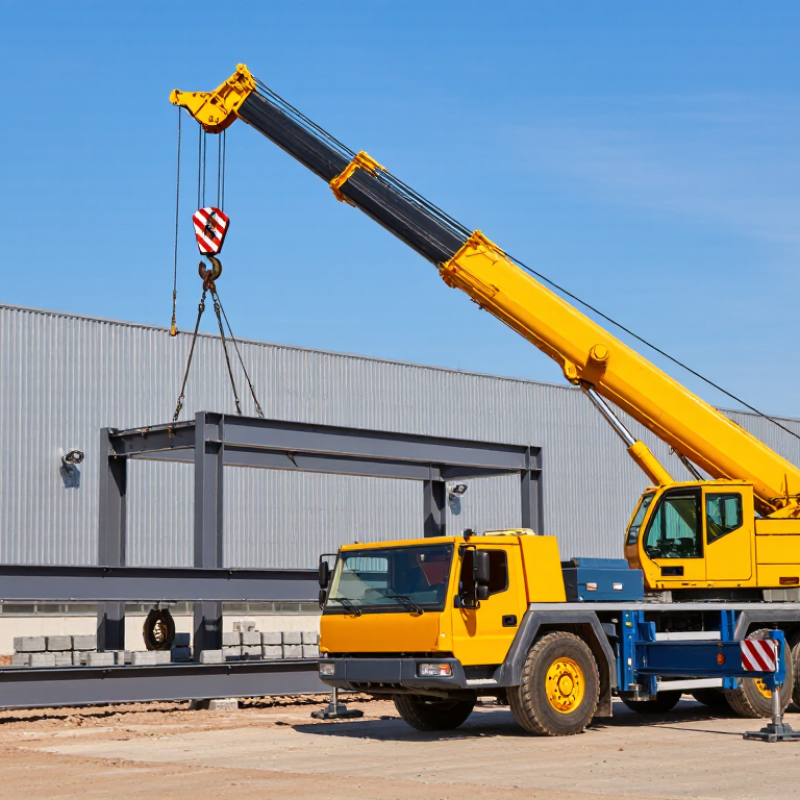
A small crane is lifting equipment built for relatively light loads, limited working space, or frequent repositioning. The term has no single industry-wide capacity limit. Not always. It may describe a compact crawler crane, portable gantry, mini mobile crane, or wall-mounted jib crane. Each design handles different tasks, so size alone does not determine suitability.
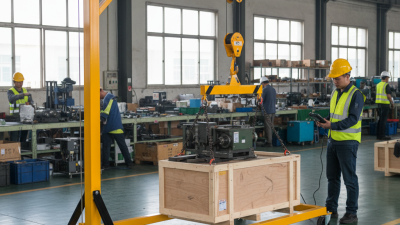
These cranes are used in workshops, warehouses, maintenance areas, and confined construction sites. A portable gantry can move machinery between work bays, while a compact crawler crane may place materials where larger equipment cannot fit. Picture a narrow doorway, a low ceiling, and a pump that must be lifted without blocking nearby work. That is where compact equipment can help. Still, “small” does not mean simple. Buyers and operators need to check the load’s weight, lifting radius, required height, floor or ground capacity, and available clearance. A load that is manageable close to the crane may exceed its rated capacity when lifted farther away. Site conditions can also change; that detail is easy to underestimate. Good planning matches the crane’s capacity chart and configuration to the actual lift, not just the machine’s footprint.
What Is the Best Small Crane Manufacturer in China? - What Defines a Small Crane and Where Is It Used?
| Topic | Practical Description | Typical Uses or Selection Notes |
|---|---|---|
| What defines a small crane? | “Small crane” is a broad industry description, not a single worldwide capacity class. It generally refers to a crane with a compact footprint, relatively modest lifting capacity, or equipment designed for restricted-access work. | Assess the crane’s rated capacity, working radius, dimensions, transport requirements, and operating environment rather than relying on the “small” label alone. |
| Mini crawler crane | A compact crane that travels on crawler tracks. Some models are designed to pass through narrow openings or operate on prepared indoor floors; capacities and dimensions vary substantially by model. | Often considered for glazing, steel installation, maintenance, and lifting in confined sites. Check floor loading, track configuration, access width, and setup requirements. |
| Compact truck-mounted crane | A crane mounted on a road vehicle, commonly used where equipment must travel between jobs. Lifting capacity depends on the crane configuration, boom extension, and distance from the vehicle. | Used for deliveries, utility work, equipment placement, and construction support. Verify the load chart, outrigger footprint, vehicle payload, and road-access limits. |
| Jib crane | A fixed or wall-mounted crane with a horizontal jib that supports local lifting and movement around a work area. It is typically selected for repetitive lifts within a defined coverage zone. | Common in workshops, assembly areas, and loading stations. Confirm mounting structure capacity, reach, rotation range, hoist compatibility, and duty requirements. |
| Portable gantry crane | A movable frame supporting a hoist, often with adjustable height or span. Some designs use wheels for repositioning, but not all are intended to travel while carrying a load. | Useful in maintenance bays, workshops, and temporary lifting areas. Check rated capacity, beam span, wheel and floor suitability, and whether loaded movement is permitted. |
| Typical work environments | Small cranes may be used indoors, in urban construction, in workshops, at warehouses, or at sites with limited access. The correct type depends on the lift and site conditions. | Review ground or floor capacity, overhead clearance, access routes, weather exposure, power supply, and nearby workers or equipment before choosing a crane. |
| How to evaluate a manufacturer | There is no single “best” manufacturer for every application. A suitable supplier should provide clear technical documentation, a crane configuration matched to the job, and support appropriate to the destination market. | Compare verifiable load charts, applicable safety and conformity documentation, component specifications, inspection records, spare-parts availability, warranty terms, and after-sales support. |
| Safe selection and operation | A crane’s rated capacity is not available at every radius or configuration. Actual safe lifting capacity must be determined from the applicable load chart and operating instructions. | Use trained operators, inspect equipment before use, set up on suitable ground, follow the load chart, and comply with local lifting and workplace-safety requirements. |
Note: Crane categories and specifications vary by design and application. Confirm all capacities, dimensions, and operating limits in the specific equipment documentation.
Related Posts
-

2026 Top Small Crane Models Features and Benefits?
-
Top 10 Small Mobile Crane Models for Construction Efficiency?
-

2026 How to Choose the Right Small Mobile Crane for Your Needs?
-
2026 Top Small Mobile Crane Innovations for Construction Industry?
-
Discover the Best Small Mobile Crane Options in China?
-
Top 10 Benefits of Using Small Gantry Cranes for Your Business?