How to Choose the Right Small Gantry Crane for Your Needs?
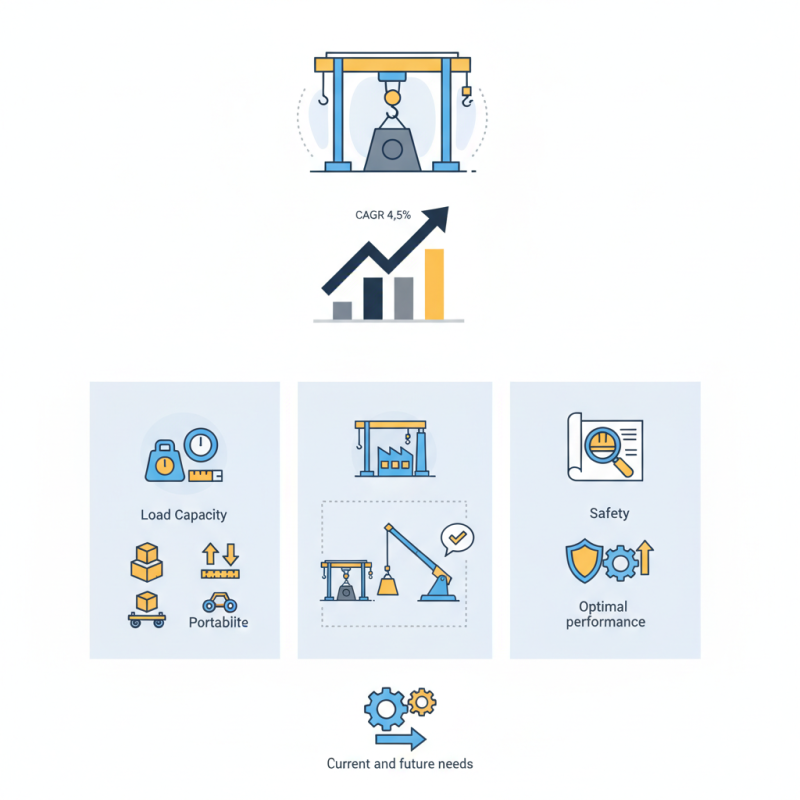
Choosing the right small gantry crane can significantly impact your operations. With the rising demand in various industries, the small gantry crane market is projected to grow at a compound annual growth rate (CAGR) of 4.5% over the next five years. This growth highlights the importance of selecting a crane that suits your specific needs.
When selecting a small gantry crane, consider factors such as load capacity, height, and portability. For instance, a crane that handles a 2,000-pound load might be ideal for some workshops, while others could require a crane with greater reach. The right crane can enhance efficiency but also carries risks if not matched to the task.
It's crucial to assess your workspace and operational requirements. Many companies overlook these factors, leading to difficulties later. Proper evaluation can ensure adequate safety measures and optimal performance. Ultimately, a small gantry crane should align with both current and future needs, providing flexibility and reliability in various applications.
Understanding Small Gantry Cranes: Types and Key Features
Small gantry cranes are versatile tools for various lifting tasks. They come in different types: adjustable height, fixed height, and cantilevered. Each type caters to specific job requirements. According to industry reports, the adjustable height type accounts for approximately 40% of small crane sales. This flexibility allows users to handle diverse loads at varying heights. It’s crucial to assess the lifting capacity. Most small gantry cranes can lift between 500 to 2,000 pounds, but selecting the right one can impact safety.
Key features to consider include material, height adjustment mechanisms, and mobility. Aluminum models weigh less and offer portability. Steel units are more robust but heavier. An ASME report highlights that proper inspection and maintenance can extend a crane's lifespan significantly. Users should reflect on whether they need a wheeled model for mobility or a stationary one for stability. Safety features like locking pins or travel stops may seem minor but are vital. Neglecting these aspects can lead to accidents. Having the right features ensures optimal performance and safety on site.
How to Choose the Right Small Gantry Crane for Your Needs?
Assessing Your Load Requirements and Crane Capacity Needs
Choosing the right small gantry crane involves understanding your specific load requirements. It’s crucial to assess the weight and size of the loads you intend to lift. According to industry data, crane selection should match or exceed the maximum load weight. For example, if you routinely handle loads around 1,500 pounds, a crane with a minimum capacity of 2,000 pounds is advisable for safety and efficiency.
Tip: Always account for dynamic loads. If your operations include movement while lifting, you might need a crane with a higher capacity than the static load alone. This ensures you stay within safe operational limits.
Furthermore, consider the lifting height and span. Many small gantry cranes have adjustable heights. However, ensure your workspace can accommodate the crane’s maximum height. Data from industry reports indicate that work environment constraints often lead to misaligned expectations, resulting in operational delays or inefficiencies.
Tip: Performing a site assessment can reveal limitations early. Do not overlook obstacles like structural beams or limited headroom. Reflect on your unique operational needs to avoid costly adjustments later.
Evaluating Space Constraints and Mobility Options
When selecting a small gantry crane, space constraints are crucial. Many workshops have limited overhead height, which can restrict crane mobility. According to industry data, over 60% of facilities report challenges with spatial efficiency. A crane that is too tall may not fit in narrower aisles, leading to safety issues and decreased productivity.
Mobility options should also be considered. Lightweight cranes offer easy maneuverability in tight spaces. Some small gantry cranes are designed with wheels that lock for stability. However, not all mobile options are versatile. In a survey, about 40% of operators expressed dissatisfaction with their cranes' ease of movement. They felt stuck when maneuvering in congested areas.
It is essential to weigh these factors carefully. A compact design may seem appealing, but its limitations can become problematic. Inspecting your workspace before making a decision can help you avoid pitfalls. Don't overlook how a crane's footprint affects your workflow. Sometimes, the right choice comes with trade-offs that require thoughtful evaluations.
Selecting Material and Design Based on Environment and Usage
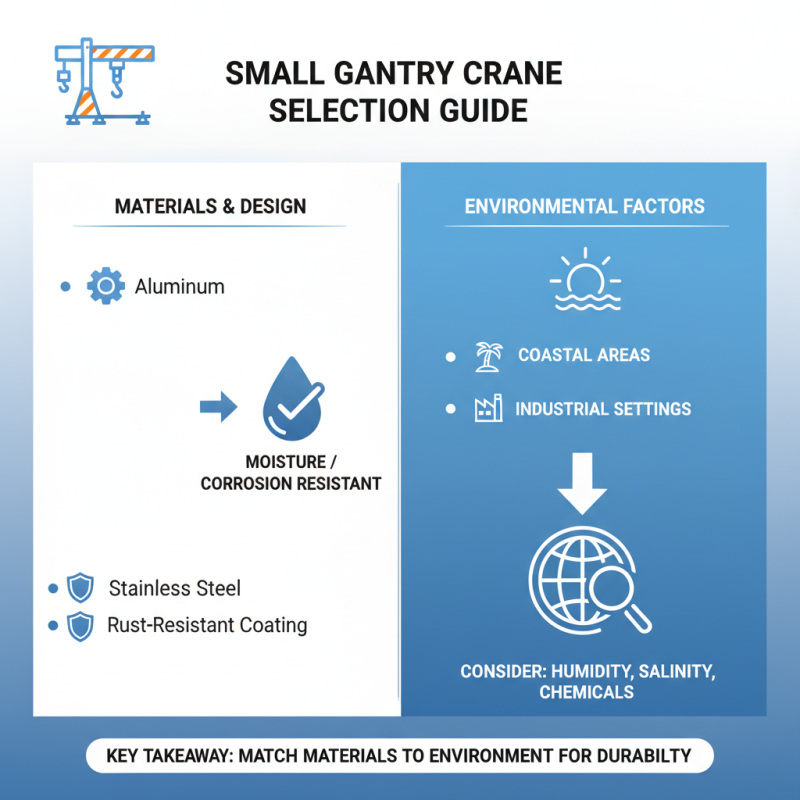
Choosing the right small gantry crane requires a close look at materials and design. The environment plays a critical role. For instance, if you are in a coastal area, consider rust-resistant materials. Aluminum and stainless steel are good options. They can withstand moisture and prevent deterioration.
Usage is another factor to consider. If the crane is for indoor usage, lighter materials may suffice. However, heavier loads might need more robust designs. Think about the space available and how you plan to maneuver the crane. Some designs are better for tight spaces. Additionally, the height and span of the gantry should match your operational needs.
It's easy to overlook these details during the selection process. Reflect on past experiences with other equipment. Did the material fail? Was the design impractical? These lessons are valuable. They inform your choice and could prevent future issues. Careful consideration now can save time and resources later.
Ensuring Safety Standards and Compliance in Crane Selection
When selecting a small gantry crane, safety standards must be a top priority. The type of equipment you choose should meet specific safety regulations. Look for cranes that comply with local safety codes. Often, these standards help in preventing accidents and ensuring a safe work environment.
Consider the weight capacity of the crane you need. Overloading can lead to dangerous situations. It's essential to assess your lifting needs accurately. Also, review the stability of the crane. A stable crane reduces the risk of tipping over during operation, which is a common concern in busy environments.
Regular inspections are crucial. Many users overlook this aspect. You may think, “It’s working fine,” but small issues can grow into serious problems. Develop a routine check-up schedule. This keeps your equipment compliant and safe. Lastly, ensure that your staff receives proper training on operating the crane. Knowledgeable operators contribute significantly to safer operations.