How to Choose the Best Trailer Crane for Your Needs?
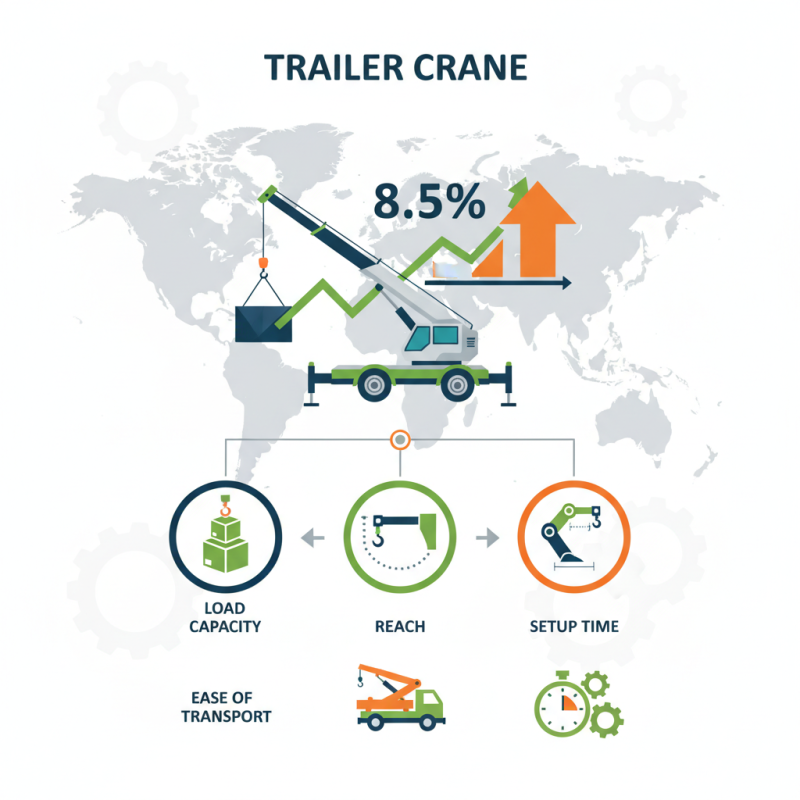
Choosing the right trailer crane can significantly impact your operations. The trailer crane market has been growing steadily, with a projected compound annual growth rate of 8.5% through 2027. This trend highlights the increasing reliance on these machines across various industries. According to industry expert John Smith, “Selecting the best trailer crane is crucial for efficiency and safety.” His words emphasize the need for careful consideration.
When deciding on a trailer crane, factors like load capacity, reach, and mobility should be carefully evaluated. A poor choice can lead to decreased productivity and potential safety hazards. For instance, if a crane can't handle the expected load, the consequences could be catastrophic. It's essential to analyze your specific needs thoroughly before making a purchase decision.
Moreover, features such as ease of transport and setup time should not be overlooked. These elements can influence the overall effectiveness of your projects. In an industry where every minute counts, the right trailer crane can make a world of difference. Make sure your choice reflects both current and future demands.
Understanding the Different Types of Trailer Cranes Available in the Market
When selecting a trailer crane, understanding the different types available is crucial. There are generally three main categories of trailer cranes: hydraulic, electric, and manual. Each has its own pros and cons. Hydraulic cranes offer powerful lifting capabilities and can handle heavy loads with ease. They are often more versatile in various terrains but may require regular maintenance.
Electric cranes are gaining popularity due to their efficiency. They are user-friendly and produce less noise during operation. However, their dependence on power sources can be a limitation in remote areas. Manual cranes serve as a cost-effective option. They require more physical effort but can be ideal for light-duty tasks.
Consider your specific needs before making a choice. Think about the weight capacity you require and the locations where you will use the crane. Keep in mind that while high-capacity cranes can lift more, they might not be necessary for smaller jobs. Size matters as well; larger trailers can be cumbersome to maneuver. Sometimes, having more power can lead to ignoring safety checks. Always reflect on the balance between capability and practicality when selecting a trailer crane.
Trailer Crane Load Capacity Comparison
Key Factors to Consider When Choosing a Trailer Crane for Specific Jobs
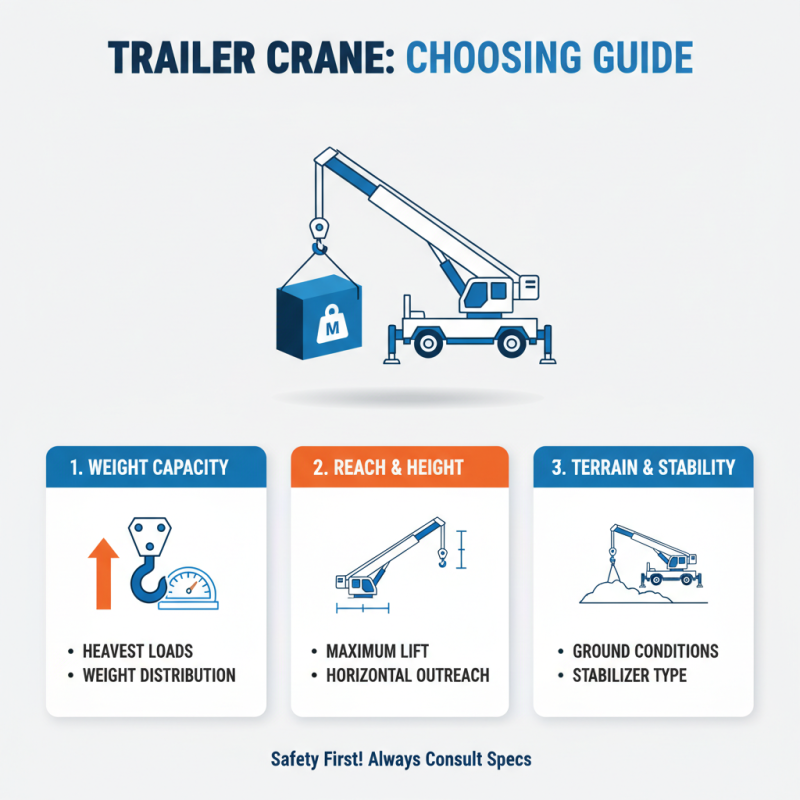
Choosing the right trailer crane involves several key factors. First, consider the weight capacity needed for your tasks. Analyze the heaviest loads you plan to lift. A crane that can’t handle your loads safely may cause accidents. It's essential to account for the weight distribution as well.
Next, evaluate the crane's reach. If you often work in tight spaces, a compact model may be best. On the other hand, jobs requiring extensive reach will need a crane designed for longer extensions. Think about versatility. Can the crane easily adapt to different job sites?
Don't overlook the importance of ease of transport. Some cranes are heavy and cumbersome, making moving them a challenge. Consider the transporting vehicle and the crane's installation time. Finally, check user reviews and maintenance history. Do users report common problems? Reflection on these aspects can help prevent future disappointments.
Assessing Load Capacity Requirements for Your Trailer Crane Selection
When selecting a trailer crane, load capacity is critical. The load capacity directly influences your operational efficiency. According to industry standards, a trailer crane should have a capacity that exceeds your maximum load by at least 20%. This buffer accounts for unexpected weight and shifting cargo.
Many users underestimate the importance of precise load assessment. It can lead to poor choices, resulting in potential hazards. For instance, a crane with a 10,000-pound capacity may seem sufficient for regular use. However, if your loads consistently reach 9,000 pounds, you should consider a higher capacity option. The risk of overloading is real and can lead to equipment failure.
Moreover, it’s vital to factor in the load's distribution. Unevenly distributed loads can compromise stability. Therefore, the dimensions of the load and how it is positioned must be evaluated. Users often overlook this aspect, leading to inefficient operations and increased wear on the crane. Assessing these details mitigates risks and enhances performance.
Evaluating Mobility and Setup Time for Enhanced Operational Efficiency
When selecting a trailer crane, evaluating mobility and setup time is crucial. A model’s weight impacts its mobility. According to industry reports, cranes weighing less than 5 tons can be transported by most standard vehicles. This ease of transport saves time during project transitions. However, cranes that are too lightweight may sacrifice stability.
Setup time is another critical factor. Fast setup improves productivity on job sites. Some cranes can be ready for use in under 30 minutes, while others may take hours. Choosing a crane staff can quickly deploy is essential for maintaining workflow. A 2022 survey shows that 40% of construction delays stem from equipment setup. This statistic highlights the importance of efficiency.
Tips: Consider your workspace. Limited space requires compact models. Ensure adequate training for operators to minimize setup times. Review the crane's stability during operation. A crane that is easy to set up but unstable in action can lead to costly accidents. Balancing these aspects takes careful thought. Assess your needs against the practical limitations of the cranes available on the market.
How to Choose the Best Trailer Crane for Your Needs? - Evaluating Mobility and Setup Time for Enhanced Operational Efficiency
| Model |
Max Load Capacity (tons) |
Mobility Type |
Setup Time (minutes) |
Operational Efficiency Rating (1-10) |
| Trailer Crane A |
10 |
Towable |
15 |
8 |
| Trailer Crane B |
15 |
Self-propelled |
10 |
9 |
| Trailer Crane C |
20 |
Towable |
20 |
7 |
| Trailer Crane D |
25 |
Self-propelled |
12 |
10 |
Reviewing Safety Features and Compliance Standards in Trailer Cranes
When selecting a trailer crane, safety features should be a priority. Look for models with a reliable braking system. A good crane must have a heavy-duty, well-maintained jack to prevent tipping. The stability of a crane is vital, especially on uneven surfaces. Check for
safety guards and emergency shut-offs too. These features can save lives and protect equipment.
Compliance with local standards is crucial. Ensure the crane meets recognized safety regulations. Do your research on load limits and operational capabilities. The crane should have clear labeling for all functions. Operators need to understand how it works. Regular inspections are necessary to ensure compliance. Make a checklist and stick to it.
Consider the training for operators. Even the safest crane can be dangerous in the wrong hands. A well-trained operator can spot issues before they become problems. Training programs often include emergency procedures, which are invaluable. It’s easy to overlook these aspects, but they are essential. The goal is not just to find a crane but one that prioritizes safety without compromising performance.