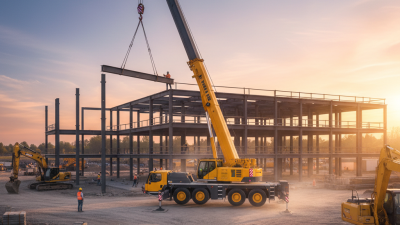
Choosing the right grove crane for a global project requires more than comparing lifting capacity and purchase price. Site conditions, transport limits, local support, and operator experience can change the decision completely. A crane working beside a wind farm in Spain faces different demands from one supporting bridge construction in Southeast Asia.
John L. Grove, founder of Grove Manufacturing, expressed a practical principle: “The best crane is the one that matches the work safely and reliably.” That idea remains relevant today. Capacity charts matter. So does the ground beneath the outriggers.
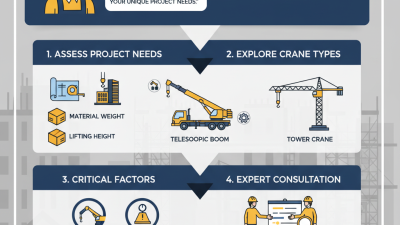
Start by defining the heaviest load, maximum radius, lifting height, and expected duty cycle. Then examine terrain, climate, road access, and available assembly equipment. A compact all-terrain grove crane may suit narrow urban streets, while a larger mobile crane may perform better on remote infrastructure sites. These choices should follow verified load charts and the manufacturer’s operating guidance.
Global projects also require dependable parts, training, inspection planning, and responsive technical support. A low initial price can become expensive when a tire, hydraulic component, or electronic system delays the schedule. That risk is easy to underestimate.
There is no perfect selection.
Project teams should document their assumptions and review them with qualified lifting professionals. Even experienced planners can miss changing soil conditions or overlooked transport restrictions. The strongest choice is not always the largest crane. It is the grove crane that delivers stable, compliant, and practical performance throughout the project.
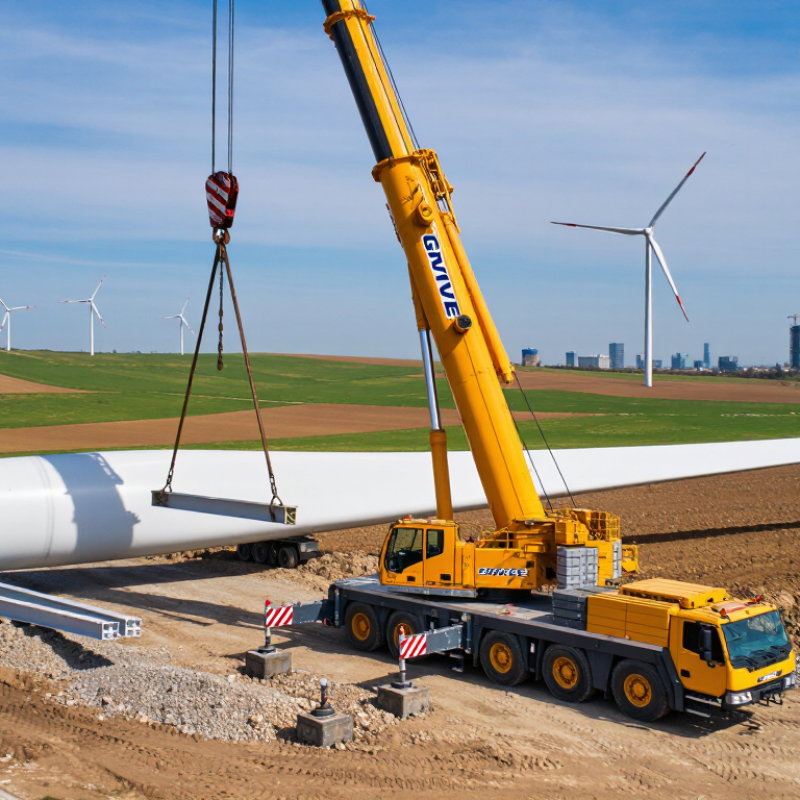
Choosing the right mobile crane starts with the lift, not the machine name. Define the heaviest load, rigging weight, pick radius, landing radius, and required hook height. Include wind exposure and ground bearing capacity. The usable capacity may fall sharply at long radius. A 100 USt crane is not automatically suitable for a 100 USt lift.
The 8.5–550 USt range covers compact urban work and heavy infrastructure projects. Select the smallest model that meets the verified load chart at the working radius. Then check transport limits, assembly space, counterweight needs, and local road restrictions. ASME B30.5 requires operators to follow rated capacities and manufacturer load charts. ISO 4301-1 also classifies cranes by duty cycle, helping teams match equipment to repeated lifts, occasional picks, or intensive production work. Duty cycle is often underestimated.
Height changes the decision. A tall boom can reduce capacity through geometry, wind, and deflection. For repeated lifts, record cycle time, daily operating hours, and peak load frequency. The U.S. Bureau of Labor Statistics recorded more than 1,000 fatal construction work injuries in 2023, reinforcing the value of disciplined lift planning.
A tidy spreadsheet can still hide weak assumptions. Recheck radius after the load leaves the ground. That small detail matters. For global projects, have a qualified lift planner verify soil data, weather limits, communications, and jurisdiction-specific requirements before mobilization.
Choosing the right Grove crane for a global project starts with the load chart, not the crane’s maximum headline capacity. A chart shows how rated capacity changes with working radius, boom length, jib configuration, and counterweight. A crane rated for 100 tonnes may lift far less at a long radius. Small setup differences matter.
Measure the actual lifting radius from the crane’s center of rotation to the load’s center. Then check the chart for the planned boom length, jib angle, and operating configuration. Include the hook block, slings, spreader beam, and other lifting accessories in the total load. Leave no detail uncounted. I have seen planning errors begin with an accessory weight copied from an old project file.
Wind deserves separate attention. A suspended panel or vessel can act like a sail, increasing side load and reducing control. Use the chart’s wind limits and the site’s measured forecast conditions, not a convenient average. Ground bearing, outrigger extension, and levelness also affect safe capacity. The chart may assume conditions that the worksite cannot provide.
Global projects often use different units, terminology, and chart revisions. Confirm tonnes versus tons, metric radius versus feet, and the correct chart edition. Ask a qualified lift planner to verify the configuration before mobilization. Recheck it when the load path changes. Plans can be accurate and still become wrong.
Choosing the right chassis is often more important than selecting maximum lifting capacity. A crane must match axle limits, road rules, and ground conditions. Rough-terrain (RT) cranes suit uneven sites, soft soil, and short-distance movement. Their compact frames and four-wheel steering improve control near foundations. However, RT cranes usually need transport support between distant projects.
Truck cranes work well when public-road travel matters. Their road-friendly chassis can reduce mobilization time and cost. Check axle spacing, bridge restrictions, and permitted gross vehicle weight before shipping. A crane may meet capacity requirements but still exceed a regional axle limit. That mistake can delay an entire project.
All-terrain (AT) cranes offer a stronger compromise for global work. They combine road mobility with off-road stability. Their suspension, steering modes, and counterweight options support varied construction environments. Still, heavier AT models may create high ground pressure on weak soil. Use outrigger mats, confirm bearing capacity, and review load charts with a qualified engineer.
Tips: Measure the access route, not only the work zone. Record bridge ratings, turning radii, gradients, and seasonal soil changes. Compare axle loads in transport and operating configurations. Small details matter.
From field experience, drawings often show ideal access. Real sites rarely do. A narrow gate, flooded shoulder, or buried utility can change the safest chassis choice. I have seen teams prioritize lifting height and overlook departure angles. That decision looked efficient, but it required costly site preparation. Verify conditions with local specialists and updated survey data.
Choosing the right grove crane for a global project starts with the ground, not the lifting chart. A crane may meet capacity requirements yet fail on soft fill, hidden voids, or uneven pavement. Request a recent geotechnical review and confirm allowable ground pressure with a qualified engineer. Measure twice.
Check outrigger reactions for the heaviest lift, not only the average operation. Outrigger mats or engineered steel plates may spread the load, but they cannot correct unstable soil. Inspect drainage, underground services, slopes, and nearby structures before arrival. Small oversights become expensive delays. The ground decides.
Wind conditions also deserve careful planning. Review operating limits, gust exposure, sail areas, and local weather records for the full lifting window. Wind changes quickly. Stop-work criteria must be clear to every operator and supervisor. Transport planning is equally practical: verify route width, bridge limits, turning radii, axle weights, clearance heights, and unloading space. Oversized components may require route surveys and local approvals, depending on the jurisdiction. A transport plan that looks complete on paper can still fail at a narrow village turn. Recheck it with current measurements, because roadworks and seasonal restrictions change. Use the crane’s load charts, inspection records, and manufacturer instructions with guidance from competent local professionals.
Reference planning values for checking ground pressure, outrigger deployment, wind conditions, and transport access before selecting a mobile crane.
These values are common preliminary planning references: 200 kPa ground-bearing capacity, 100% outrigger extension, a 10 m/s wind planning limit, and a 2.55 m road-transport width. Final limits must be verified against the crane load chart, engineered ground-support design, local road regulations, weather data, and the approved lift plan.
Global crane selection starts with compliance, not lifting capacity. EN 13000 covers mobile crane design and safety requirements in European markets. ASME B30.5 provides operating and inspection guidance for mobile and locomotive cranes. ISO 4306-1 standardizes crane vocabulary, helping engineers interpret classifications across countries. These standards do not automatically replace local laws. A project team must verify road limits, operator licensing, inspection intervals, and site-specific permits.
Small details matter. Check boom configuration, wind limits, outrigger loads, and rated-capacity charts against the actual site. HSE’s 2023/24 workplace statistics recorded 138 worker fatalities in Great Britain, showing why formal controls cannot remain paperwork. The ILO also reports nearly three million work-related deaths worldwide each year. Cranes are only one part of that wider risk picture. Yet they demand disciplined planning.
A certificate alone can mislead. Ask for traceable test records, current manuals, and evidence of competent inspections. Confirm whether the local authority accepts EN or ASME documentation. In mixed-standard projects, use the stricter requirement where practical, then document the decision. This takes time. It can prevent costly redesigns, rejected permits, or unsafe assumptions. Recheck translations and measurement units, too. My experience is that overlooked details often appear during mobilization, not during procurement.