
How to Choose an MCB Riveting Machine?

How to Choose an MCB Riveting Machine?

Choosing an MCB Riveting Machine is a practical decision that affects assembly quality, production speed, and long-term operating costs. The right machine should match the circuit breaker’s dimensions, riveting method, material, and expected output. A compact workshop model may suit low-volume production, while a multi-station system can support consistent industrial workloads. The best choice is not always the fastest machine.

Real production experience shows that small details matter. Check the rivet diameter, stroke length, feeding accuracy, and adjustment range before comparing prices. A stable frame helps reduce vibration around the work area. Precise tooling protects the MCB housing from cracks, dents, and loose connections. Operators should also examine guarding, emergency stops, noise levels, and access for routine maintenance. Safety cannot be treated as an optional feature.

Ask for sample riveting tests.

Reliable manufacturers should provide clear specifications, installation guidance, spare-part support, and operator training. Request test results using your actual MCB components, rather than relying only on catalog photographs. Independent customer feedback can reveal problems with feeding jams, tooling wear, or delayed service responses. However, reviews are not always complete. A promising machine may still require frequent adjustment in real production. That possibility deserves attention.

This guide explains the main factors behind a sound purchase, including machine structure, automation level, riveting precision, maintenance needs, and total cost of ownership. It also encourages readers to compare measurable performance with practical working conditions. Careful evaluation reduces avoidable mistakes and supports safer, more dependable assembly operations. A machine should earn trust through repeatable results, not impressive claims alone.
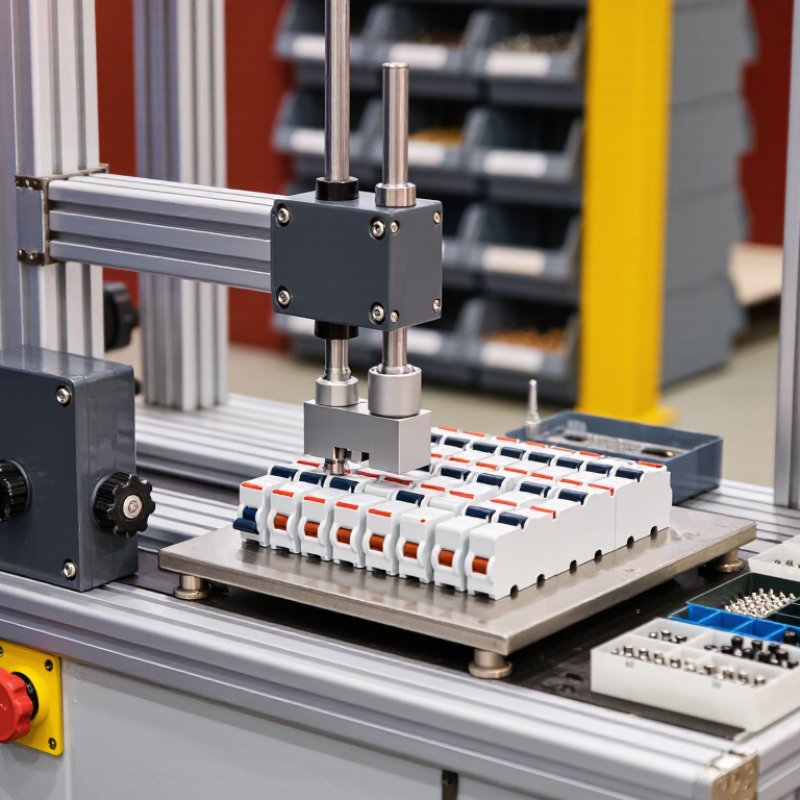
How to Choose an MCB Riveting Machine?

Define the MCB Riveting Machine and Its Core Functions

How to Choose an MCB Riveting Machine?

Define the MCB Riveting Machine and Its Core Functions

An MCB riveting machine assembles miniature circuit breakers through controlled mechanical joining. It fixes terminals, contact parts, and insulating components with precise rivet pressure. The machine usually combines feeding, positioning, riveting, inspection, and discharge operations. Its core function is simple: create stable joints without damaging delicate electrical parts.

In practical production, alignment matters most. A misplaced rivet can loosen during thermal cycling. Excessive force may deform a terminal. The machine should therefore provide adjustable riveting force, stroke control, and reliable component positioning. Force-displacement monitoring adds useful evidence during quality checks. It can identify weak joints before the breaker reaches final testing. I have found that automatic feeding saves labor, but poor part orientation still causes stoppages.

The International Federation of Robotics reported 541,302 industrial robot installations worldwide in 2023. This figure reflects continued investment in automated manufacturing. Deloitte’s 2024 Smart Manufacturing and Operations Survey reported that 86% of surveyed leaders expect smart manufacturing to become a major competitiveness driver within three years. These findings support choosing equipment with data recording and traceability features. However, automation is not always better. A compact, well-adjusted machine may outperform a complex system with unstable feeding. The IEC 60898-1 standard should guide performance verification for household and similar circuit breakers. Check riveting consistency, changeover time, safety controls, and maintenance access before comparing specifications. Some suppliers emphasize speed too heavily. That deserves careful questioning.

Identify Your MCB Production Requirements and Riveting Specifications

How to Choose an MCB Riveting Machine?

Choosing an MCB riveting machine starts with a clear production profile. Define the MCB type, pole count, rated current range, and daily output. These details affect tooling size, feeding speed, and machine capacity. Do not select equipment from output figures alone. A machine producing 30,000 rivets per shift may still fail if changeovers are slow.

Record the rivet diameter, shaft length, head shape, and material. Measure terminal thickness and the required riveting height. The machine must control force, stroke, and closing speed with repeatable accuracy. Check the pitch between riveting points, too. Small alignment errors can distort the contact assembly. Ask for sample trials using your actual terminals, carriers, and rivets. Test several batches, not just one successful piece.

Your specifications should also cover feeding, inspection, and traceability. A stable feeder should prevent reversed or missing rivets. Sensors can detect incomplete loading, abnormal force, and incorrect positioning. Review cycle time under continuous operation, not during an empty demonstration. Maintenance access matters when dust collects around the tooling. Some assumptions may need revision after testing. For example, a faster cycle can increase vibration and reduce riveting consistency. Request force curves, repeatability data, changeover time, and operator training details before approval. Keep inspection records for critical dimensions and rejected assemblies.

Compare Machine Types, Features, and Automation Levels

How to Choose an MCB Riveting Machine?

Compare Machine Types, Features, and Automation Levels

Choosing an MCB riveting machine starts with production volume, product design, and operator skill. Manual machines suit small batches and frequent model changes. They offer simple controls, lower investment, and direct adjustment. However, cycle time depends heavily on the operator. That variation can affect consistency.

Semi-automatic machines add component feeding, guided positioning, or automatic riveting cycles. They reduce repetitive handling while keeping changeovers reasonably flexible. Look for adjustable riveting force, controlled stroke length, stable tooling, and clear safety interlocks. A reliable feeder should separate parts without scratching housings or misaligning terminals. Small details matter. Ask for sample testing with your actual MCB components.

Fully automatic systems connect feeding, riveting, inspection, and transfer functions. They can support high-volume production with less manual intervention. Sensors may detect missing parts, incorrect positions, or incomplete rivets. Data recording also helps trace process performance and identify gradual tool wear. Yet automation increases setup complexity and maintenance demands. A fast machine is not always the best machine. In practice, I have seen buyers select excessive automation and struggle with long changeovers. Leave room for improvement. Choose a platform that matches current demand, supports future expansion, and allows technicians to adjust key parameters safely. Keep it practical.

How to Choose an MCB Riveting Machine?

Compare machine types, key features, and automation levels by typical production throughput.

Throughput values represent typical planning benchmarks for standard miniature circuit breaker assembly with consistent part feeding and stable operating conditions. Manual machines suit low-volume production and frequent product changes, while semi-automatic, rotary automatic, and inline automatic systems are better suited to higher volumes, repeatability, and integration with testing or packing stations.

Evaluate Precision, Compatibility, Safety, and Maintenance Needs

Choosing an MCB riveting machine starts with measurable precision, not impressive cycle-speed claims. Record rivet height, head diameter, and contact alignment across repeated samples. IEC 60898-1 provides reference requirements for low-voltage circuit breakers, including performance and verification principles. Small deviations can affect terminal pressure, housing fit, and electrical reliability. Use calibrated gauges and retain sample records. Measurements expose problems early.

Compatibility deserves a practical trial. Test actual housings, rivets, terminal layouts, and insulation materials before purchase. Check adjustable tooling, feeder stability, changeover time, and recipe control. The International Federation of Robotics reported 541,302 industrial robots installed worldwide in 2023. This growth reflects rising automation, but automation does not guarantee suitable handling of fragile components. Ask operators to test awkward parts, not only ideal samples.

Safety and maintenance should be assessed beside output. Confirm guarding, interlocks, emergency stops, noise control, and documented risk assessments. Electrical equipment should align with applicable requirements, including IEC 60204-1 where relevant. The U.S. Department of Energy’s Operations and Maintenance Best Practices Guide reports that preventive maintenance may cost 12–18% less than reactive maintenance. Request lubrication points, fault logs, spare-part lists, and calibration intervals. Keep access simple.

The uncomfortable part is service access.

A perfect first sample proves little. Real production variation will challenge the machine.

Select a Reliable Supplier and Verify Total Operating Costs

Choosing an MCB riveting machine starts with the supplier, not the catalog price. A reliable supplier explains force control, rivet feeding, tooling life, and quality checks clearly. Ask for sample production using your actual breaker housing and terminals. Observe alignment, noise, cycle time, and rejected parts. Small details matter. Request test records, operator training, installation support, and documented safety features. A supplier who discusses limitations may deserve more trust than one promising perfect output.

Verify total operating costs before signing. Include the machine price, tooling, feeders, delivery, installation, electricity, compressed air, labor, maintenance, and spare parts. Add the cost of downtime. Ask how quickly replacement sensors and custom fixtures can be supplied. Calculate cost per assembled unit, not only hourly capacity. A fast cycle is not economical if poor riveting creates hidden rework. Confirm warranty conditions and service response times in writing. Ask for evidence that the equipment meets applicable machinery and electrical safety requirements.

A practical evaluation should measure more than speed. I once saw a review ignore changeover time and feeder cleaning. That was a useful warning. Measure ten consecutive cycles, then repeat the test after a longer run. Check rivet height, joint strength, noise, and consistency. Review maintenance records from similar production environments. Supplier references can reveal weaknesses that brochures omit. Leave room for human error, because operators may need extra training during the first weeks. A realistic cost model should include that learning period.