China has become a major production base for the global tower crane industry. Its manufacturers serve residential, infrastructure, energy, and industrial projects across many regions. Suppliers now compete through lifting capacity, digital controls, energy efficiency, and after-sales support.
Mordor Intelligence estimates the global tower crane market at approximately USD 7.6 billion in 2024. Its report also projects steady growth through 2029, supported by urban construction and infrastructure investment. Fortune Business Insights reports similar expansion, although its market values and forecasts differ. That difference matters. Market reports use different definitions, regions, and data sources.
The strongest Chinese suppliers are not judged by price alone. Buyers examine load charts, maximum jib length, wind limits, erection procedures, spare-part availability, and operator training. A busy construction site makes these details visible. Steel sections arrive on schedule. Bolts fit correctly. The control panel responds without delay.
Mike Parnell, a recognized crane and rigging specialist, has often stressed, “A lift is only as strong as its weakest decision.” The sentence is simple. Its practical meaning is not. A reliable supplier must support planning, inspection, installation, and maintenance throughout the equipment’s working life.
This guide examines China’s leading tower crane manufacturers and suppliers through product range, engineering capability, certifications, export experience, and service reliability. Some claims require closer verification. Factory scale can look impressive, yet field support may remain uneven. Buyers should compare documented performance, not attractive brochures.
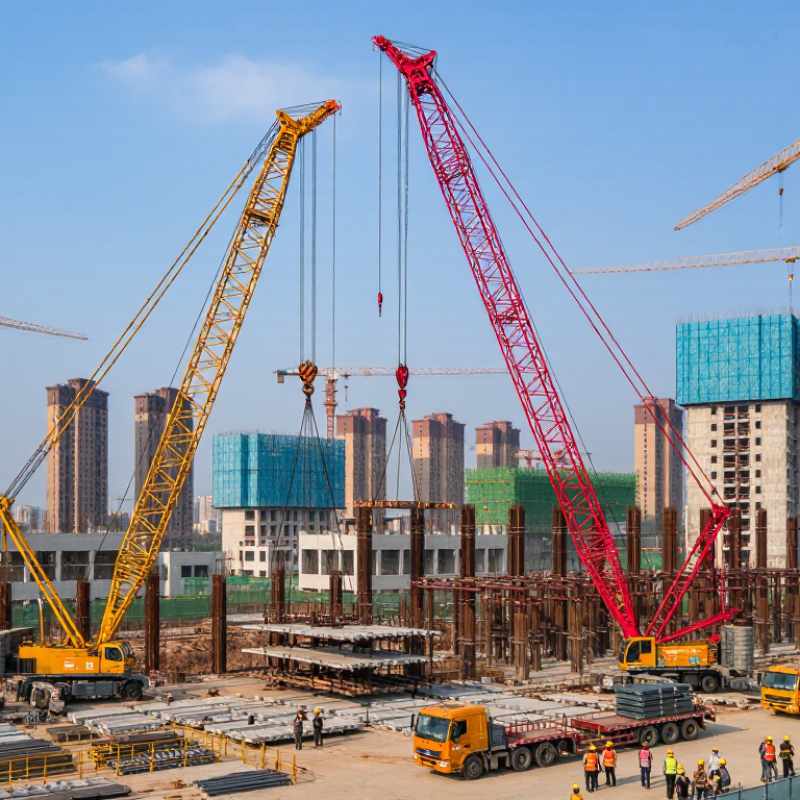
A tower crane is a fixed lifting machine built around a tall steel mast. Its horizontal jib reaches across a construction site. A trolley moves along the jib, while a hoist raises and lowers materials. The mast stays vertical. Counterweights balance the load. Operators usually work from a cabin or use remote controls with clear visibility.
In China, tower cranes support apartment complexes, bridges, industrial buildings, and large public projects. They lift rebar cages, concrete buckets, steel frames, glass panels, and prefabricated wall sections. Their height and working radius reduce ground traffic, especially on crowded urban sites. A project team normally checks the building height, maximum load, jib length, foundation condition, and local wind exposure before selecting equipment. A small mismatch can cause expensive delays.
Reliable operation depends on trained operators, qualified installation crews, and documented inspections. Technicians examine bolts, wire ropes, brakes, limit switches, electrical systems, and the climbing frame. Load charts must remain visible and easy to read. Weather matters too. Strong winds may require suspended lifting to stop and the jib to be positioned safely. In my experience, planning often looks precise on paper, but delivery schedules and changing site conditions create pressure. That assumption can fail. Regular communication between the supplier, engineer, supervisor, and operator helps prevent rushed decisions. Chinese construction sites also increasingly use monitoring systems for load, height, slewing angle, and operating time. These tools improve oversight, but they cannot replace judgment on the ground.
China’s Tower Crane Industry and Main Product Categories
China’s tower crane industry serves housing, industrial plants, bridges, ports, and renewable energy projects. Its supply chain includes steel fabrication, welding, electrical control, testing, logistics, and after-sales service. In practical purchasing, the machine is only one part of the decision. Factory process control matters too. A clean weld and accurate load chart can affect jobsite safety.
The main product categories include hammerhead tower cranes, flat-top tower cranes, luffing-jib tower cranes, and self-erecting tower cranes. Hammerhead models suit many standard building sites and offer familiar operating arrangements. Flat-top cranes help when several cranes work within one restricted airspace. Luffing-jib cranes fit dense urban areas because their jibs can lift steeply. Self-erecting models support smaller projects and faster setup. Details matter. Each category has limits.
Experienced buyers compare maximum load, tip load, working radius, lifting speed, mast height, and foundation design. They also review wind conditions, power supply, transport access, and local inspection requirements. Chinese suppliers may offer customized configurations, but customization needs clear technical drawings and acceptance criteria. I would not treat a catalog as proof. Factory audits, weld records, load testing, spare-parts planning, and operator training provide stronger evidence. Standards help, but they do not replace site judgment. A category can look clear on paper, yet real projects often expose uncomfortable gaps. That is where careful engineering review becomes essential.
China’s leading tower crane manufacturers serve projects ranging from residential towers to ports and industrial plants. Their specialties often reflect large-scale production, practical engineering, and export experience. Many offer flat-top, luffing-jib, and hammerhead tower cranes for different site conditions.
Flat-top models suit crowded urban projects because several cranes can work with limited overhead interference. Luffing-jib cranes perform better near airports, dense buildings, or narrow construction zones. Some manufacturers also produce modular mast sections and interchangeable jibs, which simplify transport and assembly. Engineers usually review lifting radius, maximum load, foundation design, wind exposure, and local electrical standards before recommending a configuration. Small details matter.
Chinese suppliers increasingly use load-moment limiters, anti-collision systems, remote monitoring, and variable-frequency drives. These systems can improve control and reduce unnecessary energy use. However, digital functions cannot replace trained operators or careful inspections. A reliable supplier provides test records, installation drawings, spare-part guidance, and technician support. Certification should match the destination market, not merely the factory’s domestic requirements.
Production scale is useful, but it is not everything. Some manufacturers respond quickly to custom height, voltage, or climate requirements, while others need clearer technical drawings from buyers. I have found that early communication prevents costly changes later. Yet even experienced teams can overlook foundation conditions or transport limits. That is why independent site checks, documented commissioning, and regular maintenance remain essential. Safety depends on the whole process.
Representative technical capabilities of common tower crane configurations used in construction projects. Values show typical maximum rated lifting capacity and maximum jib length, rather than company-specific product data.
Note: The figures are representative industry ranges compiled from commonly published technical specifications for these crane configurations. Actual capacity and jib length depend on the model, jib configuration, counterweight, mast height, and operating conditions.
China Top Tower Crane Manufacturers and Suppliers
How to Evaluate Reliable Tower Crane Suppliers in China
A reliable tower crane supplier should provide evidence, not impressive promises. Check the factory’s production area, welding procedures, testing equipment, and quality records. Photos are useful, but they are not enough. A video call can reveal more, especially when staff explain each process clearly.
Ask for load charts, technical drawings, material certificates, and inspection reports. Confirm whether the crane design suits your building height, wind conditions, lifting radius, and local power supply. Experienced suppliers should discuss foundation loads, climbing systems, safety devices, and spare parts without avoiding difficult questions. Their engineers should also explain installation and operator training in practical language.
Review independent project references from similar construction environments. Speak with previous customers when possible. Check how the supplier handles delays, damaged parts, warranty claims, and technical changes. A clear contract should define delivery dates, testing duties, documentation, and after-sales response times. Do not select the lowest quotation automatically. A cheaper crane may create higher costs through downtime or missing components. No supplier is perfect. I would still question any company that promises zero problems. On-site inspection may feel slow, yet it often exposes details that polished presentations hide.
| Evaluation Dimension | What a Reliable Supplier Should Provide | Practical Benchmark or Reference | How to Verify the Information | Priority |
|---|---|---|---|---|
| Applicable Standards | Clear identification of the design, manufacturing, inspection, and installation standards used for the proposed tower crane. | The documentation should identify applicable Chinese, European, or international standards, such as GB/T 5031, EN 14439, or ASME B30.3, according to the destination market. | Request the standard list in the technical proposal and confirm that the selected standards match local legal and site requirements. | High |
| Rated Capacity and Load Chart | Complete load charts showing maximum lifting capacity, rated capacity at each working radius, minimum radius, maximum radius, and operating height. | The load chart should be consistent with the exact jib length, counter-jib configuration, mast section, and working condition quoted. | Compare the signed load chart with the quotation, product drawings, nameplate, and third-party inspection documents. | High |
| Technical Configuration | Detailed specifications for jib length, lifting height, hoisting speed, trolley speed, slewing speed, mast section, anchoring method, and power supply. | All performance figures should be stated with operating conditions, such as rated load, empty-hook condition, voltage, frequency, and reeving arrangement. | Use a line-by-line technical comparison sheet and require written confirmation for every deviation from the project specification. | High |
| Safety and Limiting Devices | Safety systems for overload limitation, moment limitation, height limitation, trolley travel limitation, slewing limitation, and emergency stopping. | Safety devices should be listed individually, with operating limits, alarm functions, calibration procedures, and maintenance requirements. | Review the electrical schematic, safety-device list, commissioning checklist, and functional test records before shipment or installation. | High |
| Structural Quality Control | Documented controls for steel traceability, welding procedures, dimensional inspection, surface treatment, bolt quality, and non-destructive testing where required. | Critical structural parts should have identifiable material records, approved welding procedures, inspection results, and corrosion-protection specifications. | Request sample material certificates, weld inspection records, inspection plans, coating specifications, and production photographs linked to the order. | High |
| Quality Management System | A functioning quality management system covering design control, supplier control, incoming inspection, production inspection, final testing, and corrective action. | An ISO 9001 certificate can support the assessment, but the certificate should be valid, issued to the actual legal entity, and supported by production records. | Check the certificate scope, validity, issuing organization, factory address, and whether the audited site matches the manufacturing location. | High |
| Factory and Production Capability | Suitable fabrication, machining, painting, assembly, testing, storage, and loading facilities for the crane type and order quantity. | The supplier should be able to explain production capacity using verifiable information rather than only annual sales claims. | Arrange a video or on-site audit covering raw-material storage, welding areas, assembly areas, testing equipment, finished goods, and packing procedures. | Medium |
| Inspection and Testing | Pre-shipment inspection, dimensional checks, electrical tests, safety-device tests, trial operation, and any legally required inspection documentation. | Inspection records should include the crane serial number, inspection date, measured results, acceptance criteria, inspector, and corrective actions. | Use an agreed inspection and test plan with hold points for document review, visual inspection, functional testing, and final release. | High |
| Installation and Commissioning Support | Installation manuals, foundation or anchoring requirements, assembly procedures, commissioning instructions, and technical support during erection. | The supplier should clearly define whether installation supervision, operator training, commissioning, and local compliance support are included. | Request a written scope of work, required lifting equipment, installation sequence, personnel qualifications, and commissioning acceptance criteria. | High |
| Spare Parts Availability | A recommended spare-parts list covering electrical components, limit switches, braking parts, wire ropes, fasteners, sensors, and wear items. | Common replacement parts should have clear part numbers, technical specifications, interchangeability information, and estimated lead times. | Ask for a two-year spare-parts recommendation, stock policy, replacement procedure, and written confirmation of component availability. | Medium |
| Warranty Terms | Written warranty coverage for structural components, electrical systems, motors, gearboxes, safety devices, and manufacturing defects. | The contract should state the warranty period, start date, exclusions, response time, replacement responsibility, and transport arrangements for defective parts. | Compare the warranty clause in the quotation with the sales contract and request clarification of consumables, improper use, and installation-related exclusions. | High |
| After-Sales Response | A defined process for technical questions, fault diagnosis, remote support, service escalation, and urgent spare-parts requests. | A reliable supplier should provide named technical contacts, support channels, service hours, and a documented response procedure. | Test the communication process before ordering by submitting technical questions and checking response quality and response time. | Medium |
| Export and Documentation Capability | Commercial invoices, packing lists, bills of lading, certificates of origin where applicable, manuals, inspection records, and export packing documentation. | Documents should use consistent model numbers, serial numbers, quantities, weights, dimensions, and consignee information. | Request a redacted sample document package and confirm that the supplier understands the destination country’s import and compliance requirements. | Medium |
| Packaging and Shipment Protection | Export-suitable protection for painted steel parts, machined surfaces, electrical cabinets, motors, gearboxes, fasteners, and control components. | Packing should include moisture protection, impact protection, clear component identification, lifting marks, and a packing list matching each package. | Approve the packing method before shipment and require package photographs showing labels, internal protection, and container loading arrangements. | Medium |
| Commercial Transparency | A quotation that separates equipment price, optional configurations, inland transport, export packing, testing, installation support, spare parts, and taxes or duties. | The offer should identify currency, Incoterms, payment milestones, production lead time, quotation validity, and the treatment of price changes. | Compare at least three technically equivalent offers using the same specification, delivery term, inspection scope, and warranty requirements. | High |
| Contract Risk Control | Clear acceptance criteria, delivery milestones, delay remedies, document requirements, change-control procedures, and dispute-resolution terms. | The signed contract should reference the final technical specification, approved drawings, load charts, inspection plan, and spare-parts list. | Have the technical and commercial teams review the same final document set before issuing a purchase order or making the final payment. | High |
Note: Evaluation results should be based on the exact crane configuration, destination-country regulations, site conditions, and contract documents. Certificates and claims should be independently verified before purchase.
China’s leading tower crane manufacturers support projects through verified certifications and practical engineering controls. Buyers should request ISO 9001 quality records, product test reports, material certificates, and applicable conformity documents. These records should match the exact crane model, not a similar machine. Factory audits and third-party inspections can add confidence before shipment.
Export service should cover more than a sales quotation. Experienced suppliers prepare commercial invoices, packing lists, certificates of origin, and shipping documents. They also confirm voltage, plug standards, boom length, counterweight details, and destination port requirements. Cranes need strong protection during transport. Moisture barriers, labeled components, and numbered packages reduce delays at the job site. Small omissions can become expensive.
Installation requires a site-specific lifting plan, foundation review, anchorage checks, and trained technicians. Engineers should verify bolt torque, limit switches, load indicators, and emergency controls before commissioning. Training should include operators and maintenance staff. After-sales support matters just as much. Useful services include remote troubleshooting, spare-part identification, inspection schedules, and response records. Some suppliers provide local service partners, while others rely mainly on online guidance. That difference should be discussed clearly. No project is perfectly predictable. Weather, access restrictions, or incomplete drawings may change the plan. A reliable supplier documents these risks, admits limitations, and updates the customer before problems grow.