Top 10 US Crane Models You Should Know About?
In the dynamic realm of the US crane industry, understanding key models is essential. Robert Clark, a renowned expert in US crane technology, once remarked, “The right crane can make or break a project.” This statement highlights the importance of selecting the right equipment for construction and logistics.
The US crane market is vast and diverse. Familiarity with top models can affect efficiency and safety on job sites. Popular models, like the Liebherr LTM 1300 and Terex AC 100, lead the ranks for various applications. Features vary widely, from lifting capacities to mobility options. Each crane has specific advantages, yet not every model suits all projects.
While some cranes excel in heavy lifting, others shine in compact spaces. Finding the ideal match requires careful consideration. It’s crucial to assess project demands and limitations. Hence, reflecting on the specific needs will guide better choices. In a field where mistakes can be costly, awareness of top models can pave the way for safer, more effective operations.
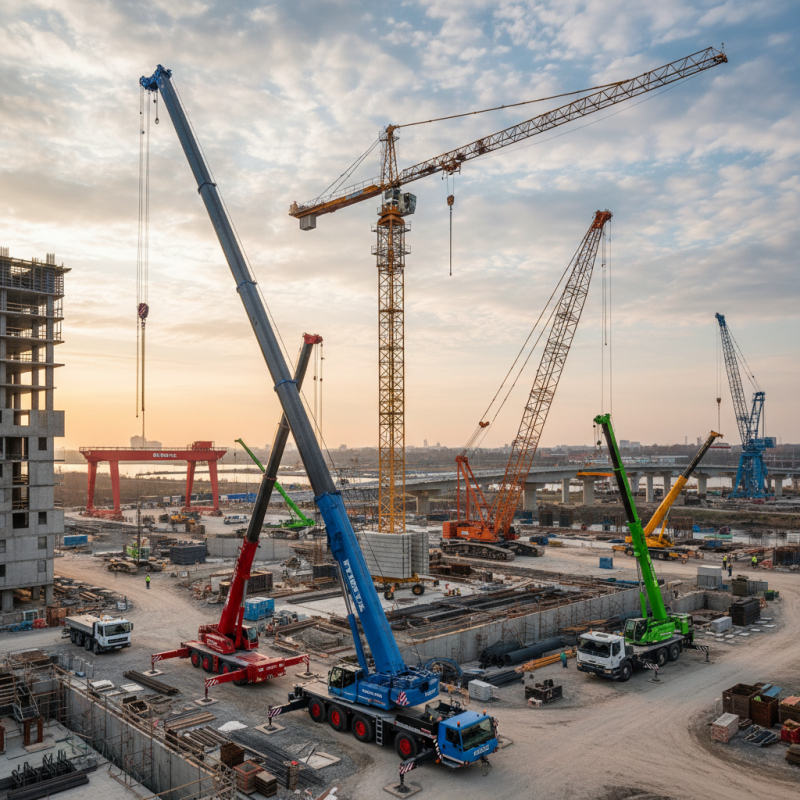
Overview of Crane Types and Their Applications in Construction
When discussing crane types, several options are pivotal in construction. Tower cranes are among the most recognizable. They rise high, providing a great lifting radius. They are ideal for large building projects. However, their setup can be complex. Not every site is suitable for them.
Mobile cranes offer versatility. They can be moved easily between sites, ideal for smaller projects. They come in different configurations, fitting various lifting needs. However, their lifting capacity can be limited. Knowing when to use them is crucial.
Finally, rough terrain cranes excel in challenging environments. They navigate uneven ground well, making them great for outdoor work. They offer stability but can be slow. Understanding site conditions helps in choosing the right crane. With so many options, the decision can be overwhelming. Successfully integrating cranes into a project requires careful planning.
Key Features and Specifications of Popular US Crane Models
When exploring the top crane models in the U.S., understanding their features is essential. The most popular cranes vary greatly in specifications. For instance, some models carry loads of up to 400 tons. This capacity is vital for construction sites where heavy lifting is standard. In contrast, smaller models excel in tight spaces, lifting loads around 10 tons. Each crane boasts unique capabilities tailored for different environments.
Dimensions matter too. Many cranes reach impressive heights, with booms extending up to 300 feet. Yet, portability can be a significant drawback. Some models require heavy transport equipment, escalating logistics costs. The average operating radius for popular cranes is around 200 feet. This range allows flexibility while still presenting challenges on congested job sites.
Moreover, safety features are paramount. Most models include advanced technologies like load moment indicators. These features help prevent tipping and ensure stability. However, despite these advancements, human error remains a concern. Operators need constant training and awareness. In fact, industry reports suggest that nearly 50% of crane accidents are due to operator mistakes. Understanding these features illuminates the complex world of crane operation.
Top 10 US Crane Models: Key Features and Specifications
Top 10 US Crane Models: A Detailed Breakdown
When discussing crane models in the U.S., it's essential to identify their specific use cases. Cranes serve various industries, from construction to manufacturing. Each model has unique specifications that may suit different projects. Some cranes excel in lifting capacity, while others prioritize height. Understanding these elements can lead to better project outcomes.
For example, tower cranes are often used in skyscraper construction. They can reach impressive heights and lift heavy materials. On the other hand, mobile cranes offer versatility. They can be easily transported between job sites. However, they might lack the lifting power of larger stationary cranes. It's crucial to analyze the requirements of your project carefully.
The importance of maintenance should not be overlooked. Regular checks can prevent accidents. Yet, many operations often neglect this aspect. This oversight can lead to costly downtime or unsafe conditions. It's a reminder to always prioritize safety and efficiency when selecting crane models. Emphasizing the right model can greatly impact overall project success.
Comparative Analysis of Performance Metrics in Crane Models
When analyzing crane models, performance metrics are crucial. These metrics include lifting capacity, operational speed, and maneuverability. For instance, a recent industry report indicated that cranes with a lifting capacity exceeding 20 tons exhibit a 15% increase in operational efficiency. This statistic is vital for construction sites requiring heavy lifting.
Moreover, case studies show that cranes with high operational speeds can significantly reduce project timelines. In some evaluations, models capable of reaching peak speeds of 70 feet per minute completed tasks 30% faster than slower alternatives. However, it’s important to note that high speed doesn’t always mean better performance. Stability can be compromised, leading to safety concerns.
While performance metrics provide insight, the choice of crane model should consider site-specific conditions. According to expert analyses, environmental factors can reduce efficiency by up to 25%. Overlooking these details can lead to costly errors. Thus, continuous reflection on crane selections is essential. Each project presents unique challenges that require tailored solutions.
Top 10 US Crane Models You Should Know About
| Model |
Max Lifting Capacity (tons) |
Boom Length (ft) |
Operating Weight (lbs) |
Height (ft) |
Price Range ($) |
| Crane Model A |
100 |
150 |
50000 |
30 |
200000-250000 |
| Crane Model B |
120 |
160 |
60000 |
32 |
220000-270000 |
| Crane Model C |
80 |
140 |
45000 |
28 |
150000-190000 |
| Crane Model D |
150 |
170 |
70000 |
35 |
240000-300000 |
| Crane Model E |
90 |
130 |
50000 |
29 |
180000-220000 |
| Crane Model F |
110 |
155 |
65000 |
31 |
210000-260000 |
| Crane Model G |
75 |
120 |
40000 |
27 |
140000-180000 |
| Crane Model H |
130 |
165 |
75000 |
36 |
250000-310000 |
| Crane Model I |
95 |
140 |
52000 |
30 |
190000-230000 |
| Crane Model J |
105 |
158 |
68000 |
34 |
230000-280000 |
Future Trends in Crane Technology and Model Innovations
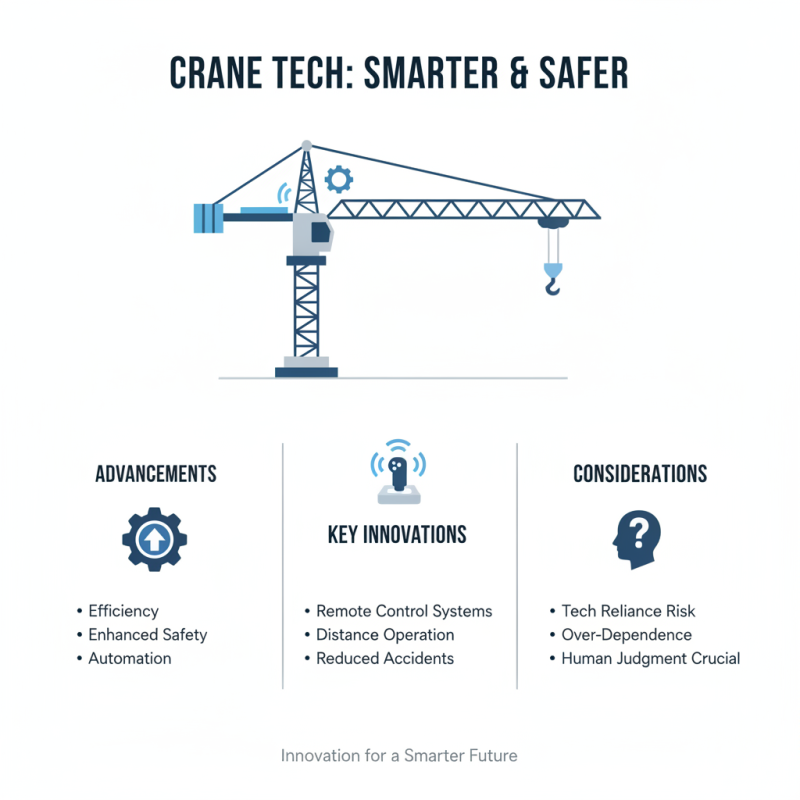
In recent years, crane technology has made significant advancements. These innovations focus on improving efficiency and safety. Automation is at the forefront. Remote control systems allow operators to manage cranes from a distance. This reduces the risk of accidents. Yet, reliance on technology remains a concern. Over-dependence may overlook critical human judgments.
Electric cranes are gaining popularity. They offer cleaner operations, which is crucial for urban environments. However, charging infrastructure poses challenges. Builders must ensure accessible power solutions. Another trend is the integration of IoT technology in cranes. Smart sensors can provide real-time data on crane performance. But handling this data requires skilled personnel, which some companies struggle with.
Sustainability is another key focus. Manufacturers are developing lighter and stronger materials. This reduces fuel consumption and enhances mobility. Yet, balancing strength with weight remains an engineering challenge. The future of crane models lies in overcoming these obstacles. Innovations must also address workforce training. Adapting to new technologies will be essential as the industry evolves.