What is a Trailer Crane and How Does It Work?
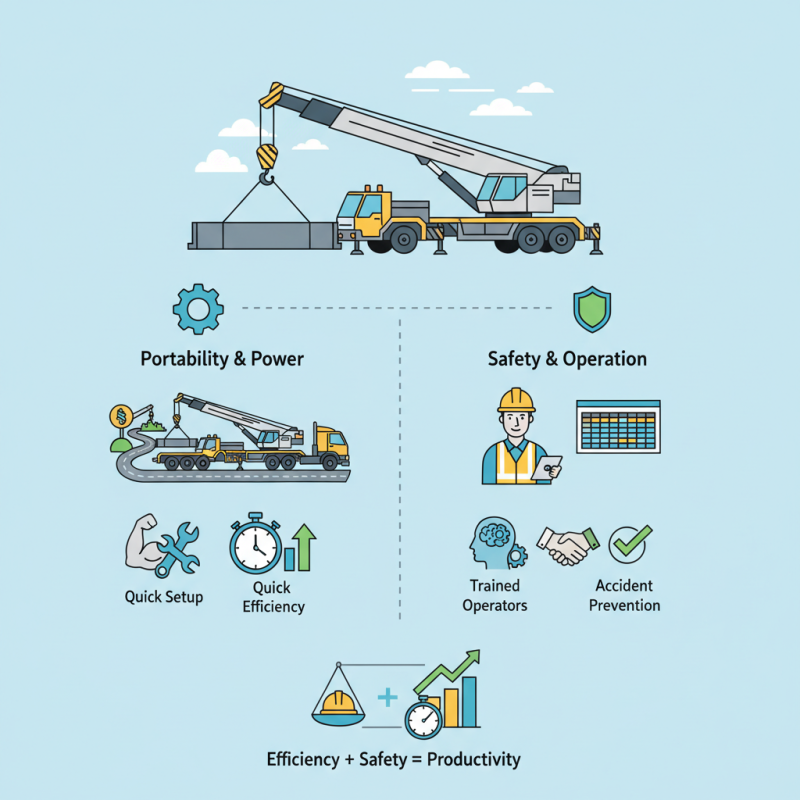
In the construction and heavy lifting industries, the utility of a trailer crane is undeniable. John Smith, a respected expert in crane technology, once remarked, “Trailer cranes combine portability and power, making them ideal for diverse job sites.” This statement encapsulates the essence of trailer cranes, which are designed to be both functional and flexible.
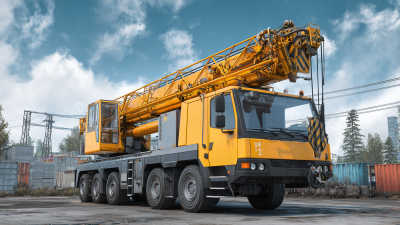
A trailer crane is a mobile lifting device mounted on a trailer, enabling easy transport. These cranes are particularly beneficial for projects in remote locations. They offer the advantage of quick setup and relocation, which is essential for efficiency. When used properly, a trailer crane enhances productivity on the site, allowing workers to lift heavy materials without hassle.
However, safety remains a critical concern. Improper usage can lead to accidents or equipment failure. Operators must be trained to understand the capabilities and limits of trailer cranes. As John Smith emphasizes, knowing your equipment is key to safe operations. The balance between efficiency and safety requires constant attention and improvement in practices.
What is a Trailer Crane: Definition and Overview
A trailer crane is a mobile lifting machine mounted on a trailer. It offers flexibility and ease of transport to job sites. These cranes are essential for safely lifting and moving heavy materials. When utilizing a trailer crane, understanding its mechanics is crucial. It usually functions through hydraulic systems that enhance lifting power while ensuring stability.
Operating a trailer crane requires careful planning. Assess the load capacity before lifting any object. Each crane has specific limits, and exceeding these can result in accidents. Always perform pre-operation checks on the crane's components. Look for any visible damages or wear and tear. It’s a small step that can prevent significant risks down the line.
Tips for effective use include securing the load properly before lifting. Ensure that the load is evenly distributed. An unbalanced load can lead to tipping. Additionally, maintain proper communication among the crew to avoid misunderstandings. Reliable teamwork can enhance safety and efficiency. Remember, while trailer cranes are versatile, they demand respect and cautious handling.
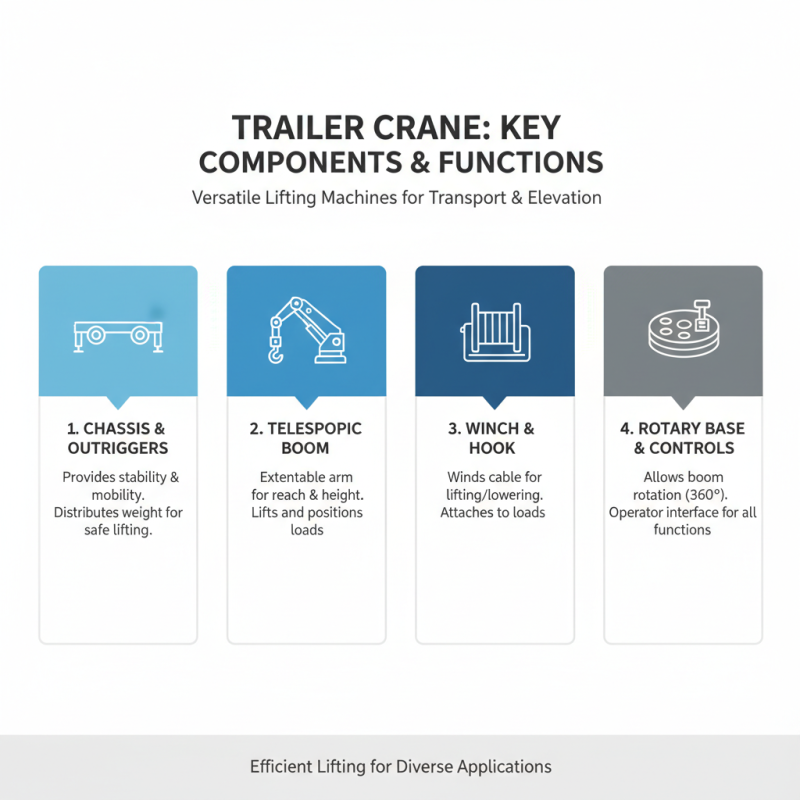
Key Components of a Trailer Crane and Their Functions
Trailer cranes are versatile lifting machines. They combine transportation and lifting capabilities in one unit. Understanding their key components is essential for their effective use in various applications.
The main structure of a trailer crane is the chassis. It supports the overall weight and stability during operations. A notable report from the International Association of Lifting Engineers indicates that a well-designed chassis improves safety by 30%. The boom is another critical component. It extends and retracts to lift loads. Data suggests that optimal boom angles can enhance load capacity by nearly 15%. The control system, often hydraulic, allows operators to maneuver the crane precisely. This system's failure can lead to severe accidents, emphasizing the need for regular maintenance checks.
Another vital part is the winch. This component enables the crane to lift and lower heavy items smoothly. Recent statistics show that improper winch operation leads to over 25% of lifting incidents. Operators must be trained effectively to use the winch safely. Each component of a trailer crane has a specific role that contributes to its overall function. With the right attention, these machines can perform efficiently, but neglecting maintenance or operator training can lead to significant risks.
How Trailer Cranes Operate: Mechanisms and Controls
Trailer cranes are versatile machines used in various industries, from construction to logistics. Their operation relies heavily on advanced mechanisms and control systems. Generally, these cranes consist of a telescopic boom that can extend and retract based on the project requirements. This flexibility allows for a diverse range of lifting tasks.
The controls on trailer cranes can be intricate. Most cranes feature dual operating systems: one for ground control and another for remote operation. Ground controls are typically found on the trailer itself, allowing a direct line of sight. Remote systems enhance safety by enabling operators to maneuver from a safe distance. A recent industry report indicates that enhanced remote operations have improved safety compliance by up to 30%. However, reliance on technology also raises questions about training opportunities for operators.
Efficiency varies across crane models. Some may require frequent manual adjustments or settings, which can slow down operations. Additionally, improper calibration can lead to safety risks. Regular maintenance and operator education are crucial. Training programs must evolve with technology, creating a gap between novice operators and expert users. This reflection on training needs is fundamental as the industry moves forward.
Applications of Trailer Cranes in Various Industries
Trailer cranes are versatile machines used in many industries. Their design allows easy mobility and quick setup on job sites. This flexibility makes them invaluable for tasks where traditional cranes may be impractical.
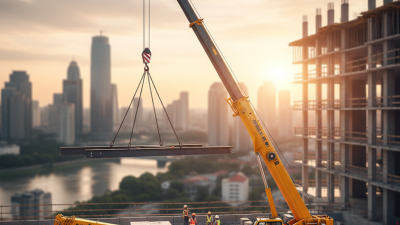
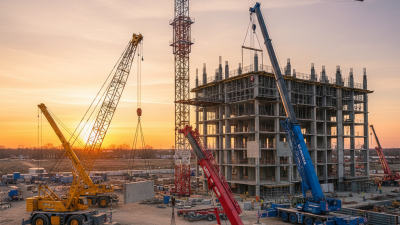
In construction, trailer cranes play a crucial role. They lift and move heavy materials efficiently. Workers often rely on these cranes for placing beams and trusses. In the utilities sector, trailer cranes assist in installing and repairing power lines. Their compact size allows access to tight locations that larger equipment cannot reach.
However, using trailer cranes requires careful planning. Operators must be aware of load limits and site conditions. Mistakes in operation can lead to costly errors or accidents. Training and adherence to safety protocols are essential for successful crane operations. Each industry faces unique challenges with trailer cranes. Addressing these challenges requires experience and constant learning.
Applications of Trailer Cranes in Various Industries
Safety Standards and Regulations for Trailer Crane Use
Trailer cranes are powerful tools used in various construction projects. Understanding their safety standards is crucial for efficient operation. These regulations ensure the well-being of the crew and the integrity of the equipment. Most importantly, compliance helps prevent accidents that can disrupt work and endanger lives.
One key aspect is operator certification. Operators should be properly trained and familiar with all specifications. Regular inspections of the crane equipment are vital too. They should include checks on the stability and load capacities. It's essential to adhere to weight limits. Overloading can lead to severe accidents. In addition, clear communication signals among the crew can improve overall safety during operations.
Another important regulation involves site assessment. Before operating a trailer crane, a thorough evaluation of the surroundings is necessary. This includes identifying overhead hazards and considering ground conditions. Unsafe environments increase risk significantly. Everyone involved should be aware of emergency procedures. Accidents can happen even with precautions in place. Continuous training and a culture of safety are not just recommended; they are necessary.