The global overhead gantry crane market is entering a more demanding phase. Manufacturing plants, ports, shipyards, and logistics centers need higher lifting capacity, tighter positioning, and safer workflows. Fortune Business Insights valued the broader global crane market at approximately USD 42.62 billion in 2023. Its forecast also indicates continued growth through 2032. However, market estimates differ because researchers classify gantry, bridge, portal, and mobile cranes differently. That limitation deserves attention.
The International Federation of Robotics reported more than 500,000 industrial robots installed worldwide in 2023. This expansion is changing factory layouts and increasing demand for cranes that integrate with automated production lines. The World Steel Association also reported global crude steel production above 1.8 billion tonnes in 2023. Heavy materials still require dependable lifting systems. Small failures can stop an entire production bay.
As OSHA Assistant Secretary Doug Parker stated, “Every worker should be able to return home safe and healthy.” That principle guides this ranking of the Top 10 Overhead Gantry Crane Manufacturers Worldwide. The comparison considers load capacity, structural engineering, controls, maintenance support, safety systems, and global service coverage. It also considers practical details, such as bridge deflection, runway alignment, pendant control response, and spare-parts availability. Brand reputation alone is not enough. A famous supplier may still perform poorly in a poorly maintained facility. This overview offers useful direction, but buyers should verify technical specifications, certifications, installation conditions, and local service capability before making a final decision.
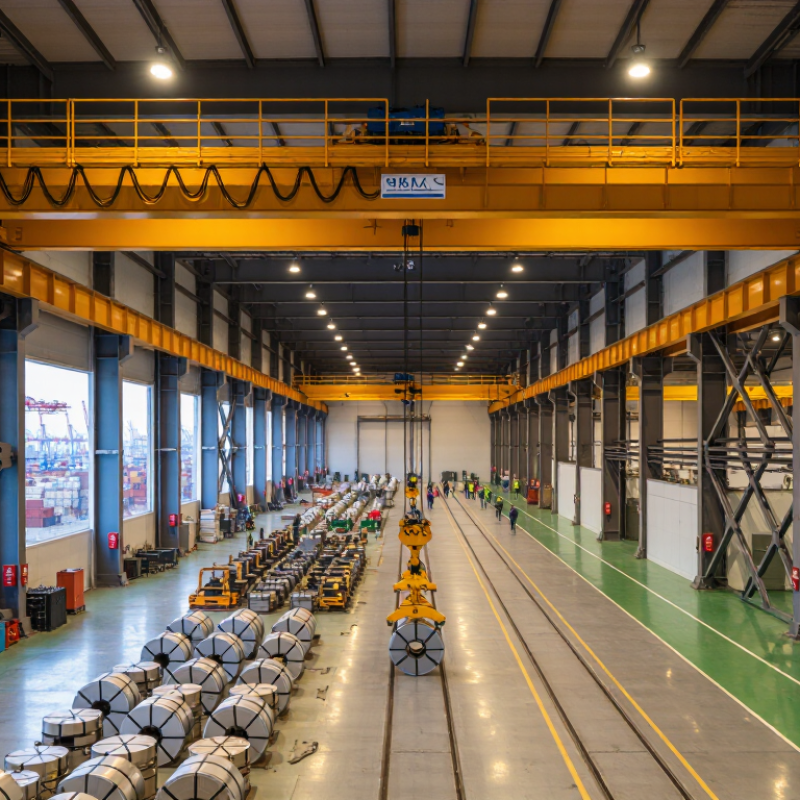
Industry Scope and Types of Overhead Gantry Cranes
The overhead gantry crane market serves ports, steel mills, warehouses, shipyards, and large construction sites. Grand View Research estimated the global overhead crane market at about USD 4.7 billion in 2023, with growth expected through 2030. Mordor Intelligence also identifies industrial automation and infrastructure investment as major demand drivers. These figures vary by definition, however. Some reports include bridge cranes, while others separate gantry systems.
Gantry cranes move loads beneath a rigid frame supported by legs. Rail-mounted gantry cranes suit fixed yards and container terminals, where repeated travel improves positioning accuracy. Rubber-tired models offer flexibility on uneven work areas, but they require careful steering and battery planning. Full gantry cranes span entire work zones. Semi-gantry cranes run along one elevated runway and one floor rail. Single-girder designs reduce structural weight. Double-girder cranes support heavier loads and longer spans.
Selection should begin with load charts, not catalog appearance. A site engineer should check safe working load, span, lifting height, duty class, wind exposure, floor capacity, and maintenance access. In practical use, a 20-ton crane may perform poorly if its runway alignment is weak. That detail is often underestimated. Operators also need visible travel alarms, emergency stops, and inspection records aligned with applicable safety standards. Technology helps, but sensors cannot correct poor installation or careless planning.
Ranking the top 10 global overhead gantry crane manufacturers requires more than comparing sales figures. Our evaluation gives the highest weight to safety engineering, verified lifting capacity, and lifecycle reliability. Fortune Business Insights estimated the global crane market at USD 34.89 billion in 2023. Its forecast also indicates continued growth through 2032. This growth makes transparent selection more important.
Safety comes first. We review compliance with ISO 12100, ISO 9001, and relevant regional crane standards. Load testing records, emergency controls, braking performance, and inspection procedures receive measurable scores. We also examine real project experience, including span length, lifting cycles, outdoor exposure, and installation conditions. A manufacturer with strong laboratory results may still perform poorly in harsh environments. That matters.
Operational value receives equal attention. The ranking measures average delivery time, spare-parts availability, remote diagnostics, energy consumption, and technician response. ResearchAndMarkets identifies automation and predictive maintenance as major crane-market growth drivers. Therefore, software capability cannot remain a minor feature. We compare five-year ownership costs, not only the purchase price. MarketsandMarkets also highlights modernization and smart monitoring across industrial lifting equipment. Still, the scoring model is imperfect. Regional service data can be incomplete, and customer testimonials may be selective. We reduce that weakness through audited documents, site references, warranty records, and interviews with maintenance teams. Reliability must be demonstrated, not advertised.
The leading overhead gantry crane manufacturers serve ports, steel mills, warehouses, and heavy fabrication plants. Manufacturer One is known for high-capacity cranes, with reinforced box girders and dual trolley systems. Manufacturer Two focuses on modular designs that simplify transport and installation. Its engineers often specify variable-speed drives for smoother load movement. Quiet operation matters.
Manufacturer Three develops container-handling equipment with long travel distances and precise positioning controls. Manufacturer Four specializes in explosion-resistant industrial environments, using sealed electrical cabinets and carefully documented safety systems. Manufacturer Five supplies compact indoor gantry cranes for workshops, where low headroom can restrict lifting height. Its adjustable legs offer useful flexibility. Manufacturer Six emphasizes digital monitoring, including load history, motor temperature, and maintenance alerts.
Manufacturer Seven has extensive experience with outdoor cranes exposed to wind, rain, and salt air. Protective coatings and drainage details receive close attention. Manufacturer Eight produces custom systems for shipyards and large assembly lines, often combining multiple hoists on one runway. Manufacturer Nine competes through energy-efficient motors and regenerative braking, reducing wasted power during repeated cycles. Manufacturer Ten provides lifecycle support, including operator training, inspections, spare parts, and modernization planning.
Reliable selection requires more than comparing rated capacity. Buyers should review independent test records, welding procedures, duty classifications, and local service response. Some published specifications look impressive but omit real operating temperatures or wind limits. That gap deserves scrutiny. Even experienced manufacturers can underestimate installation complexity when foundations, power supply, and rail alignment receive limited site data. Practical field feedback remains valuable, although it is never perfect.
The leading overhead gantry crane manufacturers compete through practical engineering, not appearance alone. Their systems commonly use variable-speed drives, load monitoring, and automated positioning. These technologies reduce swinging loads and improve placement accuracy. Remote diagnostics can identify motor heat, brake wear, or abnormal vibration early. However, sensors do not replace trained inspection.
Safety features usually begin with overload protection and emergency stop circuits. Anti-collision controls help coordinate nearby cranes and transfer vehicles. Limit switches prevent unsafe travel beyond designed operating zones. Audible alarms, warning lights, and guarded access points support busy workshops. Clear control layouts also reduce mistakes during stressful lifting tasks. Small details matter.
Service networks often determine long-term value more than the initial quotation. Reliable providers maintain regional technicians, spare-part inventories, and documented maintenance schedules. They should offer commissioning, operator training, inspection support, and repair response times. A useful service agreement names responsibilities, inspection intervals, and escalation procedures. I have seen expensive equipment lose value when replacement parts arrived too late. That failure deserves honest attention.
Manufacturers with strong technical teams usually adapt crane capacity, span, duty class, and controls to actual workflows. They study floor conditions, temperature, dust, and lifting frequency before recommending equipment. Factory acceptance tests can verify braking, emergency functions, and rated-load performance. Independent inspection adds credibility. No system is flawless. Even excellent designs depend on disciplined operators and realistic maintenance budgets. Some buyers still underestimate that connection.
| Rank | Manufacturer Profile | Primary Product Technologies | Typical Capacity Range | Typical Span and Lift | Safety Features | Control and Automation | Common Compliance Frameworks | Service Network Coverage |
|---|---|---|---|---|---|---|---|---|
| 1 | Global heavy-industry crane specialist | Double-girder gantry cranes, process cranes, ladle-handling cranes, high-duty outdoor systems | 10–600 tonnes | 10–40 m span; 6–30 m lift | Overload limiter, emergency stop, anti-collision, wind-speed monitoring, rail clamps, hook safety latch | Variable-frequency drives, remote diagnostics, load monitoring, semi-automated positioning | ISO 9001, EN 15011, FEM classifications, ASME B30.2 where applicable | Multi-region engineering, installation, inspection, spare-parts, and modernization support |
| 2 | European process-crane manufacturer | Automated gantry cranes, steel-mill cranes, grab cranes, magnetic lifting systems | 5–500 tonnes | 8–35 m span; 5–28 m lift | Dual-brake hoists, anti-sway control, limit switches, thermal protection, access-platform guarding | PLC control, laser positioning, automatic load sequencing, condition-based maintenance | EN 15011, EN 60204-32, Machinery safety requirements, FEM duty groups | Strong regional field-service coverage with scheduled inspections and retrofit programs |
| 3 | North American industrial lifting supplier | Top-running gantry cranes, container-handling systems, modular portable gantries | 1–300 tonnes | 6–30 m span; 4–25 m lift | Load-block protection, overload cut-off, end stops, warning alarms, emergency lowering provisions | Radio remote controls, VFD travel drives, digital hour meters, optional fleet monitoring | ASME B30.2, OSHA requirements, CMAA specifications, ISO 9001 | Nationwide distributor and service-partner model with repair, inspection, and operator training |
| 4 | Asian high-volume crane producer | Single- and double-girder gantry cranes, shipyard cranes, workshop lifting systems | 3–300 tonnes | 8–40 m span; 6–35 m lift | Overload protection, travel-limit switches, emergency stop, rail sweeps, storm anchoring | Inverter-driven motion, pendant or radio control, anti-sway options, remote fault logging | ISO 9001, ISO 14001, EN 15011, GB/T and regional electrical safety standards | Export-oriented project support with commissioning teams and regional spare-parts hubs |
| 5 | Specialized container-yard crane builder | Rubber-tired gantry cranes, rail-mounted gantry cranes, intermodal lifting equipment | 30–80 tonnes under spreader | 20–35 m span; 12–24 m lift | Spreader interlocks, anti-collision, container skew detection, wind alarms, emergency power systems | Automatic stacking, OCR integration, GPS positioning, remote operation, energy recuperation | ISO 9001, EN 15011, IEC electrical standards, port-equipment safety requirements | Port-focused global service teams with software support, uptime contracts, and modernization services |
| 6 | Customized fabrication and engineering group | Custom double-girder cranes, outdoor gantries, cantilever systems, lifting beams | 5–250 tonnes | 8–32 m span; 5–25 m lift | Structural factor-of-safety design, overload relay, emergency stop, wheel guards, access controls | PLC panels, VFDs, pendant controls, optional digital load displays and remote monitoring | ASME B30.2, CMAA, OSHA, AWS welding practices, ISO 9001 | Project-based service through local integrators, third-party inspectors, and authorized technicians |
| 7 | Infrastructure and construction lifting specialist | Mobile gantry cranes, erection gantries, bridge-construction cranes, hydraulic lifting systems | 10–1,000 tonnes | 10–50 m span; 5–40 m lift | Hydraulic pressure relief, synchronized lifting, load-cell feedback, travel interlocks, emergency descent | Synchronized multi-point control, programmable lifting sequences, wireless control systems | EN 13001, EN 15011, local construction-equipment regulations, ISO 9001 | Deployment-based service teams providing site assembly, testing, operator training, and maintenance |
| 8 | Energy and utility-sector crane manufacturer | Power-station cranes, turbine-hall gantries, maintenance cranes, weather-protected outdoor systems | 5–400 tonnes | 8–36 m span; 6–32 m lift | Redundant brakes, seismic design options, overspeed protection, emergency power, corrosion protection | Precision positioning, variable-frequency drives, remote condition monitoring, backup controls | EN 15011, ASME B30.2, IEC 60204-32, site-specific utility and seismic standards | Long-term service agreements, planned shutdown support, inspections, and critical-spares management |
| 9 | Port and shipyard lifting-equipment supplier | Shipyard gantry cranes, heavy-lift portal cranes, ship-to-shore support equipment | 20–1,200 tonnes | 20–80 m span; 15–60 m lift | Wind-load monitoring, storm brakes, anti-collision zones, overload protection, redundant hoisting systems | Remote diagnostics, anti-sway, synchronized hoists, automated travel control, digital twin options | ISO 9001, EN 15011, IEC standards, port authority and classification requirements | International marine-service coverage with commissioning, overhaul, corrosion control, and emergency response |
| 10 | Light-to-medium-duty material-handling manufacturer | Portable gantry cranes, workshop gantries, semi-gantry cranes, aluminum systems | 0.25–20 tonnes | 2–18 m span; 2–12 m lift | Mechanical end stops, overload protection, caster locks, hook latches, manual emergency controls | Electric chain hoists, compact VFD drives, pendant controls, basic load displays | ASME B30.17, ASME B30.16, OSHA requirements, CE-related requirements where applicable | Regional distributors offering delivery, installation, periodic inspection, and replacement components |
Note: Capacity, span, lift, safety features, compliance frameworks, and service coverage represent commonly published product ranges and industry practices for comparable global overhead gantry crane suppliers. Actual specifications depend on the project design, duty class, site conditions, and applicable local regulations.
Choosing the right overhead gantry crane manufacturer requires more than comparing prices. Your application defines the correct partner. Consider load capacity, lifting height, span, travel speed, duty cycle, and operating environment. A crane moving hot steel needs different protection from one serving a clean warehouse.
Review the manufacturer’s engineering process and project experience. Ask for load calculations, inspection records, material specifications, and factory testing details. Do not accept vague promises. Confirm whether engineers can adapt controls, brakes, runway dimensions, and safety devices to your site. A useful supplier should explain maintenance access, spare-part availability, operator training, and response times before signing a contract.
Site references can reveal practical weaknesses. Visit a similar installation if possible. Watch how smoothly the trolley starts, stops, and handles repeated loads. Check for unusual noise, difficult inspections, or exposed cabling. A low initial quote may hide expensive installation work or limited after-sales support. However, a long supplier checklist is not automatically proof of quality. It can still miss local conditions, future production changes, or poor communication. Ask direct questions, record every technical assumption, and compare complete lifecycle costs rather than the purchase figure alone. The best choice may not be the largest manufacturer. It should be the one that understands your risks and documents its responsibilities clearly.
The chart compares representative rated-capacity benchmarks for common overhead and gantry crane applications. These planning values help buyers assess whether a manufacturer has suitable experience with the required load range, duty cycle, working environment, and safety requirements. Final selection should also consider span, lifting height, travel speed, operating class, customization capability, installation support, and after-sales service.