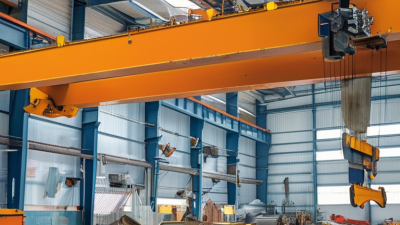
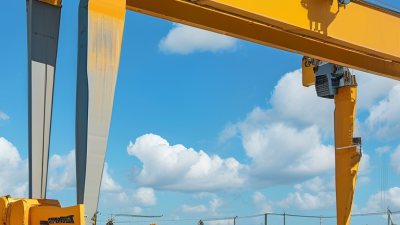
A gantry crane supports its bridge on legs that travel along wheels or rails, rather than relying entirely on a building’s overhead structure. That simple difference makes it useful in shipyards, warehouses, fabrication shops, and outdoor storage areas. Picture a steel frame straddling a work zone, with a hoist moving a load across the span. The arrangement looks straightforward. Choosing the right one is not.
Gantry cranes come in several forms, each suited to different loads and workplaces. Single-girder models can serve lighter-duty tasks and smaller spans. Double-girder designs often provide greater lifting capacity or hook height, though they need more space and can cost more. Portable gantry cranes can be repositioned for occasional lifts. Rubber-tired models travel across suitable paved surfaces, while rail-mounted cranes follow a fixed route. Semi-gantry cranes use one leg on a runway and the other side on an elevated track. Details matter: floor condition, span, lift height, travel path, and operating frequency can all affect the choice. A compact crane may fit neatly under a low roof but leave too little clearance for a tall load. This guide explains the main gantry crane types and the practical differences between them. It also points out where a type’s apparent advantages may not match the job. Real installations vary, and specifications should be checked against the actual site and lifting requirements. The right choice is rarely just the biggest crane.
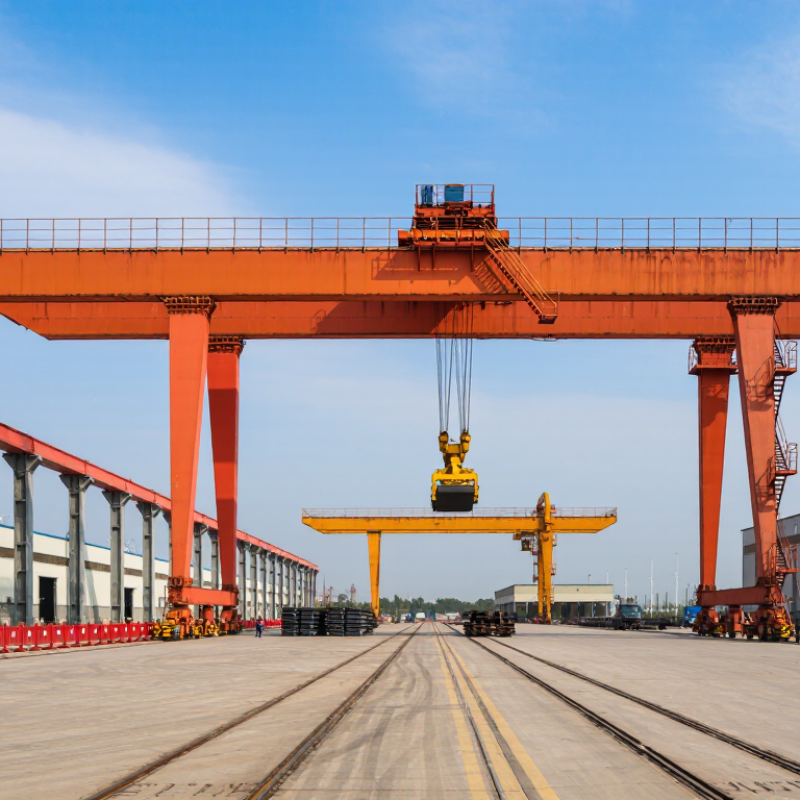
Gantry cranes are grouped by support frame, girder design, and travel method. A full gantry stands on legs at both ends of its bridge. Its wheels or rail trucks move along floor-level tracks. This layout suits outdoor yards and large indoor bays. It does not need a building runway. A semi-gantry crane has one end supported by a building runway and the other by floor-running legs. It can serve a work area beside a wall while keeping floor space open. Check the building structure carefully. Added loads can matter.
Single-girder and double-girder designs describe the bridge, not the crane’s support arrangement. Single-girder models are often simpler for lighter loads and moderate spans. Double-girder frames can offer greater lifting capacity, hook height, or service access, depending on the design. They may also need more headroom and stronger supporting surfaces.
Travel creates another useful category. Rail-mounted gantries follow a fixed path and suit repeated moves between work areas. Rubber-tired versions can reposition across a yard, but ground conditions and tire loading deserve attention. Portable gantries, often fitted with casters, work for lighter tasks and short moves. They are not automatically safe on uneven floors. In practice, categories overlap; capacity, span, lift height, duty cycle, and site conditions should guide selection, not the label alone.
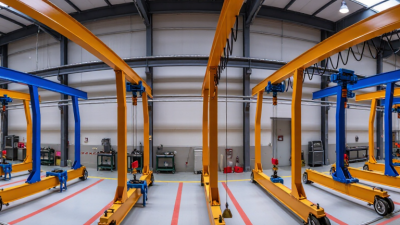
A full gantry crane has legs on both sides of its load, running on floor-level rails or wheels. This layout can span an outdoor yard, a fabrication bay, or a shipbuilding area without relying on building columns. Common configurations include single- and double-girder bridges. Single girders suit lighter duties and lower headroom; double girders often allow greater capacity, lift height, and auxiliary platforms. Actual limits depend on the engineered design, duty cycle, and site conditions.
Full gantries may be fixed-span or adjustable, with cantilevers extending beyond the legs to serve adjacent work zones. Rail-mounted versions suit repeatable paths; rubber-tired versions can move between work areas but need firm, level ground. A U.S. Bureau of Labor Statistics report recorded 1,075 fatal work injuries in construction in 2023. That figure is not crane-specific, but it underscores why travel routes, load swing, and operator visibility deserve careful review. Small details matter.
Tips: Measure hook height, span, and clearance beneath roof beams before choosing a configuration. Check rail foundations or pavement capacity, then map pedestrian routes and emergency access. A wider span may improve coverage, but can increase structural demands and cost. This trade-off is easy to underestimate.
Source: U.S. Bureau of Labor Statistics, Census of Fatal Occupational Injuries, 2023.
Among gantry crane designs, a semi-gantry crane suits work areas where one side has a supporting building structure and floor space is tight. One side runs on an elevated runway; the other travels on a floor-level rail. This arrangement can leave more open space than a full gantry system. It may suit a machine bay, warehouse edge, or fabrication shop. Picture a steel beam lifted from a pallet, carried across the bay, then lowered beside a cutting table. Clearance matters.
Before choosing one, check the runway height, rail span, hook approach, and maximum load, including lifting attachments. A short hook approach can leave a dead zone near a column. Floor rails need a level, well-supported path; uneven concrete can cause travel problems. The building-side runway also needs a structural capacity check, rather than an assumption based on appearance. Controls, end stops, travel limits, and inspection access should fit the actual duty cycle. Small details matter. A semi-gantry crane may be practical when a wall or column line can support one runway, but the layout is not perfect for every shop. Columns can obstruct long loads, and floor rails may conflict with pedestrian routes. Verify clearances with a measured layout and a realistic load path; drawings alone can miss awkward turns.
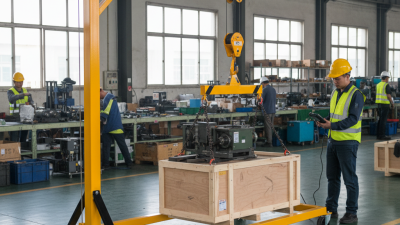
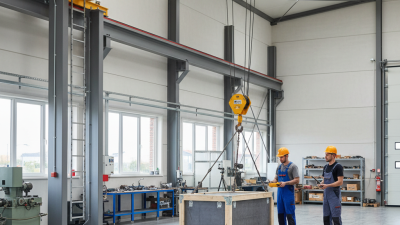
Portable and mobile gantry cranes suit jobs where a fixed runway would be impractical. A portable model typically uses a lightweight, adjustable frame and locking casters. Crews can roll it between work bays, then position the legs around a machine or pallet. Mobile gantries may use heavier frames and powered travel, but “mobile” does not automatically mean safe to move with a suspended load. Check the crane’s rated capacity, floor condition, wheel locks, and movement instructions before each lift. A sloped floor can change the picture quickly.
Movement needs planning. The U.S. Bureau of Labor Statistics recorded 2,066 fatal work injuries from transportation incidents in 2022, across all industries; this figure is not crane-specific. It still underlines why clear travel paths matter. Keep the load low, avoid sudden turns, and keep people outside its path. ASME’s B30.17 standard provides technical requirements for covered overhead and gantry cranes; confirm that the selected equipment and operating method match the applicable standard and manufacturer instructions. Small footprint. Real trade-offs. Casters can mark soft floors, while a compact frame may reduce usable headroom. I would not assume a crane fits just because it rolls through the doorway; measure the full route, including thresholds and turning clearance, before choosing it.
Specialized gantry cranes are designed around the load, worksite, and movement pattern. In ports, container gantries span ship berths and lift containers with spreaders that lock onto their corner fittings. Rail-mounted models travel along fixed tracks, while rubber-tired versions can move between work areas. That flexibility has a trade-off: ground conditions and tire capacity need careful review.
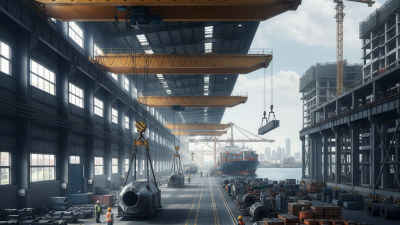
In bridge construction, launching gantries carry and position heavy precast segments over completed sections. Their reach and load capacity must match the project sequence, not just the heaviest single lift. Shipyards use large gantry cranes to handle hull blocks, often in exposed conditions where wind affects lifting plans. Smaller workshops may use portable or adjustable-height gantries for machinery maintenance. They are easier to reposition, but may offer less lifting height and capacity. A crane specification should account for span, headroom, duty cycle, travel surface, and load balance. A small mismatch matters. Site measurements and a realistic review of daily tasks help prevent costly compromises; plans sometimes overlook awkward access around the load.
| Gantry Crane Type | Typical Configuration | Specialized Features | Common Applications | Typical Operating Environment | Key Selection Consideration |
|---|---|---|---|---|---|
| Rubber-Tired Gantry (RTG) Crane | Large mobile gantry supported on rubber tires, usually with a trolley and hoist. | Can travel between container rows without fixed rails; commonly powered by a diesel generator or an electrified system. | Stacking and handling intermodal containers in ports and container terminals. | Container yards with paved surfaces and marked travel lanes. | Check yard layout, tire loads, turning requirements, stacking height, and emissions or electrification needs. |
| Rail-Mounted Gantry (RMG) Crane | Gantry travels along fixed rails, often spanning several container rows and a rail or road corridor. | Provides repeatable travel paths and can be automated for regular container-handling operations. | Container terminals, intermodal rail yards, and organized container storage areas. | Sites with prepared foundations and permanently installed crane rails. | Plan the rail span, stacking arrangement, rail foundations, and required operating capacity. |
| Ship-to-Shore (STS) Gantry Crane | Very large rail-mounted crane with a waterside boom that reaches over a vessel and a landside structure. | Designed to transfer containers between ships and the quay; the boom can typically be raised to clear passing vessels. | Loading and unloading container ships at seaports. | Quayside locations with heavy-duty rails and marine exposure. | Match outreach, lift height, vessel size, quay capacity, and local wind and corrosion conditions. |
| Shipyard Gantry Crane | Large gantry, often rail-mounted, with a high-capacity hoist system spanning a shipbuilding or repair area. | Can lift heavy ship sections, modules, or equipment over a broad work zone. | Ship construction, vessel assembly, dry-dock work, and major marine repairs. | Shipyards and dry docks with substantial structural foundations. | Consider the heaviest lift, hook height, span, lifting accuracy, and the sequencing of assembly work. |
| Semi-Gantry Crane | One side runs on an elevated runway while the other side travels on a floor-level rail or track. | Uses building space on one side and can serve an outdoor or floor-level work area on the other. | Manufacturing plants, workshops, warehouses, and loading areas alongside a building. | Facilities where a full-width overhead crane system is impractical. | Check runway support, floor-track alignment, building clearances, and the required working span. |
| Portable Gantry Crane | Compact frame with legs on casters or wheels and a manually or electrically operated hoist. | Can be moved between work locations; some models have adjustable height or span. | Maintenance, equipment installation, workshops, and occasional lifting in small work areas. | Level indoor floors or suitable prepared surfaces, depending on the model. | Verify rated capacity, wheel and floor limits, stability, headroom, and whether movement under load is permitted. |
| Aluminum Gantry Crane | Lightweight portable gantry with an aluminum frame, typically used with a separate hoist. | Designed for easier handling and assembly than many steel gantries; often used where portability matters. | Maintenance work, laboratories, water-treatment facilities, and light-duty equipment handling. | Indoor or controlled environments with suitable floor conditions. | Confirm the capacity and deflection limits; lightweight construction does not make it suitable for every lift. |
| Adjustable-Height Gantry Crane | Portable or semi-portable frame with legs that can be set at different heights. | Adapts to changing headroom or load-clearance requirements, subject to the manufacturer’s rated configurations. | Machine maintenance, installation work, and facilities handling equipment of different sizes. | Work areas where fixed-height lifting equipment would restrict access. | Use only approved height settings and confirm capacity at the selected height and span. |
| Bulk-Handling Gantry Crane | Gantry fitted with a grab bucket or other bulk-material attachment, often with a conveyor system. | Moves loose materials in repeated cycles and may integrate with storage or ship-loading equipment. | Handling materials such as coal, ore, grain, or aggregates at ports and bulk terminals. | Outdoor bulk-storage yards, docks, and material-transfer sites. | Choose the attachment and duty rating for the material, flow rate, dust control, and site conditions. |