7 Best Small Gantry Cranes for Global Buyers?

7 Best Small Gantry Cranes for Global Buyers?

Choosing the right small gantry crane is rarely a simple price comparison. Global buyers must examine load capacity, lifting height, span, mobility, and working environment. A 500-kilogram crane may suit a maintenance workshop, but it may fail in a busy fabrication area.

Mike Parnell, a respected crane-safety educator, emphasizes, “A crane is only as safe as the people operating it.” That reminder matters. Even a compact small gantry crane needs trained operators, clear load paths, stable flooring, and regular inspections. Buyers should also verify wheel locks, beam deflection, hoist compatibility, and available replacement parts. Small details matter.

This guide compares seven practical models for international purchasing decisions. The selection considers portability, structural strength, adjustment options, assembly effort, and long-term service value. It also considers shipping realities, including packed dimensions, spare-part access, and local technical support. No single crane fits every facility. That is the uncomfortable truth.

A low-cost frame can become expensive when installation drawings are unclear. A highly adjustable design may lose time during repeated setup. I may also favor durability over the lowest purchase price, because workshop downtime is rarely visible on an invoice. Buyers should confirm applicable regional requirements with qualified professionals before operation. Product specifications can change, and published ratings deserve careful verification. The best choice balances safe performance, practical handling, and dependable support.
7 Best Small Gantry Cranes for Global Buyers?

What Defines a Small Gantry Crane for Global Buyers

7 Best Small Gantry Cranes for Global Buyers?

What Defines a Small Gantry Crane for Global Buyers

“Small” has no universal definition. ISO 4306-1:2019 standardizes crane terminology, but it does not set one global tonnage limit. Commercial specifications commonly place compact gantry cranes between 0.5 and 10 tonnes, with spans below 10 metres. Capacity alone can mislead. A 2024 global crane market report valued the broader sector above USD 40 billion. It also identified Asia-Pacific as the largest regional market.

For buyers, portability, headroom, and floor loading matter more than appearance. A workshop model may use four lockable casters, adjustable legs, and a manual chain hoist. A heavier unit may require fixed rails, reinforced concrete, and three-phase power. Check the required lift height, aisle width, wheel load, and duty cycle before comparing prices. OSHA 1910.179 emphasizes rated-load marking, inspection, and safe operating controls. Local regulations may add electrical, structural, or documentation requirements.

Voltage compatibility is easy to overlook. So are metric threads and spare-part availability. Request load-test records, material certificates, assembly drawings, and an operating manual in a usable language. The term “portable” also deserves skepticism; a 2-ton frame can still need several workers to reposition. My practical view is imperfect: choosing the lightest crane often saves purchase cost, but may increase deflection, maintenance, and handling risk. A small gantry crane should fit the worksite, not merely fit the catalog.

Seven Leading Small Gantry Crane Types and Their Key Features

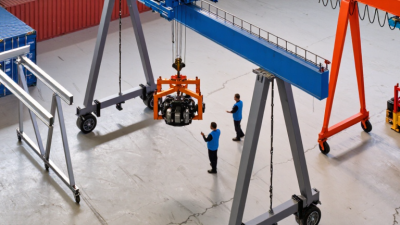
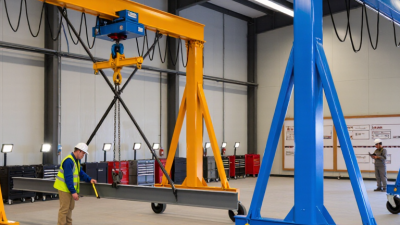
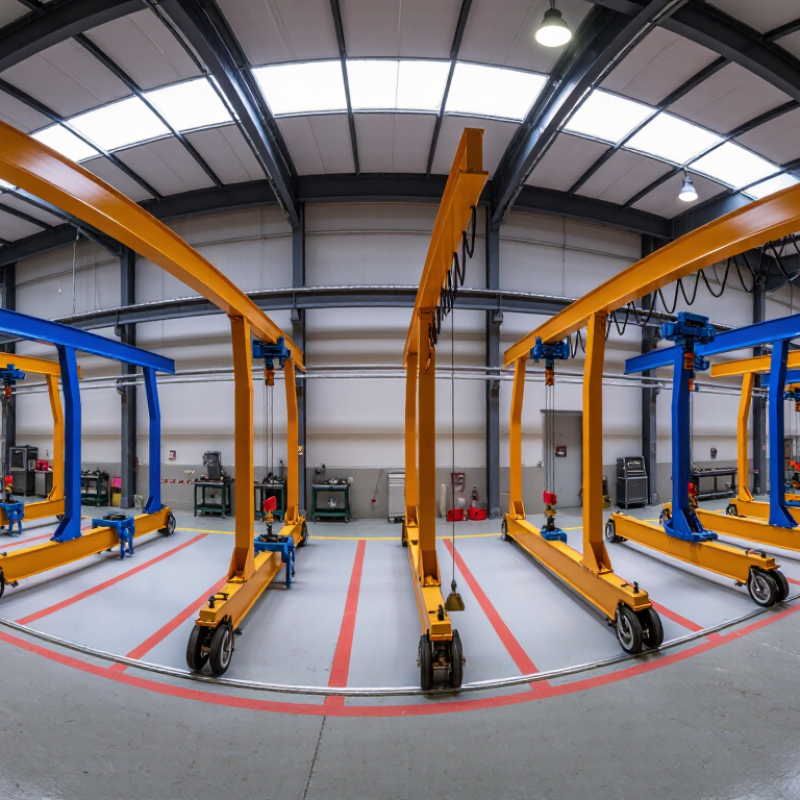
Seven small gantry crane types suit different loads, floors, and work patterns. Fixed-height steel models offer a sturdy frame for repeated lifting in workshops. Adjustable-height cranes fit changing clearance needs, though their locking pins require regular inspection. Lightweight aluminum gantries are easier to move between work areas. They can be practical for lighter loads, but are not automatically the best choice for every job.

Portable steel gantries handle tougher service and rougher handling, while manual models use a hand chain or trolley for straightforward lifting. Powered gantries reduce operator effort during frequent moves, but need suitable power access and careful controls. Track-mounted small gantries travel along a fixed path, making them useful for repeated transfers in a production cell. Each type has limits. A compact frame can still feel awkward in a crowded room.

Tips: Check the load rating, span, headroom, and floor condition before choosing. Measure the load’s full lifting path, not just its parked position. Confirm that wheels lock securely and that the trolley matches the beam. Ask for documented inspection guidance and clear operating instructions. Small details matter. I have seen buyers focus on capacity and overlook doorway clearance; that mistake can make a capable crane frustrating to use.

Comparing Capacity, Portability, Materials, and Lifting Performance

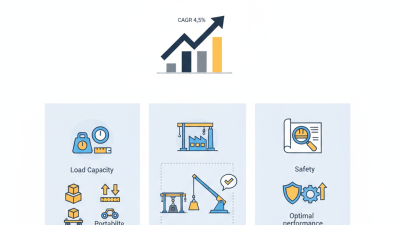
For global buyers, the seven best small gantry cranes should be compared by capacity, portability, materials, and lifting performance—not price alone. Grand View Research valued the global crane market at about USD 42.2 billion in 2022, with projected growth of 4.9% annually through 2030. That expansion reflects demand for compact lifting equipment in workshops, warehouses, maintenance areas, and construction sites.

Capacity usually ranges from 0.5 to 5 tonnes in small gantry designs. A 1-tonne frame may suit machinery positioning, while heavier units require larger casters, deeper beams, and stronger floor support. Steel offers better rigidity under repeated loading. Aluminum models are easier to move by hand, but their lower stiffness can affect lifting stability. Portable cranes with folding legs save storage space. However, frequent assembly may loosen connections if inspections are neglected.

Lifting height matters.

Check the clear height beneath the beam, not only the advertised maximum. A low-headroom hoist can improve usable reach inside a container or workshop. ASME B30.17 and OSHA 1910.179 provide useful inspection and operating references, while international buyers should confirm equivalent local requirements. ISO 4301-1 classification also helps compare duty cycles and fatigue resistance. I would not select a crane from capacity alone; wheel load, brake response, beam deflection, and emergency lowering behavior deserve equal attention. Some product specifications still omit these details. That is a warning sign.

Choosing the Right Small Gantry Crane for Different Work Environments

Choosing a small gantry crane starts with the work area, not the catalog. In a crowded workshop, measure doorways, aisle width, and the space needed to turn a load. A compact frame may fit beneath low ceilings, but its lifting height can still be insufficient. Check the hook’s usable travel against the tallest item you handle. Small details matter.

For a fixed indoor station, a steel crane with adjustable legs may provide a steady, practical setup. If operators move between benches, a lighter aluminum frame can be easier to reposition, though it may not suit every load or floor. Inspect wheel locks, floor joints, and the route the crane must travel. A smooth concrete slab is different from a cracked threshold. I would not assume that “portable” means effortless.

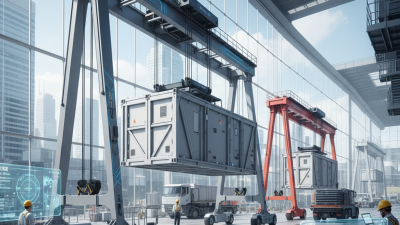
Outdoor or mixed-use work brings other trade-offs. Wind, uneven ground, moisture, and temperature changes can affect stability and maintenance needs. Choose a model whose rated capacity covers the heaviest planned load, including lifting accessories, and confirm that the frame suits the required span and height. Leave room for controlled movement. A rushed fit can look fine on paper. Before purchase, compare the manufacturer’s specifications with actual site measurements, and ask a qualified professional when the setup or load path is uncertain.

7 Best Small Gantry Cranes for Global Buyers? - Choosing the Right Small Gantry Crane for Different Work Environments

Small Gantry Crane Type Typical Rated Capacity Typical Span Adjustable Working Height Mobility and Setup Best-Fit Work Environment Main Advantages Important Limitations
Portable Aluminum Gantry Crane 0.25–1.0 t 1.5–3.0 m 2.0–3.0 m Manual movement; quick assembly; often foldable Maintenance rooms, workshops, laboratories, and light-duty indoor service areas Low dead weight, corrosion resistance, and easy transport Lower capacity and greater sensitivity to uneven floors or outdoor wind
Adjustable Steel Portable Gantry Crane 0.5–3.0 t 2.0–4.0 m 2.4–4.0 m Height-adjustable; usually moved unloaded on lockable casters General workshops, machine installation areas, warehouses, and repair bays Versatile height range and stronger capacity than aluminum designs Heavier to relocate and requires a level, sufficiently strong floor
Fixed-Height Steel Gantry Crane 1.0–5.0 t 2.5–5.0 m Usually fixed; custom heights available Stationary installation; may use fixed feet or casters for unloaded positioning Production cells, fabrication shops, warehouses, and regular lifting stations Good stability, simple structure, and efficient use for repetitive lifting Limited flexibility after installation and requires adequate floor space
Track-Mounted Portable Gantry Crane 1.0–5.0 t 2.0–4.5 m 2.5–4.0 m Moves along embedded or surface-mounted rails; powered travel is optional Long workshops, assembly lines, maintenance corridors, and repeated lifting routes Precise travel path and reduced manual repositioning Requires track installation and is less suitable for changing work locations
Rubber-Wheeled Mobile Gantry Crane 1.0–10.0 t 3.0–6.0 m 2.5–5.0 m Manual or powered travel; stabilizers and wheel locks required during lifting Large workshops, equipment yards, ship-repair areas, and heavy maintenance zones Covers multiple lifting locations without permanent rails Needs a smooth load-bearing surface and should not travel with a suspended load unless specifically designed for it
Knock-Down Container Gantry Crane 0.5–3.0 t 2.0–4.0 m 2.2–3.5 m Bolted modular sections; disassembles for storage and international shipment Rental fleets, remote projects, temporary workshops, and export-oriented applications Compact shipping footprint and convenient site relocation Assembly takes longer than a fully welded frame and bolted joints require inspection
Weather-Resistant Outdoor Small Gantry Crane 1.0–10.0 t 3.0–6.0 m 2.5–5.0 m Fixed or mobile; includes outdoor-rated coating and weather-protected electrical components Construction sites, agricultural facilities, utility yards, ports, and outdoor maintenance areas Designed for moisture, dust, temperature variation, and intermittent outdoor use Requires wind assessment, drainage, corrosion maintenance, and secure storage or anchoring
Selection note: The specifications shown are typical ranges for small gantry cranes. Actual capacity, span, lifting height, travel method, wheel configuration, duty class, and environmental protection should be verified against the required load, floor condition, operating frequency, wind exposure, and applicable local safety regulations.

Global Buying Factors: Safety Standards, Customization, Shipping, and Support

Choosing among the 7 best small gantry cranes requires more than comparing lifting capacity. Safety comes first.

The ILO’s 2023 global estimates recorded approximately 2.93 million work-related deaths annually. That figure makes inspection discipline impossible to ignore. Buyers should request load-test records, material certificates, and emergency-stop details. ISO 9927-1 recommends regular crane inspections, while ISO 4309 addresses wire-rope care. Confirm the supplier’s inspection schedule in writing. Ask whether the crane complies with local requirements, such as OSHA rules, CE obligations, or equivalent national standards.

Measure the real installation site. Record doorway width, floor strength, ceiling clearance, and aisle turning space. A 1,000-kilogram rated crane may still fail your workflow if its wheels cannot cross a floor joint. Adjustable legs help, but they can reduce stability when incorrectly positioned. That assumption is risky. Specify lifting height, span, duty cycle, caster brakes, power supply, and control type before requesting quotations. Customization should solve a measured problem, not add attractive features.

Shipping also needs technical attention. The World Bank’s 2023 Logistics Performance Index assessed 139 economies and emphasized supply-chain reliability. Request the packed dimensions, gross weight, Incoterms, spare-parts list, and installation drawings. Corrosion protection matters when the crate crosses humid ports. Support should include remote commissioning, operator training, replacement-part response times, and documented warranty limits. I would still test one unit before a fleet purchase. Photos can hide poor welds, awkward controls, and weak documentation.

7 Best Small Gantry Crane Configurations for Global Buyers

Typical rated-capacity ranges for common small gantry crane configurations. Actual capacity depends on the structure, span, lifting height, duty class, and certified engineering calculations.

Global buying factors: Buyers should verify compliance with applicable safety standards, load-test and inspection documentation, customization options, packing and shipping requirements, spare-parts availability, installation guidance, and after-sales technical support.