
How Much Does a 10 Ton Overhead Crane Cost in China?
How much does a 10 ton overhead crane cost in China? The honest answer is less tidy than many supplier pages suggest. A typical China quotation may range from US$8,000 to US$35,000 for the crane system. Heavier-duty designs can cost more. This estimate usually excludes installation, export packing, inland transport, and building reinforcement.
The price changes with span, lifting height, duty class, control method, and runway length. A 10 ton overhead crane serving a quiet warehouse is not equal to one working continuously in a steel plant. A 20-meter span, wireless remote, inverter control, and higher FEM duty classification can raise the final quotation quickly. A small detail matters. The end carriage design can affect both price and maintenance access.
Industry data supports this wider view. Fortune Business Insights reported strong global crane-market growth in its 2024 Cranes Market report, driven by construction, manufacturing, and infrastructure investment. Grand View Research also identified industrial automation and replacement demand as important overhead-crane market factors. These reports describe market direction, not a fixed Chinese selling price. That distinction is important.
For this guide, supplier quotations should be compared by technical scope, not by headline price alone. The quotation should clearly state motor brand, steel grade, wheel material, electrical protection, testing, warranty, and spare-parts support. Chinese manufacturers can offer competitive pricing, but quality varies between workshops. A low quote may hide weaker components or limited commissioning support. I have seen attractive numbers become expensive after delivery. That risk deserves attention.
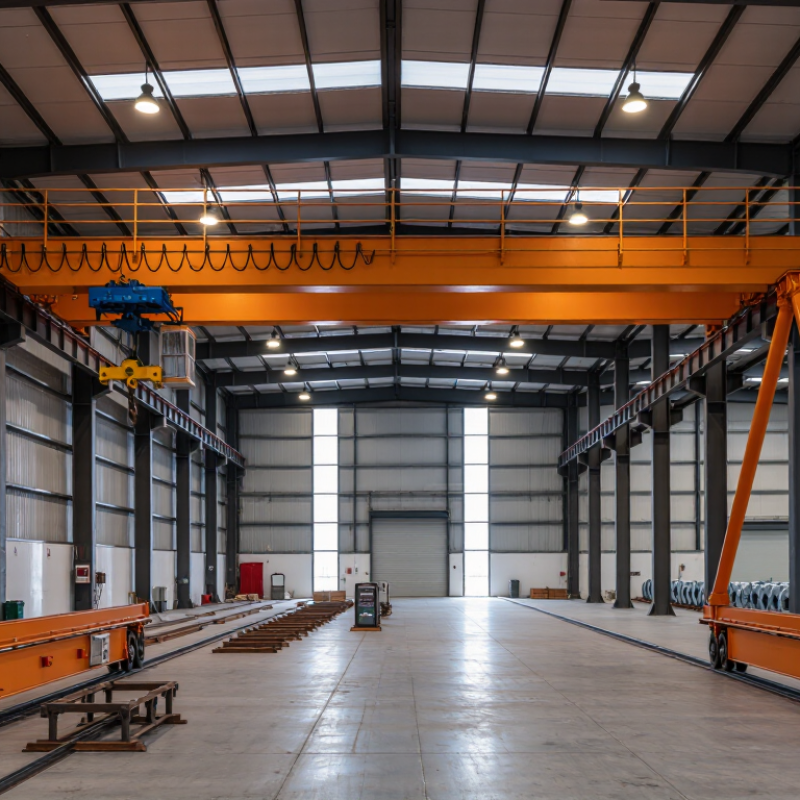
What Determines the Cost of a 10-Ton Overhead Crane in China?
How Much Does a 10 Ton Overhead Crane Cost in China?
What Determines the Cost of a 10-Ton Overhead Crane in China?
A 10-ton overhead crane in China may cost about USD 15,000 to USD 60,000. This range is only indicative. The final quotation depends on design, duty class, span, lifting height, and delivery terms. A single-girder crane usually costs less than a double-girder model. However, heavier production cycles may require stronger structures and more durable components.
Span length changes the amount of steel, rail load, and workshop space required. A 20-meter span can cost noticeably more than a 10-meter span. Lifting height also affects drum size, rope length, and motor selection. A crane lifting eight meters has different requirements from one lifting twenty meters. Frequency matters too. A warehouse crane used twice daily should not be priced like equipment running continuously.
Watch the details.
The quotation should identify the hoist capacity, control method, wheels, electrical protection, painting system, testing, packaging, and spare parts. Installation, shipping, insurance, and import charges may be excluded. I have seen low offers become expensive after these items appeared later. That comparison was not completely fair. Buyers should request drawings, load calculations, inspection records, and a clear delivery schedule. Factory experience with similar spans is valuable, but even experienced suppliers can overlook local voltage or working-temperature requirements. A careful technical review often prevents a cheaper mistake.
How Much Does a 10 Ton Overhead Crane Cost in China? - What Determines the Cost of a 10-Ton Overhead Crane in China?
| Cost or Design Factor | Typical Specification or Range | Estimated Cost in China | How It Affects the Final Price |
|---|---|---|---|
| Complete 10-ton overhead crane system | Single-girder or basic double-girder crane; approximately 10-ton rated capacity | USD 12,000–35,000 RMB 85,000–250,000 |
This is a broad equipment-only range. The exact price depends on span, lifting height, duty class, controls, and included accessories. |
| Crane configuration | Single-girder or double-girder design | Double-girder designs are commonly 15%–40% higher | A double-girder structure provides greater rigidity and higher hook height, but uses more steel and generally requires a heavier trolley and end-carriage system. |
| Span and runway width | Approximately 10–30 m for many industrial workshops | Often adds USD 1,000–4,000 for each substantial increase in span, depending on structure | A longer span requires stronger or deeper girders, more steel, larger end trucks, and potentially higher transport and installation costs. |
| Lifting height | Commonly 6–12 m; higher lifts are available | USD 500–3,000 additional for higher-than-standard lifting height | A longer wire rope, larger drum, taller support arrangement, and additional safety requirements can increase the price. |
| Working duty classification | Light to heavy industrial duty; often aligned with FEM or ISO duty classes | Heavy-duty specifications may be 10%–30% higher | Frequent starts, long operating hours, and high lifting cycles require stronger motors, brakes, gears, bearings, and structural components. |
| Hoist and lifting speed | Single-speed, dual-speed, or variable-frequency drive operation | USD 800–4,000 additional for higher speed or variable-frequency control | Higher speeds and smoother acceleration require upgraded motors, inverters, brakes, controls, and sometimes a larger hoist unit. |
| Power supply and electrical controls | Common industrial supplies include 380 V, 400 V, or 415 V, three-phase, 50 Hz | USD 500–5,000 depending on controls and voltage requirements | Pendant controls are usually less expensive than radio remote controls or cabin operation. Voltage customization may require different electrical components. |
| Runway rails and power-feeding system | Rails, conductor bars, festoon cable, brackets, and end stops | USD 2,000–10,000 | The cost depends on runway length, building structure, conductor type, and whether existing rails can be reused. |
| Workshop support structure | Existing columns and brackets or a new independent steel structure | USD 5,000–30,000+ | This may be the largest additional expense when the building cannot safely support the crane and runway loads. |
| Safety and operating accessories | Overload limiter, emergency stop, limit switches, warning light, buffers, and anti-collision devices | USD 500–6,000 | Required safety equipment varies with local regulations, operating environment, crane layout, and the level of automation. |
| Installation and commissioning | Mechanical assembly, electrical connection, testing, and operator training | USD 2,000–10,000 | Labor, travel distance, lifting equipment, site access, working height, and testing requirements determine the installation charge. |
| Export packing and inland transport | Steel-frame packing, protective wrapping, factory-to-port delivery, and documentation | USD 1,000–6,000 before international freight | Oversized girders, delivery distance, port location, packing method, and shipment volume affect logistics costs. |
| Indicative project budget | Crane, standard accessories, runway equipment, and typical installation; excludes major building modifications | USD 20,000–60,000 RMB 145,000–430,000 |
A project with a long span, heavy duty cycle, new support columns, special controls, or difficult site conditions can exceed this range. |
Reference basis: The figures are indicative budget ranges for a new 10-ton electric overhead traveling crane manufactured in China. RMB conversions use an approximate rate of USD 1 ≈ RMB 7.2. Actual quotations vary according to technical specifications, steel and electrical component prices, exchange rates, delivery terms, taxes, installation conditions, and applicable safety standards.
Related Posts
-
How to Choose the Right 10 Ton Overhead Crane for Your Operations?
-
2026 Best 10 Ton Crane Options for Heavy Lifting Requirements?
-
Top 10 Types of 10 Ton Cranes and Their Uses
-
2025 Top 10 Ton Overhead Crane Features and Benefits You Need to Know
-
2026 Top Small Crane Models Features and Benefits?
-
What Is the Best Small Crane Manufacturer in China?