How to Choose a 2 Ton Overhead Crane in 2026?

How to Choose a 2 Ton Overhead Crane in 2026?

Choosing a 2 ton overhead crane in 2026 requires more than comparing prices and lifting capacity. The right system must match your building, workflow, duty cycle, and maintenance resources. A crane lifting two tonnes may still fail operational needs if its span, hook height, or travel speed is poorly selected.

Start with the working environment. Measure the runway length, clear height, column spacing, and floor condition. Check whether trucks, machines, or stored materials could obstruct crane movement. A workshop handling steel frames needs different controls from a warehouse moving packaged components. Even small details matter, such as pendant cable reach and hook access near loading doors.

Reliable selection also depends on technical evidence. Review load charts, motor ratings, brake performance, control options, inspection access, and emergency stop arrangements. Ask suppliers for installation drawings, service records, warranty terms, and realistic delivery information. Confirm applicable local safety requirements with a qualified engineer or inspector, because requirements vary by location.

No selection method is perfect. Budget pressure can make a cheaper crane appear attractive, yet weak support design or limited spare parts may create higher costs later. I have seen specifications focus heavily on lifting capacity while ignoring maintenance access. That mistake deserves attention. This guide examines practical criteria for comparing a 2 ton overhead crane, including safety, structure, controls, lifecycle cost, and supplier reliability. The goal is a confident decision, not a rushed purchase.

How to Choose a 2 Ton Overhead Crane in 2026?

What Is a 2 Ton Overhead Crane and Where Is It Used?

How to Choose a 2 Ton Overhead Crane in 2026?

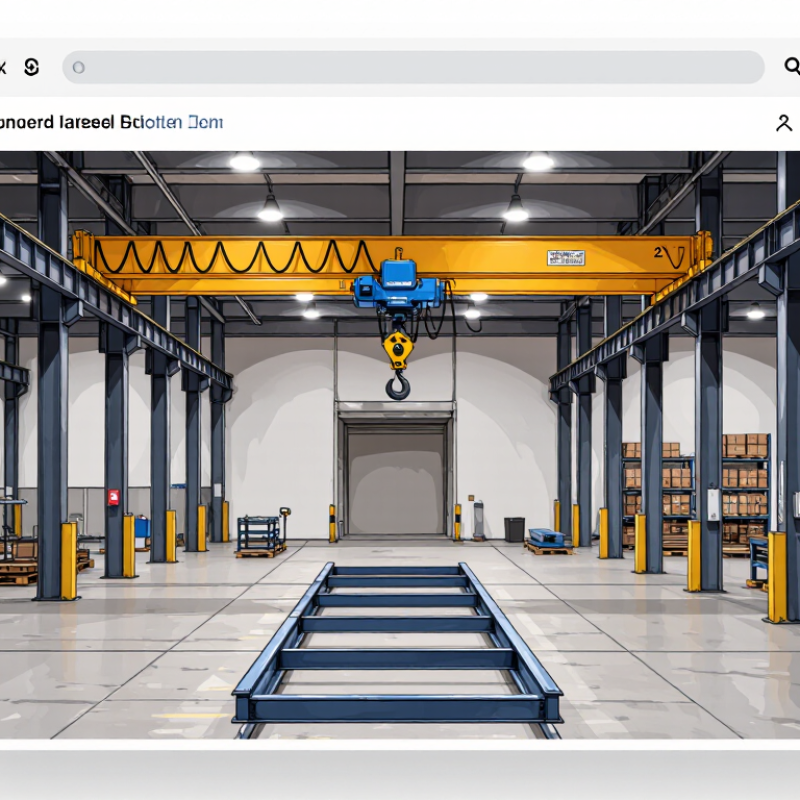
A 2 ton overhead crane is a lifting system rated for loads up to 2,000 kilograms. It travels along runway beams fixed inside a factory or warehouse. A bridge moves across the building width, while a hoist raises and lowers the load. The operator may use a pendant control, radio control, or a cabin.

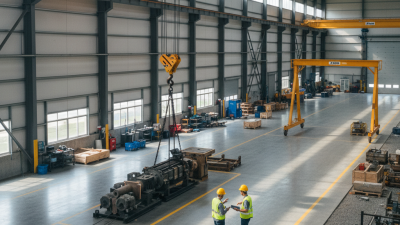
These cranes suit machine shops, maintenance areas, fabrication plants, and storage facilities. They can move motors, steel parts, molds, and packed equipment between workstations. Picture a metal component rising from a pallet and traveling smoothly across the bay. The required span, lifting height, travel speed, and duty cycle affect the design. A 2 ton rating does not mean every lift is suitable.

Check the building structure before ordering. Runway beams, columns, floor strength, and available headroom all matter. Measure the heaviest load, its lifting points, and the working area around it. In practical installations, poor clearance can cause more trouble than limited speed. Safety devices, emergency stops, overload protection, and regular inspections deserve careful attention. Do not rely only on a catalog number. I would also question future needs, because a crane selected too tightly may become restrictive. A small margin helps, but excessive capacity can increase cost and structural demands. Some choices look efficient on paper, yet feel awkward during daily handling.

Assessing Load, Span, Lift, and Duty Requirements

How to Choose a 2 Ton Overhead Crane in 2026?

A 2-ton overhead crane should match the real load, not an estimated average. Confirm the heaviest lifted item, including slings, hooks, spreader beams, and other lifting accessories. A 2-ton rating is a limit, not a recommended target for every lift. Leave practical capacity margin for impact, load movement, and uncertain weight records.

Measure the required span between runway beams and inspect the building structure before selecting equipment. A wider span can increase trolley loads and beam deflection.

Check the lifting height carefully. The hook must reach below the lowest working level while clearing roof members, lighting, pipes, and stored materials. Small clearance errors can restrict daily operations. They are easy to overlook.

Tips:

Record the heaviest load, lifting frequency, travel distance, and average operating hours. Describe the duty cycle using actual load patterns, not only “light” or “heavy” work. A crane lifting near capacity several times per hour needs a different duty rating from one handling occasional maintenance parts.

Also review floor access, pendant location, control visibility, emergency stops, and inspection access. In practice, a quick capacity decision may seem efficient. It may create expensive limitations later. Confirm structural calculations and installation details with a qualified engineer.

Comparing Crane Configurations and Hoist Options

A 2 ton overhead crane handles up to 2,000 kilograms, but capacity is only the starting point. The 2024 Global Overhead Cranes Market Report estimated the sector at about USD 4.4 billion, with steady growth through 2030. That demand reflects tighter material-flow requirements, not simply larger lifting loads.

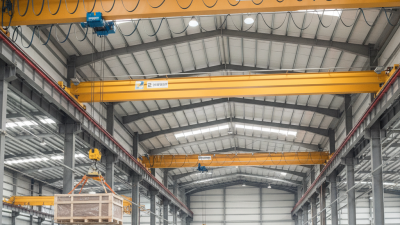
For most workshops, a single-girder, top-running crane offers a practical balance between cost, headroom, and service access. A double-girder design provides greater stiffness and hook height, but may add structural weight and installation expense. Under-running systems can suit buildings with limited runway support. Measure twice. Existing columns, runway span, and roof clearance often decide the configuration before the hoist is selected.

Hoist choice should follow real duty cycles. An electric chain hoist is compact and economical for occasional lifting, while an electric wire-rope hoist suits frequent cycles, higher lift heights, and smoother long travel. The 2024 MHI Annual Industry Report identified labor availability and productivity as persistent operational pressures, making pendant controls, variable-speed drives, and simple maintenance valuable. Still, automation is not automatically better. A poorly positioned control station can slow a skilled operator. Check lifting frequency, starts per hour, hook travel, brake access, and load balance against ISO or FEM duty classifications. OSHA 1910.179 also requires suitable inspection and operating provisions. A two-ton crane with a light-duty hoist may fail the workflow, even when its rated capacity looks correct.

How to Choose a 2 Ton Overhead Crane in 2026?

Comparing Crane Configurations and Hoist Options

The chart compares representative lifting speeds commonly specified for 2 ton overhead crane hoists. Single-speed wire-rope hoists prioritize simple operation, dual-speed hoists improve load positioning, and chain hoists are often selected where compact dimensions and lower headroom are important.

Values are typical preliminary planning figures in metres per minute and should be confirmed against the required duty class, lifting height, operating frequency, available headroom, runway design, and applicable safety standards.

Checking Site Conditions, Safety, and Compliance Needs

Choosing a 2 ton overhead crane in 2026 starts with the site, not the catalog. A two-ton rating does not guarantee suitability. Measure the building span, lifting height, runway length, headroom, and floor capacity. Check columns for deflection, corrosion, and hidden damage. A six-meter lift may need more clearance than expected. Leave room for slings, hooks, and the load itself. Small details matter.

Observe the working environment during a normal shift. Dust, heat, moisture, chemicals, and outdoor wind can change equipment requirements. Identify the heaviest load, lifting frequency, travel speed, and load shape. Confirm that the power supply matches the crane system. Test access for maintenance vehicles and emergency personnel. Crowded aisles create risks. They also slow inspections.

Safety and compliance need documented attention. Select brakes, upper and lower limit devices, overload protection, emergency stops, warning signals, and suitable controls. Ask a qualified engineer to verify the supporting structure and load path. Confirm the design against current local regulations and applicable lifting equipment standards. Keep inspection records, operator training files, repair histories, and planned maintenance schedules. Requirements vary by location. Do not assume one certificate covers every jurisdiction. A site survey can still miss an underground service or an unusual impact load. I would rather pause the purchase than discover that after installation.

How to Choose a 2 Ton Overhead Crane in 2026? — Checking Site Conditions, Safety, and Compliance Needs
Assessment Dimension What to Check on Site Reference Data or Typical Requirement Selection Guidance Priority
Rated Capacity Confirm the maximum load that will be lifted, including pallets, lifting beams, hooks, slings, magnets, or other below-the-hook devices. A 2-ton crane has a rated lifting capacity of 2,000 kg, equivalent to approximately 19.6 kN under standard gravity. Do not exceed the marked safe working load. If attachments are part of the lifted load, include their weight in the capacity calculation. High
Load Characteristics Review load shape, center of gravity, lifting points, flexibility, surface condition, and whether loads may swing or rotate. Capacity alone does not confirm suitability; uneven or suspended loads can create additional handling and stability risks. Specify suitable hooks, slings, lifting beams, guide ropes, or other accessories based on the load and lifting method. High
Span Measure the distance between the runway rails or supporting beams, including required clearances from walls, equipment, and building columns. Actual span is project-specific. It must match the building structure, runway arrangement, and crane manufacturer’s design calculations. Use verified structural and architectural measurements rather than nominal workshop dimensions. High
Lifting Height Measure the required hook height from the lowest operating level to the highest lifting point, while accounting for obstructions. Required hook travel depends on building height, roof structure, lighting, ducts, sprinklers, and the load dimensions. Select a hoist headroom and hook travel that provide safe clearance without reducing usable lifting height. High
Runway Length and Travel Check the required travel distance, end stops, maintenance access, adjacent work areas, and collision risks. Travel limits must be defined by the runway layout and protected by suitable end stops or travel-limiting systems. Verify that the crane can reach all intended pick-up and set-down locations without operating over prohibited areas. High
Duty Classification Record lifts per hour or day, average lifted load, maximum-load frequency, operating hours, and expected service life. Duty classification is based on operating cycles and load spectrum, not capacity alone. Common systems include ISO, FEM, and CMAA classifications. Choose the duty group from the actual workload. A frequently used 2-ton crane may require a higher duty rating than a lightly used crane. High
Building Structure Inspect runway beams, brackets, columns, roof members, foundations, and connections. Confirm allowable vertical and horizontal loads. The supporting structure must be checked for wheel loads, impact effects, lateral forces, fatigue, deflection, and connection capacity. Obtain a site-specific structural review by a qualified engineer before installation, especially in an existing building. High
Headroom and Clearances Measure the distance from the rail top to the roof, lowest obstruction, equipment, walkways, and energized services. Clearances are determined by the selected hoist, trolley, bridge design, building geometry, and local safety rules. Maintain the legally required and manufacturer-specified clearances; do not assume that a compact hoist will fit without a dimensional check. High
Electrical Supply Confirm available voltage, phase, frequency, short-circuit protection, isolation points, grounding, and cable routing. Industrial crane systems commonly use three-phase power, but the correct voltage and frequency must be confirmed for the installation location. Match the crane controls, motors, and protection devices to the verified site supply. Provide an accessible lockable disconnect where required. High
Operating Environment Identify dust, moisture, corrosive chemicals, extreme temperatures, outdoor exposure, hazardous areas, and washdown requirements. Standard indoor equipment may not be suitable for corrosive, explosive, high-dust, or outdoor environments. Specify appropriate enclosures, corrosion protection, heating, weather protection, or hazardous-area equipment when the risk assessment requires it. High
Controls and Visibility Assess operator position, line of sight, pendant route, radio-control needs, emergency-stop access, and communication with ground personnel. Controls should allow intentional operation, clear identification of functions, and rapid stopping in an emergency. Use pendant or remote controls according to visibility, traffic, noise, and workplace risk. Define control authority when more than one person is involved. Medium
Safety Devices Verify overload protection, upper and lower hook limits, bridge and trolley travel limits, emergency stop, audible or visual warnings, and end stops. Required devices vary by jurisdiction, crane type, and risk assessment. Protective devices must not be bypassed during normal operation. Prepare a safety-device checklist and confirm functional testing during commissioning and periodic inspections. High
Lifting Accessories Check sling type, hook configuration, shackles, lifting beams, clamps, magnets, and their rated capacities and inspection status. Every accessory must have a rated capacity suitable for the intended configuration, angles, temperature, and load condition. Keep accessory capacity and inspection records separate but coordinated with the crane’s maintenance program. High
Standards and Legal Compliance Identify the country, state, province, industry, and site rules that govern design, installation, operation, inspection, and maintenance. Applicable requirements may include local occupational-safety regulations and recognized crane standards such as ASME B30, EN 13001, EN 60204-32, or CMAA guidance, depending on jurisdiction. Use the edition and legal requirements applicable to the installation location. A standard reference does not replace local regulatory approval. High
Documentation Request load charts, drawings, calculations, manuals, electrical diagrams, certificates, test records, and maintenance instructions. Documentation should identify rated capacity, serial or asset information, operating limits, inspection requirements, and applicable compliance evidence. Do not place the crane into service until required documents, markings, instructions, and records are complete and accessible. High
Installation and Commissioning Plan delivery access, lifting equipment, assembly area, runway alignment, electrical connection, testing, and operator training. Commissioning normally includes functional checks, safety-device tests, unloaded operation, and load testing where required by law or the approved procedure. Use qualified personnel and retain signed installation, inspection, test, and training records. High
Inspection and Maintenance Establish pre-use checks, frequent inspections, periodic inspections, lubrication, brake checks, rope or chain checks, and defect reporting. Inspection frequency depends on usage, environment, duty, manufacturer instructions, and local regulations. Remove unsafe equipment from service, control access, repair defects, and document the return-to-service decision. High
Total Cost of Ownership Compare purchase, structural modifications, installation, electrical work, inspections, spare parts, training, energy use, and downtime. The lowest initial price may not provide the lowest life-cycle cost when duty, access, maintenance, or building modifications are considered. Evaluate the complete installed solution and expected operating profile rather than comparing hoist prices alone. Medium

Estimating Total Cost, Installation, and Long-Term Maintenance

How to Choose a 2 Ton Overhead Crane in 2026?

A 2 ton overhead crane should be priced as a complete system, not only as lifting equipment. The budget may include the bridge, hoist, runway beams, controls, electrification, delivery, and site preparation. A structural survey is essential before ordering. Existing columns may require reinforcement, which can change the project cost quickly. Installation often needs lifting access, electrical work, testing, and operator training. Allow room for error.

In practical projects, installation may represent 20% to 40% of the equipment price, depending on building access and runway conditions. Local labor rates, ceiling height, and production downtime also affect the final figure. Ask for a written quotation with separate costs for equipment, installation, testing, and exclusions. A low initial quote can hide expensive steelwork or temporary access equipment. That estimate is imperfect. Real buildings rarely match drawings perfectly.

Long-term maintenance deserves equal attention. Plan regular inspections of ropes, hooks, brakes, wheels, limit switches, and pendant controls. Keep service records with inspection dates, findings, and replaced parts. Lubrication schedules should follow the manufacturer’s technical instructions and actual operating frequency. Heavy daily use may require more frequent checks than occasional lifting. Budget for wear components, emergency repairs, and periodic load testing. Choose accessible components and clear maintenance paths; a few extra minutes during servicing can reduce downtime. Safety devices should never be bypassed to maintain production. Teams should document unusual noise, uneven travel, or delayed braking immediately.