How to Choose the Best New York Crane Supplier?

How to Choose the Best New York Crane Supplier?

Choosing the right new york crane supplier can shape every stage of a lifting project. It affects safety, scheduling, equipment performance, and overall cost. In New York, crowded streets, tight job sites, changing weather, and strict project requirements add practical pressure. A supplier must understand these conditions, not simply offer a long equipment list.

This guide examines the details that experienced contractors often check before signing an agreement. We will consider crane capacity, maintenance records, operator qualifications, delivery planning, insurance documentation, and emergency support. A reliable supplier should explain load charts clearly and recommend equipment that matches the site, load, reach, and ground conditions. Look for evidence.

Real project experience matters. Ask for recent references from similar construction environments, such as Manhattan renovations, bridge work, or industrial facilities. Visit the supplier’s yard when possible. Notice whether machines appear clean, inspected, and properly maintained. Ask how quickly technicians respond when a hydraulic issue stops a lift. Small details can reveal a great deal.

No supplier is perfect. Even a well-established company may have limited availability during peak seasons or delayed communication during busy periods. That weakness deserves honest discussion. A careful comparison should balance technical expertise, transparent pricing, dependable support, and a strong safety culture. The cheapest quote may become expensive when equipment arrives late or cannot perform as planned. Good decisions come from asking specific questions, checking documentation, and matching promises with observable evidence.
How to Choose the Best New York Crane Supplier?

Understanding New York Crane Supplier Types and Service Areas

How to Choose the Best New York Crane Supplier?

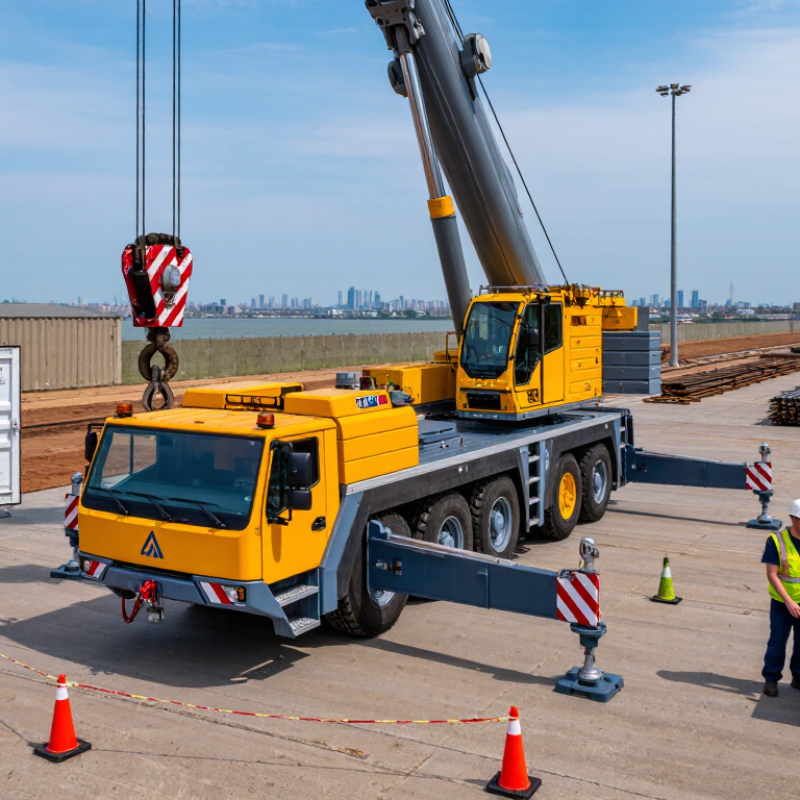
Understanding supplier types and service areas can prevent expensive delays. Mobile crane suppliers suit short-term jobs and changing locations. They can reach Manhattan rooftops, bridge sites, and narrow industrial lots. Crawler crane suppliers offer strong stability on soft or uneven ground. They need more setup space and transport planning. Tower crane suppliers support long construction schedules and tall urban projects. Overhead crane suppliers work better inside warehouses and manufacturing facilities.

Service coverage matters as much as equipment. A supplier serving New York City may not cover Long Island, Westchester, or upstate projects efficiently. Ask about travel limits, mobilization time, emergency support, and local site experience. Reliable suppliers provide current inspection records, trained operators, load charts, and clear lift plans. They should also explain ground pressure, access routes, weather limits, and setup requirements. A supplier that avoids these questions deserves caution.

Tips: Match the crane to the load, reach, ground, and site access. Request a written estimate with transport and setup costs. Check whether the crew has handled similar lifts nearby. Do not choose only by the lowest price. In practice, small details matter. A narrow gate or weak pavement can change the entire plan. I still allow extra time for traffic and weather because early estimates are not always perfect.

Checking Licensing, Safety Standards, and Legal Compliance

Choosing a New York crane supplier requires more than comparing rental prices. Licensing, safety standards, and legal compliance should guide every decision.

Ask for current business credentials, equipment records, and proof of insurance before discussing delivery dates. Crane operations may involve state and local requirements, including permits, inspections, and qualified personnel. Requirements can vary by location and project type. A reliable supplier should explain these differences clearly, not hide behind vague promises.

Check each crane’s inspection history, maintenance schedule, rated load chart, and safety controls. Ask whether operators hold appropriate training and certifications for the equipment they will use. On a real job site, small details matter. A faded warning label or missing inspection tag deserves attention. The supplier should also provide lift planning support, site coordination, and emergency procedures when needed.

Do not accept paperwork blindly. Verify certificate dates, coverage limits, and the identity of the insured company. Contact the relevant authority when a license or permit appears unclear. Even experienced contractors can overlook an expired document during a rushed project. I would rather delay delivery than discover a compliance problem beside an active work zone. A dependable supplier welcomes questions, records concerns, and corrects weaknesses before the crane arrives.

How to Choose the Best New York Crane Supplier? - Checking Licensing, Safety Standards, and Legal Compliance
Priority Compliance Dimension Authority or Scope Review Status
01 Crane and Hoisting Equipment Permits New York City Department of Buildings for work within NYC; local building departments elsewhere in New York Current crane or hoisting-machine permit, approved equipment information, site-specific filing details, and permit expiration date Will the supplier obtain the required permit before mobilization? Does the permit cover the exact crane model, configuration, location, and planned operation? Required
02 Qualified Crane Operators OSHA 29 CFR 1926.1427; NYC Department of Buildings licensing requirements may also apply Operator qualification or certification records, applicable New York City hoisting-machine operator license, training history, and identification of the assigned operator Is the operator qualified for this crane type, capacity, and operating environment? Are license and certification documents current? Required
03 OSHA Crane Safety Compliance OSHA 29 CFR 1926 Subpart CC, including §§ 1926.1400–1926.1442 Written lift plan, qualified-person designation, operator inspection records, signal-person qualifications, and required safety procedures How will the supplier control setup, assembly, disassembly, signaling, power-line hazards, and personnel exclusion zones? Required
04 Pre-Use and Periodic Inspections OSHA 29 CFR 1926.1412 and 1926.1413; manufacturer inspection requirements Daily or shift inspection forms, monthly inspection records where applicable, annual/comprehensive inspection reports, and documented corrective actions Who performs inspections, what defects require removal from service, and how are repairs verified before returning equipment to operation? Required
05 Load Charts and Equipment Capacity OSHA requirements and the crane manufacturer’s rated-capacity information Current load chart, configuration chart, certification plate, outrigger requirements, counterweight details, and maintenance records Can the crane safely lift the planned load at the required radius, height, boom length, and site configuration? Required
06 Insurance and Workers’ Compensation New York Workers’ Compensation Law; contract-specific insurance requirements Current certificates of liability insurance, workers’ compensation coverage evidence, employer’s liability coverage, automobile liability coverage, and additional-insured endorsements when required Do the policy limits, effective dates, exclusions, and additional-insured terms satisfy the project contract and site requirements? Verify
07 New York Labor Law and Site Safety Duties New York Labor Law §§ 200, 240(1), and 241(6), where applicable to the project Site-specific safety plan, competent-person assignments, fall-protection procedures, incident-reporting process, and coordination records with the controlling contractor How will responsibilities be divided among the supplier, general contractor, site owner, and other employers at the worksite? Verify
08 Signal Persons and Rigging Personnel OSHA 29 CFR 1926.1419–1926.1422 and 1926.1404; applicable site rules Signal-person qualification records, rigger training documentation, lift-direction procedures, rigging inspection logs, and communication plan Are signal persons and riggers qualified for the planned lift? Will standard hand signals or reliable radio communication be used? Required
09 Power-Line and Utility Clearance OSHA 29 CFR 1926.1407–1926.1411; utility-owner requirements Documented utility survey, minimum-clearance assessment, warning-line or barricade plan, dedicated-spotter arrangement, and utility coordination records Has the supplier identified energized lines and established the required clearance or de-energization procedure before lifting begins? Required
10 Ground Conditions and Crane Setup OSHA 29 CFR 1926.1402; project engineer and site-specific requirements Ground-bearing assessment, outrigger and cribbing plan, underground-utility review, leveling records, and setup photographs where appropriate Can the ground support the imposed loads, and have voids, excavations, slopes, underground structures, and access limitations been evaluated? Required
11 Maintenance and Repair History OSHA requirements, manufacturer instructions, and rental or service contract terms Preventive-maintenance schedule, service invoices, repair history, parts records, safety-alert response records, and current equipment condition report What major repairs or safety-related defects occurred recently, and can the supplier demonstrate that corrective work was completed? Best Practice
12 Contract, Responsibility, and Emergency Terms Project contract, New York law, and applicable local requirements Written quotation and service agreement covering mobilization, operator provision, weather limits, cancellation, damage responsibility, emergency response, and incident notification Does the contract clearly identify who controls the lift, who supplies rigging and signal personnel, and who is responsible for delays or equipment failure? Verify
Requirements can vary by municipality, project type, crane classification, and worksite conditions. For projects outside New York City, confirm permit and licensing rules with the relevant local building department before signing the rental or lifting agreement.

Comparing Crane Equipment, Capabilities, and Technical Support

How to Choose the Best New York Crane Supplier?

Choosing a New York crane supplier requires more than comparing hourly rates. The real test involves equipment, lifting capability, and technical support. A tower crane may suit a dense Manhattan project, while a mobile crane fits changing sites. Review rated capacity, boom length, duty cycles, transport limits, and ground pressure. Ask for recent inspection records and complete load charts. Small details matter.

During supplier evaluations, I look for clear answers under pressure. Can the team explain capacity at specific radii, wind limits, and setup requirements? Vague answers suggest weak engineering control. A capable supplier provides lift plans, competent operators, site surveys, and documented maintenance. Technical support should include a reachable dispatcher, field technicians, and stocked critical parts. Response time matters when a crane stands idle beside a concrete pour. Ask how quickly technicians can arrive in Manhattan, Brooklyn, or Long Island.

Experience also appears in uncomfortable conversations. A reliable supplier will reject an unsafe lift instead of chasing the invoice. They should explain alternatives without hiding extra costs. Compare service logs, emergency procedures, training records, and customer references. Still, no checklist catches everything. Weather delays, access problems, and misunderstood drawings can expose planning gaps. A common mistake is favoring newer equipment too quickly. Older cranes can perform well when maintained, documented, and correctly matched to the work. That distinction deserves careful questioning.

Evaluating Experience, Reputation, Insurance, and Project Reliability

Choosing a New York crane supplier requires more than comparing hourly rates. Experience should match your project’s load charts, access limits, and permit conditions. Ask for records from similar urban lifts, not only a general equipment list. OSHA’s crane standard requires annual inspections and additional inspections after severe events or extended inactivity. Request dated inspection reports, maintenance histories, and operator qualification records. Details matter.

Reputation is easier to test through evidence. Speak with recent contractors about arrival times, communication, and damaged materials. BLS reported 56 fatal occupational injuries involving cranes in 2022, showing why safety claims need verification. A supplier should explain lift planning, ground conditions, signal-person procedures, and emergency responses in plain language. Vague answers deserve caution.

Insurance also needs careful review. Confirm general liability, workers’ compensation, commercial auto, and crane or equipment coverage. Request current certificates, policy limits, and additional-insured wording before mobilization. Reliability should be measured against the schedule. Ask how the supplier handles breakdowns, weather delays, substitute equipment, and traffic restrictions in New York. Get those answers in writing. A backup crane is not guaranteed. That is an uncomfortable gap many buyers overlook. The strongest evaluation combines documented experience, independent references, active insurance, and clear recovery procedures. Still, every project has unknowns, so leave time for a second review before signing.

How to Choose the Best New York Crane Supplier?

A practical evaluation framework for comparing crane suppliers by experience, reputation, insurance, project reliability, and safety compliance.

The percentages represent a transparent buyer-defined scoring model rather than company performance data. Verify licenses, insurance certificates, safety records, references, equipment availability, and delivery history before selecting a supplier.

Reviewing Quotes, Contracts, Scheduling, and Customer Service

How to Choose the Best New York Crane Supplier?

A useful quote should show more than an hourly crane rate. Check mobilization fees, setup time, operator costs, fuel, permits, and standby charges. Ask whether the estimate includes a site visit. A detailed quote reveals planning quality. I once saw a low bid grow after access problems appeared. The missing detail was costly.

Read the contract slowly. It should identify the crane model, rated capacity, work radius, working hours, cancellation terms, insurance documents, and responsibility for site conditions. Confirm how weather delays are handled. New York projects can change quickly. A vague clause may create arguments when wind stops the lift. Scheduling also needs realistic arrival windows, backup equipment plans, and one responsive contact. Customer service matters most when the schedule slips.

Tips: Request two or three itemized quotes. Compare assumptions, not just totals. Ask for recent project references with similar loads and restricted access. Check response times before signing. Put every verbal promise in writing. If the supplier avoids clear answers, pause the decision. A polished proposal is helpful, but it is not proof of reliable field performance. Photos, inspection records, and a practical lifting plan offer stronger evidence.