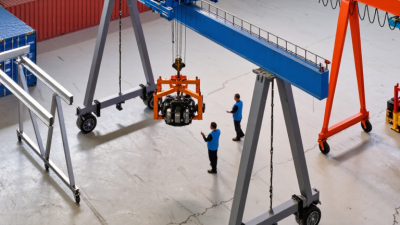
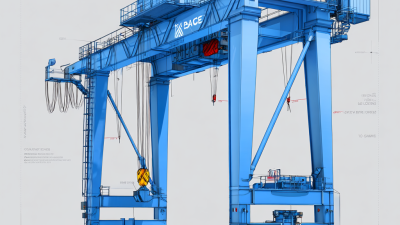
Choosing the right mobile gantry crane is not simply a matter of comparing prices or maximum capacity. The correct choice depends on the load, workspace, floor condition, lifting frequency, and available headroom. A 2-ton crane may suit a maintenance bay, yet fail to provide enough stability for repeated outdoor work. Small details matter. Wheel locks, beam height, caster quality, and setup time can affect daily safety and productivity.
Engineering educator Henry Petroski once said, “Design is not just what it looks like and feels like. Design is how it works.” This principle applies directly to every mobile gantry crane decision. A crane may appear robust, but its real value is shown during assembly, movement, positioning, and controlled lifting. Buyers should examine load charts, inspection records, brake performance, and manufacturer guidance before committing. The cheapest frame may become expensive when adjustments, repairs, or downtime appear.
This guide presents seven practical tips for selecting a mobile gantry crane that fits real working conditions. It considers capacity, portability, adjustability, materials, safety features, maintenance, and supplier reliability. Some decisions will remain imperfect. No crane suits every site. A careful choice reduces that uncertainty. Measure the doorway. Check the floor. Question assumptions. Then compare equipment based on safe performance, not appearance alone.
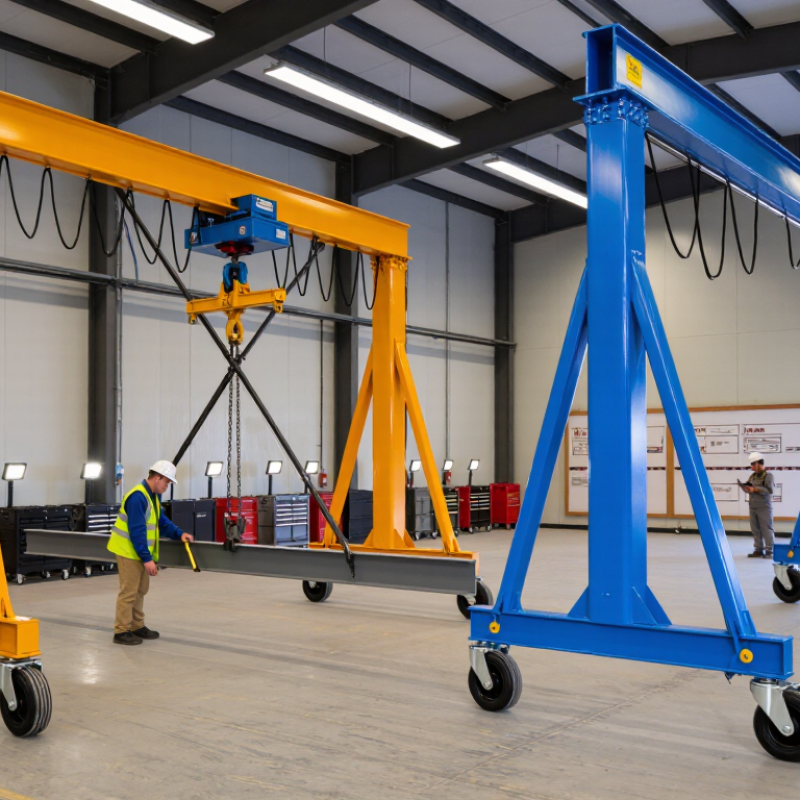
7 Tips for Choosing the Right Mobile Gantry Crane
Define the lifting requirements before comparing mobile gantry cranes. Record the heaviest load, load dimensions, lifting height, and required span. Include slings, hooks, spreader beams, and other accessories in the total weight. A 2,000-kilogram load may demand more capacity than expected. Center of gravity matters too. An uneven load can swing or tilt during movement.
Tip 1: Measure the actual workspace. Check doorways, ceiling height, aisles, floor slopes, and overhead obstructions. Confirm that the crane can pass through the narrowest route. Stop and measure. Tip 2: Examine the floor carefully. The surface should support the crane, load, and wheel loads without dangerous settlement. Cracks, loose plates, or wet areas need attention before use. I have seen planning fail because teams measured the load but ignored the floor.
Worksite conditions also influence the crane’s suitable design. Indoor areas may require compact dimensions and non-marking wheels. Outdoor lifting requires closer attention to wind, rain, uneven ground, and changing access routes. Tip 3: Consider how often the crane will move while loaded. Some tasks need smooth positioning, while others should use stationary lifting only. Tip 4: Leave practical clearance around the load and nearby workers. Never rely on a capacity label alone; follow the equipment instructions, inspection requirements, and applicable workplace rules. A qualified person should verify the final selection. Even experienced teams can overlook one small obstruction.
Choosing the right mobile gantry crane starts with comparing its type, capacity, and structural design. A fixed-height model suits repetitive lifting in one work area. An adjustable-height model offers more flexibility for changing loads and equipment. Folding frames store easily, but they may feel less rigid under demanding cycles. Consider the floor surface, aisle width, and available headroom before selecting a design.
Check the safe working load, not only the maximum advertised capacity. A two-ton load may require a three-ton crane when lifting accessories, uneven loads, and movement forces are included. Keep the load centered between the legs. Never judge capacity from frame size alone. Beam thickness, weld quality, bracing, caster rating, and locking mechanisms all influence stability. A wider base usually improves resistance to tipping, but it also needs more operating space.
I once focused too heavily on lifting capacity and overlooked clearance beneath a low doorway. That mistake changed how I assess equipment. Measure the lowest obstruction, trolley height, and hook travel on site. Select manually pushed casters for short, controlled movement. Powered movement may suit heavier loads, but it demands stronger procedures and operator training. Ask for load charts, inspection records, material details, and test documentation. If the structure flexes noticeably during a trial lift, stop and investigate. Small compromises can become expensive problems.
Choosing the Right Mobile Gantry Crane
Mobility should match your actual worksite, not the showroom floor. MHI’s 2024 Annual Industry Report found that 83% of respondents planned to increase automation investment. Flexible lifting equipment supports that shift, especially where layouts change frequently. Check wheel diameter, locking casters, steering control, and floor load capacity. A crane that rolls smoothly on concrete may struggle across expansion joints or debris.
Stability deserves more attention than speed. Inspect the base width, outrigger design, brake performance, and rated capacity at each boom position. ISO 4309 emphasizes documented inspection and maintenance for lifting equipment components, including ropes and sheaves. That principle applies here: small defects become serious when loads swing. Keep the load centered. Never treat a wide frame as proof of safety. I have seen operators focus on capacity plates while ignoring uneven flooring. That mistake is easy to repeat.
Height adjustment should be practical, repeatable, and secure. Look for clearly marked pin holes, guarded adjustment points, and locking systems that remain visible under load. ASME B30.17 addresses safety requirements for gantry cranes and their supporting components. Use its guidance alongside local rules and the manufacturer’s load chart. A higher setting can reduce head clearance problems, but it may also increase sway. Measure the tallest load, lifting path, and storage position before purchase. Test the movement with an unloaded crane first. Then test carefully.
Choosing a mobile gantry crane starts with its safety system, not its paint or advertised capacity. Check the rated load chart, including span, height, trolley position, and floor condition. A crane that lifts safely in one position may become unstable after a small adjustment. Ask for inspection records, test certificates, and clear maintenance intervals. Confirm that guards, limit switches, overload protection, and emergency stops are present and accessible. Test the emergency stop before accepting the equipment. It should stop movement promptly, without confusing delay. Inspect wheels, brakes, locking pins, and adjustable legs. These small parts often decide whether a loaded frame moves or settles.
Compliance needs more than a certificate in a folder. Match the crane’s design and inspection documents with the rules applying at your site. Verify serial identification, safe working load markings, electrical protection, and documented pre-use checks. Have a qualified inspector review uneven floors, slopes, door thresholds, and outdoor wind exposure. Do not assume indoor approval covers every location. That assumption can fail. Ask how defects are reported and who may authorize repairs. Reliable technical support should explain limitations plainly, without hiding them behind complicated language.
Operator usability is equally practical. Controls should be labeled, responsive, and reachable from a safe standing position. The operator needs a clear view of the hook, load path, and nearby workers. Try the controls while wearing gloves and hearing protection. Notice awkward reaches. Training should include emergency actions, load balance, and pre-use inspections. A short supervised trial can reveal problems that documents miss. People sometimes overlook this step. I would not. A smooth control layout may prevent hesitation when a suspended load begins to swing.
| Tip | Evaluation Dimension | Recommended Data or Benchmark | What to Verify Before Purchase | Why It Matters |
|---|---|---|---|---|
| 1 | Match Rated Capacity to the Real Load | Select a crane with a rated capacity greater than the heaviest planned load, including lifting accessories such as slings, shackles, spreader beams, and hooks. Capacity must include accessories | Check the load chart and confirm the rated capacity at the required span, lift height, and trolley position. Do not rely only on the maximum headline capacity. | Capacity can be affected by span, support spacing, trolley location, dynamic forces, and the weight of below-the-hook equipment. |
| 2 | Check Structural Stability and Mobility | The frame should be designed for the intended load, span, floor condition, and movement method. Swivel casters should be suitable for the total supported load, with load distribution considered. Stable on the intended floor | Review the maximum allowable floor gradient, wheel or caster capacity, frame deflection limits, locking arrangements, and whether the crane may be moved with a suspended load. | A mobile gantry can become unstable if the floor is uneven, the load is off-center, or the crane is moved outside the manufacturer’s stated operating conditions. |
| 3 | Evaluate Brakes, Locks, and Safety Systems | Look for positive caster brakes or wheel locks, mechanical height or span locks where adjustable features are provided, a secure hook latch, and a clearly identified emergency stop where powered motion is used. Prevent unintended movement | Test each brake and locking device under the site’s normal operating conditions. Confirm that the hook latch closes correctly and that powered controls stop motion promptly. | These systems help control rolling, shifting, accidental release, and uncontrolled powered movement during lifting operations. |
| 4 | Confirm Overload and Load-Control Protection | The crane should have a clearly marked safe working load and a load-control method appropriate to the application. Powered hoists may require overload protection, upper and lower limit controls, and controlled lifting and lowering speeds. Protect the load and equipment | Review the hoist documentation, inspect limit devices, confirm control labeling, and verify that the system prevents operation beyond its rated capacity where such protection is specified. | Overloading and excessive travel can damage structural components, lifting equipment, and the load, while increasing the risk of dropped loads. |
| 5 | Verify Standards and Documentation | Require design, inspection, testing, and operating documentation that aligns with the regulations and recognized standards applicable to the installation location and crane type. Compliance must be location-specific | Obtain the rated-load chart, operating manual, inspection records, conformity or test documentation, maintenance instructions, and information on applicable lifting-equipment requirements. | Legal duties and technical requirements vary by jurisdiction, workplace, crane configuration, and whether the equipment is manually or electrically powered. |
| 6 | Assess Operator Usability and Controls | Controls should be clearly labeled, logically arranged, easy to reach, and usable while the operator maintains a safe view of the load and travel path. Push-button controls should return to a safe state when released where applicable. Simple, visible, controlled operation | Conduct a practical trial using normal personal protective equipment. Check pendant reach, control direction, visibility, handle height, travel effort, and access to the emergency stop. | Intuitive controls reduce operating errors, awkward postures, unnecessary travel, and the likelihood of contact with people or nearby structures. |
| 7 | Plan Inspection, Maintenance, and Training | Choose a crane with accessible inspection points, replaceable wear components, documented maintenance intervals, and training materials for operators and designated inspectors. Support safe use over time | Confirm pre-use inspection requirements, periodic inspection intervals, spare-part availability, lubrication points, maintenance responsibilities, and operator training provisions. | Regular inspection and competent operation help identify damaged wheels, bent members, worn hooks, faulty brakes, and other defects before they lead to an incident. |
A mobile gantry crane should match your real work area, not an idealized drawing. Check the required lifting capacity, span, height, floor condition, and movement frequency. Maintenance needs deserve equal attention. Inspect wheels, brakes, locking pins, casters, welds, and hoist connections before each shift. Keep a written inspection record. Small defects can become expensive downtime.
Ask how often major components require inspection or replacement. Confirm whether spare wheels, bolts, pins, and electrical parts are readily available. A low purchase price may hide shipping charges, service labor, training, storage, and annual inspections. Calculate the total cost over five years. Include lost production during repairs. That figure is often surprising.
I once focused too heavily on the initial quote and underestimated transport costs. That was a useful mistake.
Supplier support should be specific and measurable. Request clear manuals, load charts, inspection procedures, warranty terms, and technician response times. Ask whether remote troubleshooting is available and whether local service coverage exists. Speak with experienced users about repair delays and documentation quality. Do not accept vague promises.
Test the supplier with practical questions before purchasing.
Can they explain safe operation in plain language?
Can they provide replacement parts quickly?
If answers remain unclear, reconsider the equipment. Reliability depends on the crane, its maintenance plan, and the people supporting it.