Choosing the right service crane in 2026 requires more than comparing lifting capacity and purchase prices. Global buyers must consider working environments, maintenance access, operator training, energy use, and long-term support. A compact jib crane may suit a factory repair bay, while an overhead crane can handle repeated component movement across a larger workshop. Mobile service cranes offer flexibility for field maintenance, construction sites, and remote facilities.
This guide examines the leading service crane types for international buyers. It considers load ratings, boom reach, control systems, installation needs, and inspection requirements. Real working details matter. A crane lifting a 500-kilogram motor needs stable positioning, smooth braking, and clear visibility around the load. In dusty plants, sealed electrical parts and simple maintenance access can prevent costly downtime.
Reliable purchasing decisions also require evidence. Buyers should review test certificates, factory quality records, spare-parts availability, and after-sales response times. Regional power standards and site conditions must be verified before ordering. A technically impressive crane may still disappoint if local technicians cannot service it quickly. That weakness is easy to overlook.
There is no universal best model. The correct choice depends on duty cycle, workspace, budget, and risk control. This overview compares practical options and highlights where each design performs well. It also questions common assumptions, because the lowest initial price rarely represents the lowest total cost.
2026 Top Service Crane Types for Global Buyers?
What Is a Service Crane and Where Is It Used?
A service crane is a compact lifting system designed for maintenance, repair, and loading tasks. It handles pumps, generators, valves, tools, and spare parts. Unlike heavy construction cranes, it focuses on controlled lifting in restricted work areas.
Common types include knuckle boom, telescopic boom, davit, and small gantry cranes. A knuckle boom crane folds beside a service truck, saving road space. A telescopic model offers longer reach for utility poles, pipelines, and industrial equipment. Davit cranes suit boats, platforms, and confined maintenance zones. Small gantry cranes work well inside workshops and warehouses.
Selection should begin with the real load, working radius, mounting space, and lifting frequency. A 1,000-kilogram load may exceed capacity at full reach. This detail is often missed. Check the load chart, hydraulic system, outrigger position, and emergency controls before purchase. Operators should receive practical training and follow local inspection requirements.
In field maintenance, access usually matters more than maximum capacity. A crane that reaches the job safely can outperform a stronger crane that cannot fit. Weather, uneven ground, saltwater, and limited visibility also affect daily reliability. Some specifications look convincing on paper, yet site testing may reveal awkward controls or poor stability. Buyers should request drawings, maintenance guidance, and realistic operating data before approval.
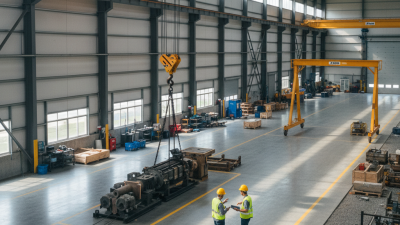
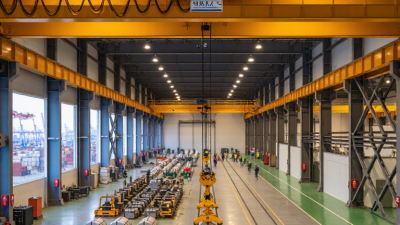
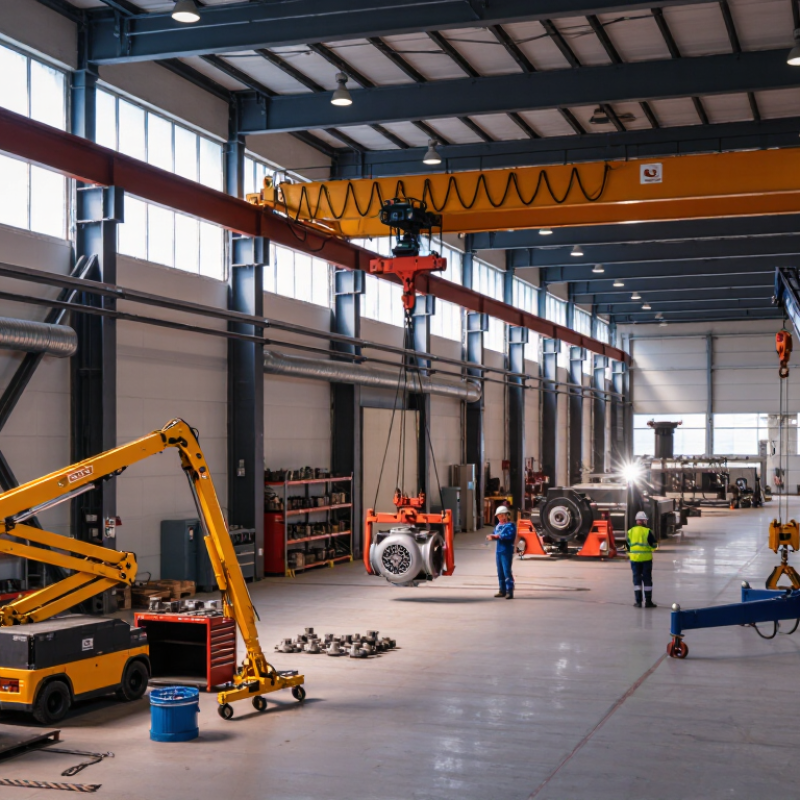
Service cranes support maintenance, assembly, and material handling inside factories, workshops, ports, and warehouses.
Market data shows continuing demand, but forecasts vary by definition. Fortune Business Insights valued the global crane market at about USD 36.6 billion in 2023. Its forecast reaches roughly USD 52.1 billion by 2032. Research and Markets also identifies industrial maintenance and infrastructure upgrades as important demand areas in its 2025 outlook.
Buyers should compare duty class, rated capacity, lifting height, span, power supply, and local certification requirements. ISO 4301 classification helps match crane usage with expected operating cycles.
Remote monitoring can record overloads, brake temperature, and service hours. Useful, but not magic.
A cheaper crane may create higher inspection and downtime costs. In humid coastal sites, corrosion protection matters more than a polished brochure.
Recent project experience also shows one weakness: buyers sometimes specify maximum capacity, but ignore daily lifting frequency.
For global buyers, service crane performance depends on the job, not the largest rated capacity. A truck-mounted hydraulic crane uses a PTO-driven pump to pressurize oil and move boom cylinders. It travels with the service vehicle and sets up quickly beside roads, workshops, or construction sites. Outriggers spread reaction forces across the ground. Capacity falls as radius grows. An experienced buyer checks the load chart at the actual working distance, not only the headline rating.
A knuckle-boom crane folds into a compact package, then unfolds through several articulated joints. Its geometry helps technicians place tools behind obstacles, inside machinery bays, or near building edges. It performs well where access changes often, although more joints require careful lubrication and inspection.
A telescopic crane extends straight sections for longer reach and predictable lifting paths. It suits generators, pipes, and maintenance materials when vertical clearance is available. However, extension reduces available capacity, and wind can turn a long boom into a serious control challenge.
Crawler service cranes move on tracks and distribute weight over soft ground. They offer stable lifting near uneven work areas, but transport takes more planning and equipment. In field evaluations, I look for smooth hydraulic response, readable controls, outrigger stability, and emergency lowering performance. Noise, fuel use, and maintenance access also affect real ownership costs. No crane performs perfectly in every condition. I would document ground pressure, lift frequency, weather exposure, and operator skill before choosing a configuration. A smaller crane may work better than a powerful model when setup space is limited. That detail is easy to miss.
2026 Top Service Crane Types for Global Buyers?
How to Select the Right Service Crane for Your Facility
Selecting a service crane starts with the work, not the catalogue. Record load weight, lifting frequency, travel distance, headroom, floor condition, and maintenance access. A bridge crane suits repeated coverage across a bay. A jib crane fits localized repairs near machinery. Monorail systems work well along fixed service routes, while gantry cranes help where building support is limited.
The choice should reflect real operating conditions. ISO 4301 classifies crane duty by load spectrum and operating time. Use this classification instead of relying only on maximum capacity. A 5-ton crane used ten times daily may need a different duty rating than one used occasionally. The 2024 Global Crane Market report by Fortune Business Insights valued the market at approximately USD 36.97 billion in 2023. That growth reflects wider industrial investment, but it does not make every crane suitable.
Check local requirements against ISO 9927, EN 13001, or OSHA 1910.179, depending on jurisdiction. Confirm electrical protection, ambient temperature, corrosion exposure, and emergency access. Professional site surveys often reveal overlooked issues, such as a beam blocking a maintenance door. Small details matter.
Do not ignore future loads. Yet oversizing can increase cost, headroom demands, and structural stress. A neat specification can still be wrong. Ask for inspection records, load testing procedures, spare-part availability, and operator training evidence. Local engineering review remains essential, especially for older buildings and mixed-use facilities.
2026 Top Service Crane Types for Global Buyers?
Global buyers commonly compare overhead, gantry, and jib cranes for service operations. Overhead cranes suit fixed workshops with repeated lifting paths. Gantry cranes work well in open yards or buildings without strong roof support. Jib cranes provide local handling around machines, loading points, and maintenance benches. Selection should begin with the actual load pattern, not the catalog photograph.
Global standards improve consistency, but they do not replace local approval. Buyers should check relevant requirements such as EN 13001, ISO 4301, ASME B30.2, and applicable national rules. The crane should include a clearly marked safe working load, overload protection, upper and lower limit switches, emergency stop controls, reliable brakes, and visible warning labels. Anti-collision systems matter when several cranes share one runway. Guarding and secure pendant controls reduce everyday risks.
Small details often decide long-term value. Confirm span, lifting height, duty cycle, ambient temperature, dust exposure, power supply, and floor capacity. Request load calculations, inspection records, operating manuals, spare-parts information, and technician training. Ask who will inspect the crane after installation. A low purchase price can hide expensive alignment or maintenance problems. I have seen specifications copied without matching the real workshop. That mistake deserves careful review. Allowing a practical safety margin is wise, although excessive capacity may increase structural and operating costs. Reliable purchasing depends on evidence, competent installation, and honest performance expectations.
| Crane Type | Typical Service Application | Indicative Capacity Range | Typical Span / Reach | Common Global Standards | Important Safety Features | Key Purchasing Factors |
|---|---|---|---|---|---|---|
| Single-Girder Overhead Bridge Crane | Workshop maintenance, assembly lines, warehouses, and general material handling. | 1–20 t | Up to approximately 30 m span | ISO 4301-1; EN 13001; ASME B30.2; IEC 60204-32 | Upper and lower travel limits, overload protection, emergency stop, pendant or radio control, buffers, and emergency limit devices. | Building runway capacity, headroom, duty classification, lifting speed, power supply, floor condition, and maintenance access. |
| Double-Girder Overhead Bridge Crane | Heavy workshop service, production plants, machinery installation, and high-lift applications. | 10–100+ t | Approximately 10–40 m span | ISO 4301-1; EN 13001; ASME B30.2; applicable local electrical and machinery regulations | Load-moment or overload monitoring, fail-safe brakes, end stops, anti-collision systems, hoist overtravel protection, and guarded electrical equipment. | Wheel loads, runway alignment, hook height, structural deflection, load spectrum, inspection access, and future capacity requirements. |
| Gantry Crane | Outdoor yards, container or equipment handling, construction areas, and facilities without overhead runways. | 1–200+ t | Approximately 5–40 m span; custom systems may be larger | ISO 4301-1; EN 13001; ASME B30.17; local outdoor lifting and electrical requirements | Rail clamps or storm locks, wind-speed monitoring, travel limit switches, skew protection, overload protection, and anti-collision controls. | Wind exposure, ground and rail foundations, drainage, site transport, outdoor corrosion protection, power collection, and safe access platforms. |
| Jib Crane | Workstations, machine loading, maintenance bays, loading points, and localized lifting. | 0.125–10 t | Approximately 1–10 m radius | ASME B30.11; EN 13001; applicable local machinery, electrical, and workplace safety rules | Rotation stops, overload protection, hook safety latch, limit switches, emergency stop, brake monitoring, and clearly marked rated load. | Column or wall strength, foundation loads, swept area, rotation angle, mounting height, duty cycle, and operator visibility. |
| Monorail Hoist System | Repetitive movement along a fixed route, process lines, maintenance stations, and transfer operations. | 0.25–10 t | Route-specific; straight or curved track | ASME B30.16; EN 13001; ISO 4301-1; applicable local structural and electrical standards | Overload limiting, upper and lower hook limits, trolley stops, fail-safe brake, emergency stop, and track end protection. | Track load capacity, curve radius, travel frequency, load positioning accuracy, headroom, process integration, and inspection points. |
| Portable Gantry Crane | Temporary maintenance, equipment repair, workshops, construction tasks, and occasional lifting. | 0.25–10 t | Approximately 2–8 m span | ASME B30.17; ASME B30.16 for hoists; applicable local lifting-equipment rules | Locking casters or fixed feet, adjustable height pins, overload protection, mechanical end stops, hook latch, and visible load markings. | Total weight, portability, floor flatness, caster rating, assembly time, adjustable dimensions, and prohibition of moving a suspended load unless specifically designed for it. |
| Mobile Hydraulic Crane | Outdoor service, plant maintenance, construction support, lifting in changing locations, and emergency repair work. | 10–500+ t, depending on configuration | Boom and load-chart dependent | ASME B30.5; ISO 4301-1 where applicable; local road, lifting, and operator-certification regulations | Rated-capacity limiter, boom angle and length indicators, anti-two-block device, outrigger interlocks, emergency stop, and load-moment monitoring. | Load chart, outrigger reaction forces, ground bearing capacity, transport dimensions, road legality, wind limits, operator qualification, and site access. |
| Truck-Mounted Service Crane | Field service, utility maintenance, delivery operations, roadside repair, and mobile installation work. | 0.5–25 t·m load moment | Approximately 2–20 m hydraulic reach | EN 12999; ASME B30.22; applicable vehicle, road, and workplace safety regulations | Load-moment limiter, stabilizer interlocks, overload warning, hydraulic hose protection, emergency controls, and transport-position locking. | Vehicle payload, axle loads, mounting subframe, outreach capacity, stabilizer footprint, hydraulic power, road compliance, and serviceability. |
| Electric Wire-Rope Hoist | General-purpose lifting on bridge cranes, gantry cranes, monorails, and fixed lifting stations. | 0.5–100+ t | Lift height commonly 3–30 m | ASME B30.16; EN 14492-2; ISO 4301-1; IEC 60204-32 | Upper and lower limit switches, overload limiter, fail-safe electromagnetic brake, rope guide, emergency stop, and thermal protection. | Duty class, lift height, reeving arrangement, lifting and travel speeds, power frequency, brake type, rope inspection access, and spare parts availability. |
| Electric Chain Hoist | Light and medium-duty workstation lifting, maintenance, production cells, and portable lifting frames. | 0.125–10 t | Lift height commonly 3–15 m | ASME B30.16; EN 14492-2; IEC 60204-32 | Slip clutch or overload protection, upper and lower limits, mechanical load brake, chain container, hook latch, and emergency stop. | Duty cycle, chain grade, noise level, lifting speed, mounting orientation, available voltage, portability, and chain inspection requirements. |
| Explosion-Protected Service Crane | Maintenance in areas containing flammable gases, vapors, mists, or combustible dust. | Application-specific; commonly 0.25–20 t | Site and crane configuration dependent | IEC 60079 series; ATEX or equivalent regional requirements; ASME B30 or EN crane standards as applicable | Certified electrical equipment, temperature-class compliance, bonding and grounding, spark-reduction measures, protected braking, and area-appropriate controls. | Hazardous-area classification, gas or dust group, temperature class, certification documents, ventilation, inspection regime, and material compatibility. |