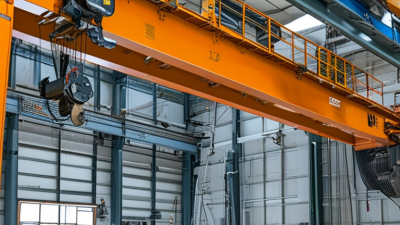
Top 10 Types of 1 Ton Cranes for Global Buyers?
Choosing a 1 ton crane is not simply a matter of comparing lifting capacity and price. Global buyers must examine workspace, lifting frequency, installation conditions, power supply, duty class, and local safety requirements. A crane that performs smoothly in a factory may struggle outdoors, especially when wind, uneven ground, or limited headroom affects operation.
This guide introduces ten practical crane types, including bridge cranes, gantry cranes, jib cranes, monorail cranes, wall-mounted cranes, workstation cranes, portable gantry cranes, davit cranes, folding cranes, and customized lifting systems. Each type solves a different handling problem. A compact jib crane may serve a machine station well, while a mobile gantry crane can support temporary maintenance work. Small details matter, such as runway clearance, hook height, wheel load, pendant position, and emergency stopping access.
Our comparison reflects common engineering practice and purchasing experience across industrial applications. However, no general list can replace a site survey or a qualified technical review. That limitation deserves attention. Buyers should confirm rated load, lifting speed, travel speed, control method, inspection needs, and spare-parts availability before ordering. Supplier documentation should also identify materials, testing procedures, surface treatment, and recommended maintenance intervals.
Some options may look similar on paper. They are not always equal in daily use. The right choice depends on the complete lifting task, not capacity alone. This overview aims to help international buyers ask sharper questions, avoid costly mismatches, and select equipment with dependable performance over time.
What Defines a 1 Ton Crane and Where It Is Used
Top 10 Types of 1 Ton Cranes for Global Buyers
What Defines a 1 Ton Crane and Where It Is Used
A 1 ton crane is designed to lift a maximum rated load of 1,000 kilograms under specified conditions. The rating does not guarantee one ton at every reach, speed, or lifting height. Load charts, hook position, travel limits, and duty class all affect safe performance. A small workshop crane may lift a steel motor from a pallet, while a longer-span unit handles repeated movement across a production area.
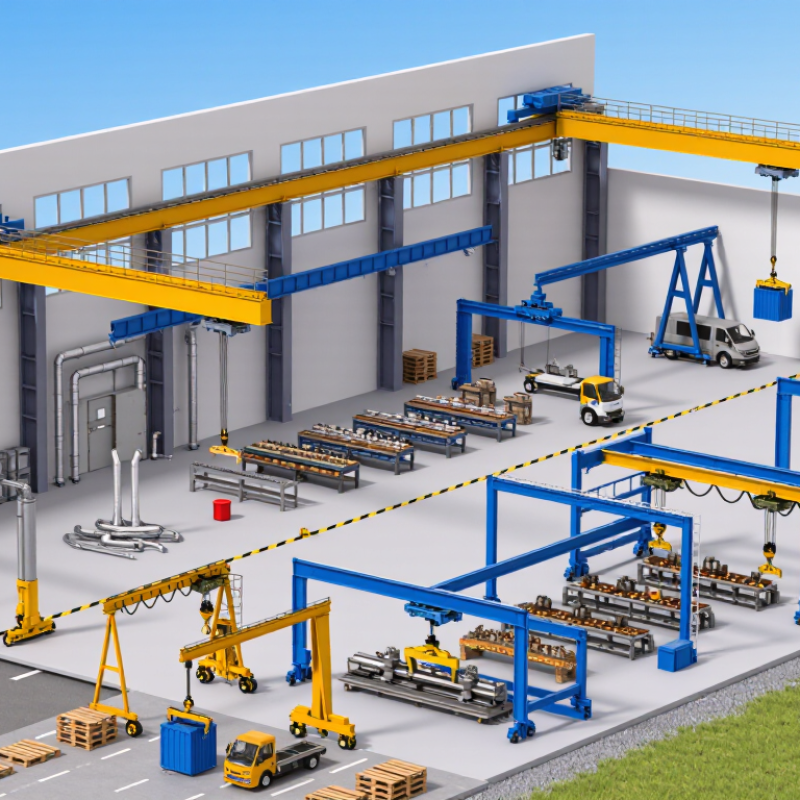
Common designs include overhead cranes, gantry cranes, jib cranes, monorail cranes, wall-mounted cranes, portable gantries, and compact electric hoists. Each suits a different working space. An overhead crane uses building structure or runway beams. A gantry crane stands on legs and can serve outdoor yards. A jib crane rotates around a fixed column, often covering a machine station or loading corner. Portable models offer flexibility, but uneven floors can create unwanted movement.
In real purchasing work, buyers should check headroom, floor strength, power supply, lifting speed, hook travel, and local inspection requirements. A 1 ton crane may support maintenance in a factory, warehouse picking, equipment installation, or light construction tasks. Operators also need clear sightlines and reliable controls. One detail is often underestimated: the load’s shape can matter as much as its weight. Long, swinging materials require slower handling and suitable lifting accessories. I have seen specifications focus on capacity while ignoring workspace limits. That can make a technically correct crane impractical.
How 1 Ton Crane Designs Differ in Capacity, Reach, and Mobility
Top 10 Types of 1 Ton Cranes for Global Buyers
How 1 Ton Crane Designs Differ in Capacity, Reach, and Mobility
A 1 ton rating does not define one crane design. The main options include single-girder overhead, double-girder overhead, monorail, gantry, semi-gantry, jib, wall-mounted jib, portable gantry, underhung, and truck-mounted cranes. Single-girder and underhung cranes suit workshops with long travel paths. Jib cranes offer focused coverage around one column. Portable gantries trade maximum reach for quick relocation. Truck-mounted units provide the highest mobility, but they need careful ground assessment. Real sites punish tidy comparisons.
According to ISO 4301-1, crane selection should consider load spectrum, working cycles, and operating class, not rated capacity alone. A 1,000 kg load at a 5-meter radius creates 5 tonne-metres of overturning moment before dynamic effects. That detail changes the design conversation. Grand View Research’s 2024 market outlook identifies construction and manufacturing as major crane demand sectors, where compact lifting often meets restricted floor space. Meanwhile, OSHA guidance emphasizes rated-load charts, inspection routines, and competent operation. Reach also depends on headroom, hook approach, runway length, and anchoring quality. Mobility is not automatically an advantage. A portable frame may move easily, yet its manual positioning can reduce daily productivity. A fixed jib may seem less flexible, but it can deliver faster repetitive handling. This is where many buyer comparisons remain too simple.
Key Selection Factors for Global Buyers
Top 10 Types of 1 Ton Cranes for Global Buyers
Choosing a 1 ton crane starts with the working environment, not the catalogue picture. Common options include bridge, gantry, jib, monorail, wall-mounted, portable gantry, davit, and truck-mounted cranes. Each suits a different movement pattern. A bridge crane fits repetitive lifting across a fixed bay. A jib crane saves floor space near one workstation. A portable gantry supports flexible projects, but its wheels need a firm, level surface.
Measure twice.
Confirm the working load, lifting height, span, headroom, and daily duty cycle. A one-ton rating does not mean every attachment can lift one ton safely. Include hooks, slings, magnets, and spreader beams in the total load. Check local voltage, ambient temperature, dust, humidity, and outdoor exposure. Conditions matter. A coastal workshop may require stronger corrosion protection than a dry indoor warehouse.
Reliable selection also depends on documentation and service. Request load charts, structural calculations, inspection records, operating instructions, and spare-parts information. Verify that the design follows applicable national and international safety requirements. Site access deserves attention; a crane that cannot enter through the doorway is a costly mistake. Low prices can look attractive, yet weak after-sales support may create longer downtime. In practice, buyers sometimes focus too heavily on capacity and overlook maintenance access. That decision may need reconsideration. A clear inspection plan, trained operators, emergency stops, and realistic delivery terms provide better long-term value.
Safety Standards, Customization, and International Purchasing Considerations
Top 10 Types of 1 Ton Cranes for Global Buyers
A one-ton crane may include overhead, gantry, jib, monorail, underslung, wall-mounted, and portable designs. Each suits a different workspace and lifting path. Buyers should match the crane to load frequency, span, headroom, travel distance, and floor strength. A compact jib crane may fit a service bay, while an overhead crane can support repeated production lifting. Real operating conditions matter more than catalog capacity.
Safety compliance requires careful verification before purchase. Request load-test records, material certificates, operating manuals, wiring diagrams, and inspection procedures. Confirm the crane’s design standard with qualified local engineers and the receiving country’s authorities. Electrical voltage, control language, plug configuration, emergency stops, and guarding also need confirmation. A certificate alone does not prove safe installation. I have seen projects delayed because the runway structure was checked too late.
Tips: Share drawings, photos, lifting heights, duty cycles, and ambient temperatures with the supplier. Ask about spare parts, warranty response, packaging, delivery terms, and installation support. For humid, dusty, or outdoor sites, specify suitable protection levels and corrosion-resistant finishes. Leave room for honest review. The cheapest quote may exclude testing, training, or essential accessories. A small mismatch in voltage or beam size can create expensive delays. Local inspection should remain part of the purchasing plan.
Top 10 Types of 1 Ton Cranes for Global Buyers
Representative span or reach values for common 1-ton crane configurations. Actual capacity, duty class, dimensions, and operating environment must be verified against the applicable design standard and supplier engineering documents.
International purchasing considerations: Buyers should confirm load spectrum and duty classification, lifting height, power supply, control voltage, runway or foundation requirements, corrosion protection, spare-parts availability, and documentation for standards such as EN 13001, FEM, ISO 4301, ASME B30.2, and ASME B30.16. Customization is commonly required for cleanroom use, low headroom, outdoor installation, seismic conditions, or non-standard spans.